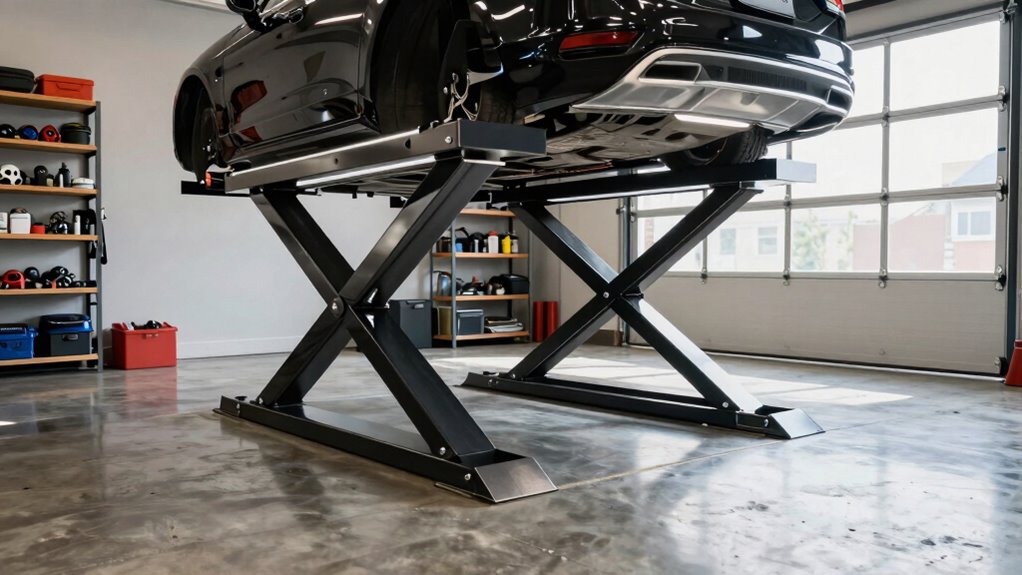

To choose the right car lift for your home garage, start by checking your ceiling height and ensuring it can support the lift’s weight and dimensions. Verify that the lift meets safety standards and has proper locking mechanisms. Consider space constraints and select a model suited to your garage layout, whether a two-post, four-post, or in-ground lift. Proper installation is key to save your ceiling and keep your vehicle secure—continue to explore more tips to get it just right.
Listen free for 30 days with Audible
Thousands of audiobooks and originals — cancel anytime.
As an affiliate, we earn on qualifying purchases.
Key Takeaways
- Measure your garage ceiling height to ensure the lift fits and provides enough clearance for safe vehicle operation.
- Choose a lift type (two-post, four-post, in-ground) based on your space, vehicle size, and installation complexity.
- Verify the lift’s weight capacity and safety certifications to ensure stability and compliance with standards.
- Consider ease of installation and professional support options to prevent ceiling damage and ensure proper setup.
- Regularly inspect and maintain the lift to protect your ceiling structure and ensure ongoing safety during use.
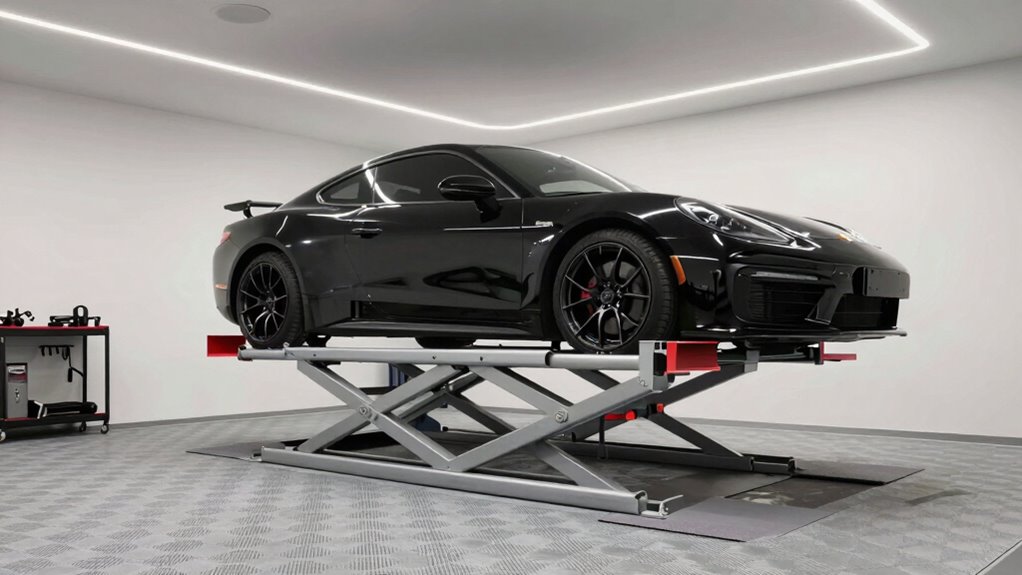
Choosing a Car Lift
Choosing the right car lift is essential for ensuring safety, efficiency, and convenience when working on your vehicle. When you’re selecting a lift for your home garage, you want something that fits your space, meets your needs, and keeps you safe during every use. One of the most important aspects to consider is proper installation. While it might be tempting to set up your lift yourself, paying attention to installation tips can make all the difference. Start by carefully reading the manufacturer’s instructions and ensuring your garage floor is solid, level, and capable of supporting the weight. Reinforcing the concrete slab, if needed, is crucial to prevent any shifting or cracking that could compromise safety. It’s wise to consult a professional if you’re unsure about the structural requirements or installation process, as improper setup can lead to accidents or damage to your vehicle. Proper installation also involves verifying that the lift is compatible with your garage’s ceiling height and layout to avoid clearance issues.
Safety considerations are paramount when choosing and installing a car lift. Always verify that the lift has the necessary certifications and adheres to safety standards. Look for features like sturdy locking mechanisms, safety pins, and secure arms to ensure the lift stays stable during operation. Remember, an improperly installed lift or one lacking safety features can pose serious risks, including collapse or injury. When installing, ensure the lift’s arms are correctly aligned and that you’re following weight capacity limits strictly. Don’t overlook the importance of regular inspections, especially before each use — check for signs of wear, loose bolts, or hydraulic leaks. Proper maintenance and adherence to safety protocols are essential to keep your workspace secure.
Prioritize safety: verify certifications, inspect regularly, and follow proper installation protocols to prevent risks and ensure stability.
Choosing a lift that suits your garage’s ceiling height is also vital. A lift that’s too tall may hit the ceiling or limit access, while one that’s too short might not provide enough clearance for your vehicle. Measure your garage space carefully and compare it with the lift’s specifications before making a decision. Additionally, consider the type of lift that works best for your projects—whether a two-post, four-post, or in-ground lift—each offers different advantages and installation considerations. Be sure to also review manufacturer support and warranty options to ensure ongoing assistance and protection for your investment.
Ultimately, selecting the right car lift for your home garage is about balancing safety, functionality, and space. Take your time to research different models, prioritize safety considerations, and follow proper installation tips. Doing so will ensure your investment is not only convenient but also secure, giving you peace of mind while working on your vehicle. Proper setup and ongoing safety checks will help you enjoy the benefits of your car lift for years to come.
As an affiliate, we earn on qualifying purchases.
Frequently Asked Questions
What Is the Maximum Weight Capacity of Typical Home Garage Lifts?
A typical home garage lift has a maximum weight capacity ranging from 4,000 to 12,000 pounds, depending on its lifting strength. You should choose one that matches your vehicle’s weight and future needs. Always check the lift’s specifications to verify it can handle your heaviest cars safely. Investing in a lift with higher weight capacity provides extra safety and flexibility for various vehicle sizes.
How Much Space Is Needed for Installing a Car Lift?
You need at least 10 to 12 feet of ceiling height to install a car lift comfortably. Investigate how garage dimensions influence installation—adequate length, width, and ceiling space are essential. For a standard two-post lift, plan for a garage that’s roughly 12-15 feet wide and 20-24 feet deep. This ensures safe operation, enough space to maneuver, and proper clearance for lifting and maintenance activities.
Are There Electric or Hydraulic Options for Home Garage Lifts?
Yes, you can choose between electric lifts and hydraulic lifts for your home garage. Electric lifts are powered by motors, offering smooth, quiet operation and easier installation. Hydraulic lifts use fluid pressure, providing robust lifting capacity and durability. Both options work well, so consider your space, budget, and preference for either electric or hydraulic systems to find the best fit for your garage.
What Safety Features Are Essential in a Home Car Lift?
Think of safety features as the backbone of your home car lift. You must guarantee it has a thorough safety inspection before use, confirming all components are in top shape. An emergency stop button is vital, allowing you to halt operation instantly if needed. Additionally, safety locks, overload sensors, and sturdy support arms help prevent accidents, giving you peace of mind as you work safely beneath your lifted vehicle.
How Much Does a Standard Residential Car Lift Cost?
A standard residential car lift typically costs between $3,000 and $8,000, depending on size and features. As you consider this investment, think about how it will impact your garage aesthetics—opt for a lift that blends seamlessly with your space. Remember, proper lift maintenance is vital to guarantee safety and longevity, so factor in ongoing costs and servicing when planning your budget.
Conclusion
Now that you’ve navigated the nuances of choosing a car lift, it’s time to trust your tech-savvy taste. Consider your ceiling’s capacity, your car’s size, and your garage’s layout to make a smart, safe selection. Remember, the right lift not only raises your ride but also restores your space and sanity. So, stay savvy, select smart, and soon you’ll be soaring above your sedan without stressing your ceiling!
Flea & tick season Picks
flea and tick prevention
As an affiliate, we earn on qualifying purchases.