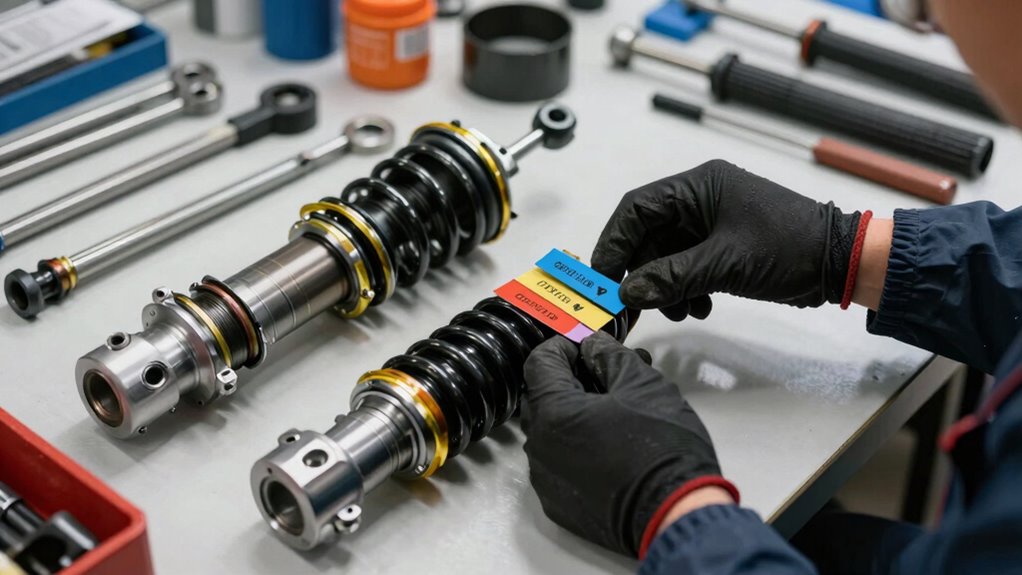

To effectively label and track parts during a suspension job, use durable, clearly printed labels with essential info like part numbers and installation dates. Secure labels properly to prevent detachment, and follow standardized procedures for consistency. Incorporate digital tools like RFID tags or barcode scanners for real-time updates on part locations and status. Regularly calibrate tools and double-check data to avoid errors. For an in-depth guide on optimizing your process, keep exploring the key strategies that make or break the job.

Get business pricing on garage and car supplies
- Business-only prices and quantity discounts
- Tax-exempt purchasing
- Multiple users, one account, clear invoices
Key Takeaways
- Use durable, standardized labels with critical information, securely attached to prevent detachment or unreadability.
- Implement digital tracking tools like RFID or barcode systems for real-time part identification and status updates.
- Regularly calibrate tools and record maintenance to ensure measurement accuracy during labeling and installation.
- Establish clear protocols for labeling and tracking, and train team members to maintain consistency and accuracy.
- Conduct routine double-checks and cross-references of labels and digital data to catch discrepancies early.
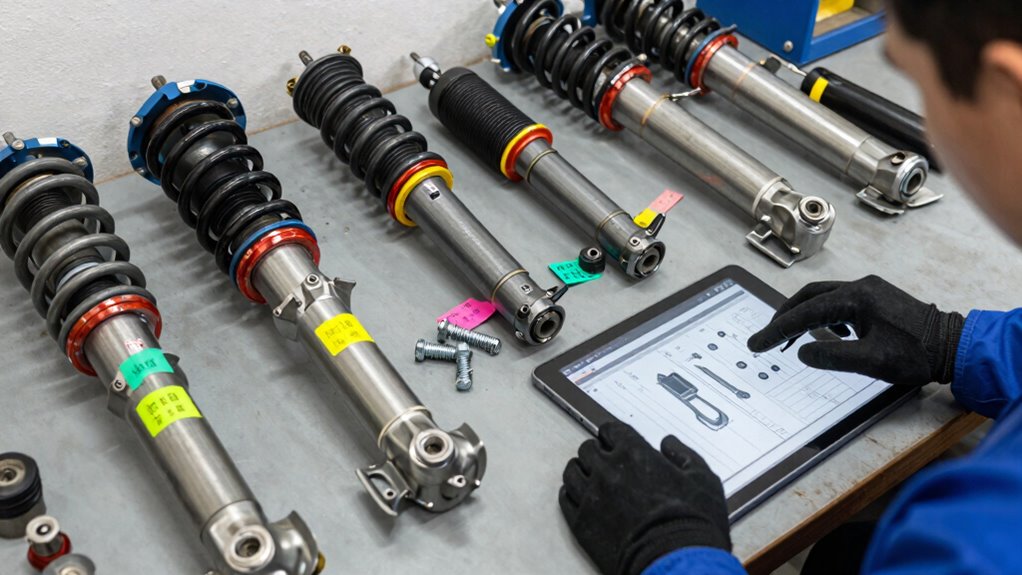
During suspension jobs, properly labeling and tracking parts is vital to guarantee safety, efficiency, and accuracy. When you’re working on complex machinery or large structures, keeping track of every component can seem overwhelming, but it’s essential to avoid costly mistakes or safety hazards. The key to successful labeling and tracking lies in implementing a structured system that integrates precise tool calibration and strict safety protocols. You want your tools to be accurate, so regularly calibrate them to confirm measurements are reliable, especially when marking parts or verifying their positions. Proper calibration minimizes errors that could compromise the integrity of the work or lead to safety issues down the line. Using clear, durable labels that can withstand harsh conditions, such as extreme temperatures, moisture, or chemicals, is also crucial. These labels should contain critical information like part numbers, installation dates, and special handling instructions. Attach labels securely to prevent them from falling off or becoming unreadable, which could cause confusion or misidentification later. Consistently following safety protocols also means verifying that each part is correctly tracked throughout the process, from removal to reinstallation, so nothing gets misplaced or overlooked. Implementing a systematic tracking process is equally important. Use digital tools such as barcode scanners or RFID tags to streamline the process. These technologies not only speed up identification but also reduce human error. When you scan a part, the system automatically updates its status and location, providing real-time visibility into the entire project. This method ensures that every component’s history, including calibration dates and inspection records, is accurately maintained. Utilizing digital tracking tools can significantly improve project efficiency and accuracy. Regularly checking calibration records and tool calibration procedures ensures ongoing accuracy. Incorporating standardized labeling practices also helps maintain consistency across the team and minimizes mistakes. Additionally, establishing clear labeling protocols helps team members understand and follow consistent procedures, reducing the risk of miscommunication. A well-organized labeling system can also serve as a reference resource during troubleshooting or future maintenance. Finally, double-check your labels and tracking data at each stage. Cross-reference information regularly to catch discrepancies early. Training your team on proper labeling techniques and emphasizing the importance of consistent documentation helps maintain a high standard of accuracy. Remember, the goal is to prevent any missteps that could compromise safety or prolong the job. By prioritizing tool calibration, adhering to safety protocols, and employing reliable tracking methods, you create a well-organized workflow that keeps everyone safe and the project on track.
Frequently Asked Questions
What Tools Are Best for Labeling Suspension Parts?
You should use durable labels with strong adhesive and color coding to organize suspension parts effectively. Waterproof and heat-resistant labels guarantee they stay attached under challenging conditions. Choose markers with good adhesive strength for handwritten labels if needed. Color coding helps quickly identify parts during disassembly and reassembly. Combining these tools ensures you keep track of every component, minimizing errors and saving time during your suspension job.
How Do I Prevent Labels From Falling off During the Job?
To prevent labels from falling off during your suspension job, focus on selecting labels with high durability and a strong adhesive suited for automotive environments. Use labels made of weather-resistant material, and guarantee the surface is clean and dry before applying. Press firmly to activate the adhesive fully. Regularly check labels during the process, and replace any that show signs of peeling to keep your parts accurately tracked throughout the job.
Can Digital Tracking Be Integrated With Existing Systems?
You can definitely integrate digital tracking with your existing systems; as they say, “if it ain’t broke, don’t fix it.” Start by evaluating your current system compatibility and choosing digital tools that seamlessly connect. Many modern solutions offer APIs or compatible software that sync easily. By doing so, you guarantee real-time updates, streamline workflows, and avoid disruptions, making your suspension job more efficient and organized.
How Long Should Labels Last During Heavy-Duty Work?
For heavy-duty work, labels should last the entire duration of the suspension job, which can be several weeks. You should conduct durability testing to guarantee they withstand harsh conditions like grease, dirt, and vibration. Opt for label customization to choose materials that resist tearing, chemicals, and extreme temperatures. Regularly check labels during the job, replacing them if they show signs of wear to maintain accurate tracking and avoid mix-ups.
What Are Common Mistakes in Labeling Suspension Components?
You might be surprised, but common mistakes in labeling suspension components can cause chaos in your work. Poor component identification and inaccurate labeling often lead to confusion, mix-ups, and delays. Always double-check your labels for clarity, use consistent terminology, and guarantee labels are securely attached. Avoid rushing through labeling—accuracy is key. Mistakes here can turn a smooth job into a nightmare, so take your time to get it right.
Conclusion
By labeling and tracking parts meticulously, you can streamline your suspension job and prevent costly mistakes. Some say that a well-organized system can even predict potential issues before they arise, thanks to the way proper documentation reveals patterns. While not all theories hold up, investing in clear labels and tracking methods definitely boosts efficiency and accuracy. So, trust in your system, stay organized, and watch your suspension project run smoothly—proof that good planning makes all the difference.
Fall Picks
fall essentials
As an affiliate, we earn on qualifying purchases.