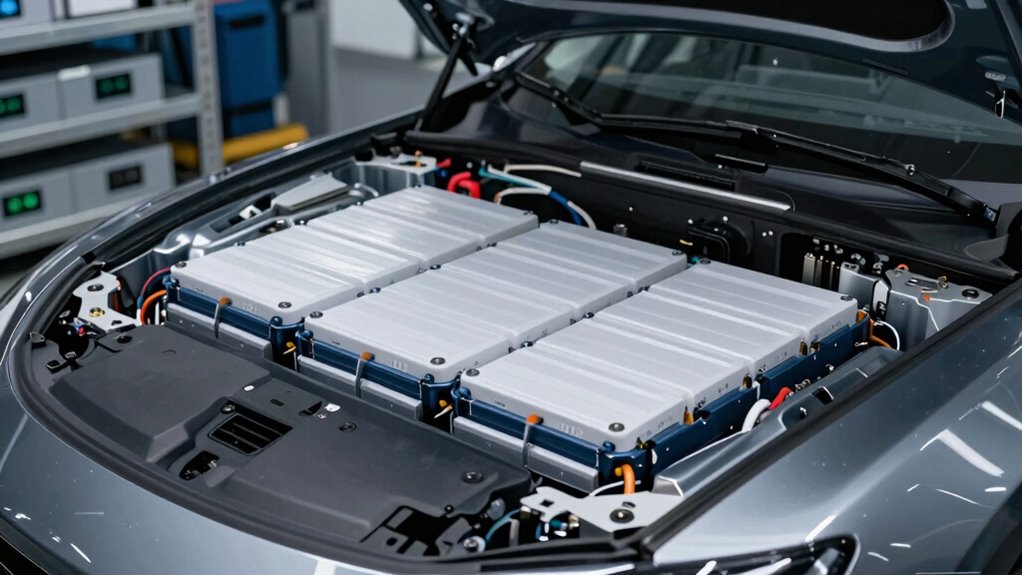
To protect your hybrid and EV batteries during storage, keep them in a cool, dry, and well-ventilated area away from direct sunlight, high humidity, and temperature swings. Store batteries at around 50-60% charge, and regularly check for damage or corrosion. Use proper cases or covers, and follow the manufacturer’s guidelines for handling and storage. Managing environment and maintenance helps extend battery life—continue to learn how to optimize your storage practices.

Get garage and car supplies delivered free — and shop member deals
- Fast, free delivery on millions of items
- Access to Prime Big Deal Days deals on October 6–7
- Prime Video, Amazon Music and more included
Key Takeaways
- Store batteries in a cool, dry, and well-ventilated environment at 50-77°F (10-25°C) to prevent capacity loss.
- Keep batteries partially charged around 50-60% to minimize stress and chemical degradation during long-term storage.
- Regularly inspect and clean terminals, and ensure batteries are stored upright to prevent physical damage and corrosion.
- Use temperature-controlled storage or insulation in extreme climates to maintain stable conditions.
- Follow manufacturer guidelines for specific chemistries, and disconnect batteries from systems to prevent parasitic drain.
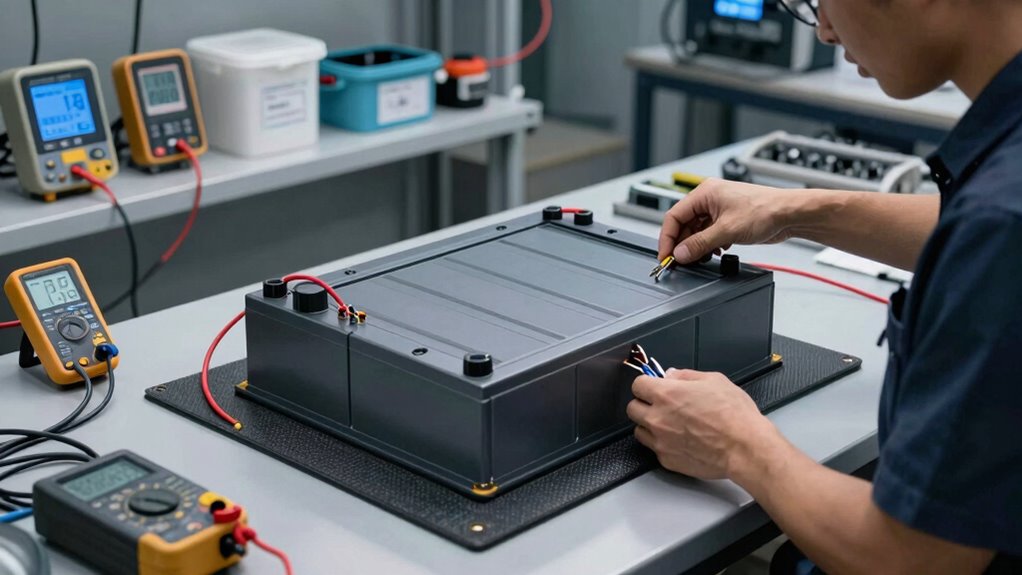
Properly storing your battery systems is essential to maintain their performance and extend their lifespan. When it comes to hybrid and electric vehicle builds, your batteries are the heart of the system, and neglecting proper storage can lead to reduced battery longevity and potentially costly replacements. To guarantee your batteries stay in top shape, you need to focus on key factors like temperature management and proper storage conditions. Batteries are sensitive to temperature fluctuations; extreme heat can accelerate degradation, while cold temperatures may temporarily reduce capacity. Keeping your batteries in a controlled environment where temperature stays stable is critical. Ideally, store them in a cool, dry place with temperatures between 50°F and 77°F (10°C to 25°C). Avoid areas with direct sunlight, high humidity, or significant temperature swings, as these conditions can cause physical and chemical changes within the cells, diminishing their effectiveness over time.
Temperature management is one of the most important aspects of preserving battery longevity. If your batteries are stored for extended periods, consider using temperature-controlled storage units or, at the very least, monitor the environment regularly. If you’re in a hotter climate, using insulation or cooling methods can help prevent overheating. Conversely, in colder environments, adding insulation or heating elements can prevent freezing and capacity loss. Additionally, you should periodically check the batteries during long storage periods. Maintaining a partial state of charge—around 50-60%—is generally recommended, as fully charged or fully discharged states can stress the cells and accelerate aging. If possible, disconnect the batteries from the vehicle or system to avoid parasitic power drain, which can further deplete their charge and increase the risk of deterioration. Proper temperature management can significantly extend your battery’s lifespan and maintain optimal performance. Regularly inspecting and cleaning the terminals and connectors is also crucial, as corrosion can cause poor connections, which may lead to uneven charging and further damage the battery cells. Ensuring proper ventilation around the stored batteries can help dissipate any built-up heat and prevent overheating, especially in enclosed spaces. When storing your batteries, ensure they are stored upright and not stacked in a way that could cause physical damage. Using original or compatible protective cases or covers can shield the batteries from dust, moisture, and accidental impacts. Finally, battery chemistry differences mean that always following the manufacturer’s storage guidelines and recommendations is essential, as different chemistries may have specific requirements. By paying close attention to temperature management and proper handling, you’ll considerably improve your batteries’ lifespan, ensuring your hybrid or EV build remains reliable and efficient for years to come.
As an affiliate, we earn on qualifying purchases.
Frequently Asked Questions
How Long Can a Battery Be Safely Stored Without Maintenance?
You can typically store a battery safely for up to six months without maintenance, but it depends on the battery type. During storage, you should consider using a proper storage container to prevent damage and monitor the state of charge regularly. When it’s time for recycling, make sure you follow proper battery recycling procedures to protect the environment. Regular checks and appropriate storage help maintain battery health before reuse or disposal.
What Specific Storage Temperature Ranges Are Ideal for Batteries?
You should aim for a storage temperature between 32°F and 77°F (0°C to 25°C), where temperature stability minimizes stress on the battery. Keep the environment cool, dry, and consistent, avoiding temperature fluctuations. Regular charge monitoring guarantees the battery stays within suitable voltage levels. Maintaining these ideal conditions helps preserve battery health, prevents degradation, and extends storage life, ensuring your battery remains prepared for use when needed.
How Does Humidity Affect Stored Battery Life?
High humidity levels can accelerate humidity effects like corrosion on your stored battery systems, which diminishes their lifespan and performance. To prevent this, you should store batteries in a dry environment and use corrosion prevention measures such as sealed containers or desiccants. Keeping humidity low minimizes corrosion risks, ensuring your batteries stay healthier longer. Regularly check storage conditions to avoid moisture buildup that can lead to costly damage.
Can Batteries Be Stored in a Partially Charged State?
Yes, you can store batteries in a partially charged state. Follow proper charging protocols, ensuring the battery is at around 30-50% charge before storage. Use appropriate storage containers that protect against humidity and temperature fluctuations, which can harm the battery. Avoid fully discharging or overcharging, as these can damage the cells. Regularly check and recharge the battery if needed to maintain ideal health during storage.
What Are the Signs of Battery Degradation During Storage?
If your battery starts acting like it’s auditioning for a horror movie, with reduced capacity or uneven charge cycles, you’re likely witnessing signs of degradation. Watch for decreased performance, swelling, or unusual heat—these are your battery chemistry’s way of crying for help. Proper storage insulation can slow this process, but if these signs appear, it’s time to reconsider your storage tactics and give your battery some TLC.
Conclusion
Properly storing your hybrid or EV battery can extend its lifespan and guarantee peak performance. Remember, batteries stored improperly can lose up to 20% of their capacity within a year. By following the right protocols—like maintaining the correct charge level and storing in a cool, dry place—you safeguard your investment and support battery health. Protecting your battery isn’t just smart—it’s essential for saving money and reducing environmental impact over time.
Halloween Picks
halloween
As an affiliate, we earn on qualifying purchases.