
TL;DR
Volkswagen’s ID. Polo and Renault’s 5 electric models both use similar battery capacities but deliver notably different driving ranges. This development raises questions about efficiency and design choices in compact EVs.
Volkswagen’s ID. Polo and Renault’s 5 electric models, both equipped with a 50 kWh battery, demonstrate significantly different driving ranges, with the VW surpassing the Renault by approximately 20-30 kilometers in tested conditions. This discrepancy highlights ongoing debates about efficiency, design, and technological optimization in compact electric vehicles.
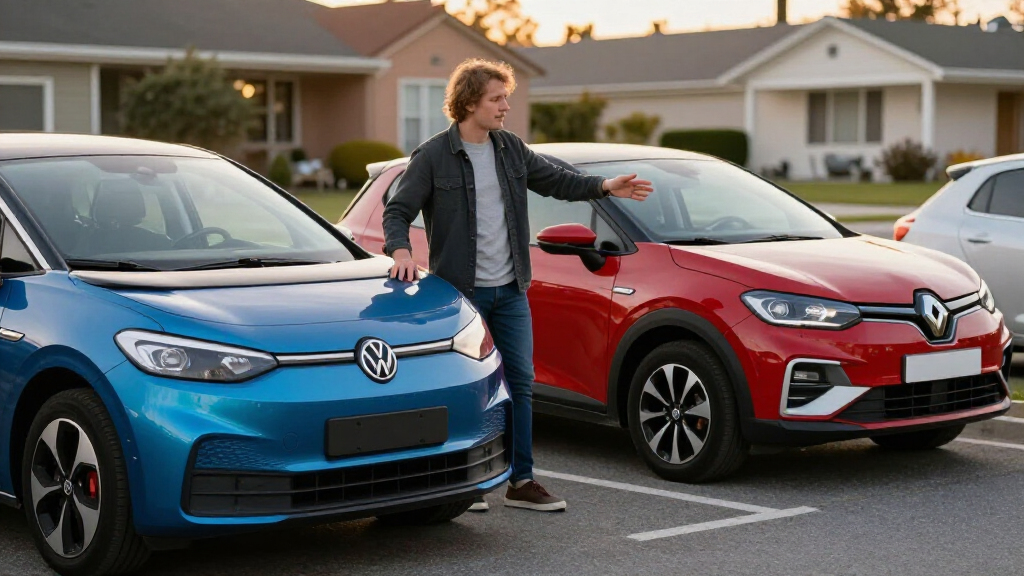
Both the VW ID. Polo and Renault 5 electric models are now available with a 50 kWh battery, a common capacity in the segment aimed at balancing affordability and range. However, recent reviews and testing data indicate that the ID. Polo offers a range of around 330 kilometers (205 miles) on a full charge, while the Renault 5 delivers approximately 300 kilometers (186 miles), despite sharing the same battery size.
Manufacturers attribute these differences to various factors, including powertrain efficiency, aerodynamics, weight distribution, and software optimization. VW officials have emphasized that their engineering efforts focus on maximizing range without compromising performance, while Renault has prioritized compact design and urban usability.
Automotive analysts note that such variations are common in the EV market, where multiple factors influence real-world range. The difference, while seemingly modest, can impact consumer choices, especially in markets where range anxiety remains a concern. The models are both aimed at urban and suburban drivers seeking practical, affordable EV options.
Implications of Battery Efficiency Variations in Compact EVs
This development underscores the importance of efficiency optimization in electric vehicle design, especially within the competitive compact segment. The fact that two similarly sized batteries can produce different ranges highlights ongoing challenges manufacturers face in balancing cost, performance, and consumer expectations. For consumers, these differences can influence purchasing decisions, especially in markets where range anxiety remains a significant barrier to EV adoption. Additionally, the disparity raises questions about the transparency of efficiency metrics and the actual performance of EVs in real-world conditions.
Industry experts suggest that such differences could also influence future battery technology development and design strategies, as automakers seek to improve range without increasing battery size or cost. This case exemplifies the broader trend of optimizing existing battery capacities rather than simply increasing capacity to boost range.
As an affiliate, we earn on qualifying purchases.
Growing Interest in Compact EV Range Performance
Interest in the range capabilities of small electric vehicles has surged recently, driven by increasing market availability and consumer inquiries. The trend reflects a broader shift toward urban mobility solutions, with many drivers prioritizing compact size, affordability, and efficiency. The comparison between the VW ID. Polo and Renault 5 emerges amidst a backdrop of rising coverage and search interest, indicating that consumers and industry watchers are paying close attention to how different brands optimize similar battery capacities.
Historically, manufacturers have varied in their approach to efficiency, with some focusing on maximizing range through advanced software and aerodynamics, while others emphasize cost-effective manufacturing and urban usability. The current focus on these two models exemplifies the ongoing debate about what constitutes the best balance in EV design for city dwellers and suburban users.
While official specifications are available, the actual range experienced by drivers can vary based on driving conditions, climate, and usage patterns. The recent data suggests that even with identical batteries, automakers’ engineering choices significantly influence real-world performance.
Unconfirmed Factors Behind Range Discrepancies
While initial data shows a range difference between the VW ID. Polo and Renault 5 with identical batteries, the exact technical reasons for this gap remain unconfirmed. Details about software tuning, aerodynamics, weight distribution, and powertrain efficiency are still emerging, and automakers have not publicly disclosed comprehensive technical data to explain the variance.
Additionally, real-world testing conditions such as climate, driving style, and route type can influence range results, making it difficult to draw definitive conclusions at this stage. Industry insiders suggest that more detailed testing and transparency are needed to fully understand the causes of these differences.
Further Testing and Data Disclosure Expected
Automakers and independent testers are expected to conduct additional real-world and laboratory tests to verify the current range figures and identify the specific factors behind the discrepancies. Future updates may include more detailed technical disclosures from VW and Renault, providing clearer insights into their efficiency strategies.
Market analysts anticipate that as EV adoption grows, manufacturers will increasingly focus on transparency and optimization, potentially leading to more comparable range metrics across similar battery sizes. Consumers should watch for official updates and third-party testing results to better inform their purchasing decisions.
Key Questions
Why do two cars with the same battery size have different ranges?
Differences in efficiency, aerodynamics, weight, and software tuning can cause variations in range, even with identical battery capacities. Manufacturers optimize these factors differently based on design priorities.
Will the range difference affect my choice between VW ID. Polo and Renault 5?
Potentially, especially if range is a critical factor for your driving needs. It’s important to consider real-world testing results and how each vehicle performs in your typical usage environment.
Are the reported ranges reliable?
While official figures are based on standardized testing, real-world conditions can cause actual range to vary. Consumers should look for independent tests and user reviews for more accurate estimates.
Could future software updates improve Renault 5’s range?
Yes, automakers often release software updates that can enhance efficiency and range, but the extent of improvement depends on the underlying hardware and design.
Is battery size the only factor determining range?
No, factors such as powertrain efficiency, aerodynamics, vehicle weight, and driving conditions also significantly influence the actual range a vehicle can achieve.
Source: rss
Fall Picks
fall essentials
As an affiliate, we earn on qualifying purchases.