
Brake squeal after a big upgrade usually happens because of incompatible or improperly prepared components. If the new pads and rotors aren’t correctly matched, it can cause uneven contact, vibrations, and noise. Poor installation, lack of proper surface cleaning, or skipping the bedding-in process can also make squealing worse. Additionally, softer materials or high-metal content in pads can increase noise. If you want to find out how to prevent these issues, keep exploring the details below.

Get business pricing on garage and car supplies
- Business-only prices and quantity discounts
- Tax-exempt purchasing
- Multiple users, one account, clear invoices
Key Takeaways
- Incompatible or mismatched brake pad and rotor materials can create vibrations leading to squeal.
- Rough or uneven rotor surface finish increases contact vibrations causing noise.
- Improper installation or inadequate surface preparation can result in squealing issues.
- Lack of proper bedding-in transfer layer may cause uneven pad contact and squeal.
- High-performance pads with insufficient damping features or missing shims can generate noise.
Brake squeal can be a common and frustrating issue for drivers, often signaling a problem with your vehicle’s braking system. After a big upgrade, like installing new brakes or switching to high-performance components, squealing can become more noticeable. It’s natural to wonder why your brakes suddenly scream when you step on them, especially after an upgrade. The answer often lies in the interaction between brake pad materials and the rotor surface finish.
Brake squeal after upgrades often results from mismatched pad materials and rotor surface finish issues.
When you upgrade your braking system, you might choose different brake pad materials—such as ceramic, semi-metallic, or organic pads. Each material has unique friction characteristics and wear patterns, which directly impact brake noise. Some materials are more prone to squeal, especially if they’re softer or produce more vibrations. For example, semi-metallic pads tend to generate more noise because of their higher metal content, which can cause vibrations that result in squealing. Ceramic pads, while generally quieter, can squeal if they aren’t properly bedded or if the rotor surface finish isn’t compatible with them.
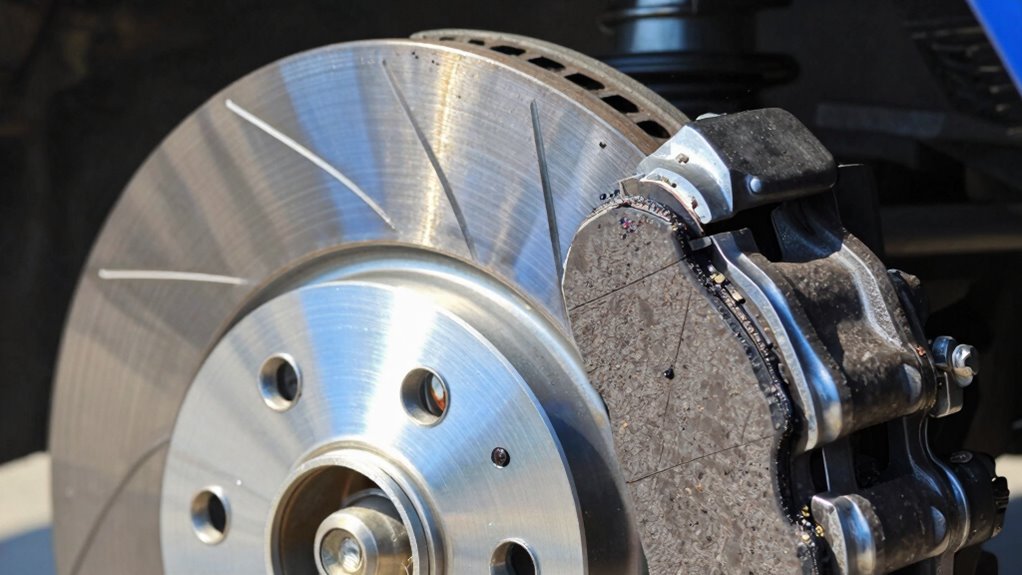
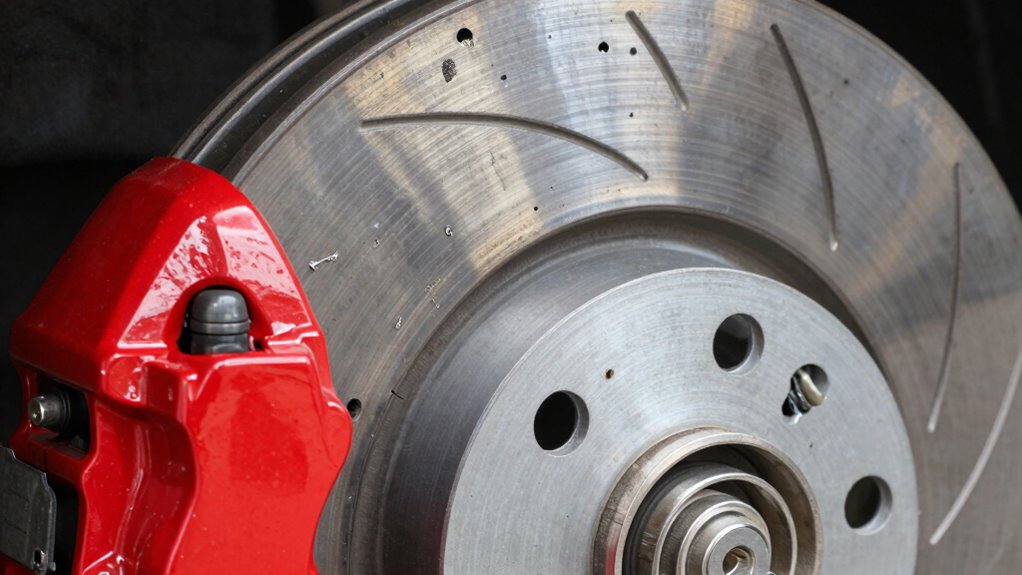
The rotor surface finish plays a critical role in whether your brakes squeal after an upgrade. If the rotors are new, their surface finish might be rougher or uneven, especially if they’re machined or haven’t been properly broken in. A rough rotor surface finish can cause uneven contact with the brake pads, leading to vibrations and noise. On the other hand, a smooth, well-finished rotor surface ensures better contact and helps dampen vibrations, reducing squeal. Sometimes, during installation, the rotors might not be properly cleaned or the surface might develop rust or debris, which can also cause squealing. Additionally, rotor surface finish compatibility with your brake pads is crucial for minimizing noise. Ensuring that the rotors are properly surface treatment can further help in reducing vibrations and squeal. Proper surface preparation before installation is also essential to achieve optimal braking performance. Moreover, understanding the material compatibility between pads and rotors can help prevent squeal issues from arising in the first place.
The interaction between your brake pad materials and rotor surface finish is delicate. If the materials are incompatible or if the rotor isn’t properly prepared, squealing can occur. Proper bedding-in procedures can help, as they transfer a layer of brake pad material onto the rotor surface, promoting smoother contact. Additionally, some high-performance brake pads come with shims or anti-squeal compounds, which help dampen vibrations and reduce noise.
In short, after a big upgrade, brake squeal often results from mismatched brake pad materials and rotor surface finish issues. Ensuring the rotors are properly finished, cleaned, and broken in, along with selecting appropriate brake pads, can markedly reduce or eliminate squealing. If the squeal persists, it’s worth consulting a mechanic to check for installation issues or consider different pad materials better suited to your driving style and the upgraded system.
Products Worth Considering

DEWALT 20V MAX 1/4-Inch Impact Driver Kit with Battery and Charger (DCF787D1)

Chemical Guys 14-Piece Arsenal Builder Car Wash Kit with Foam Blaster

Milwaukee 2697-22 M18 18-Volt Lithium-Ion Cordless Hammer Drill/Impact Driver XC Combo Kit (2-Tool)
As an affiliate, we earn on qualifying purchases.
Frequently Asked Questions
Can Brake Squeal Be Completely Eliminated?
Brake squeal can often be minimized but not completely eliminated. It depends on factors like brake material and rotor design. Using high-quality brake pads with anti-squeal properties and choosing rotors designed to reduce noise can help. Regular maintenance, proper installation, and ensuring components are clean and well-lubricated also reduce squealing. However, some noise may persist due to the physics of friction, so complete elimination isn’t always possible.
How Long Does Brake Squeal Usually Last?
Brake squeal typically lasts from a few days up to several weeks, depending on factors like brake pad materials and rotor surface finish. If your upgraded brakes are squealing, it’s often due to these components settling in. Usually, the noise diminishes as the brake pad materials adapt and the rotor surface finish smooths out. Regular driving and braking help expedite this process, and most squeals lessen within the first few weeks.
Does Weather Affect Brake Squeal Severity?
Weather impact can definitely influence brake squeal severity. Temperature fluctuations cause brake components to expand and contract, which can create or worsen squealing noises. Humid or wet conditions might also affect brake pad friction, making squeals more noticeable. You might find squealing worsens during extreme heat or cold. To minimize this, make sure your brake parts are properly installed and maintained, especially when weather changes considerably.
Are Aftermarket Brake Parts More Prone to Squealing?
Did you know 60% of drivers report brake squeal after upgrades? Aftermarket brake parts can be more prone to squealing, especially if the brake pad materials aren’t compatible with your rotor surface finish. Poor-quality pads or mismatched materials create vibrations, causing squeal. To minimize noise, make sure your parts are compatible and properly installed. Regularly inspecting and bedding in your brake components also helps reduce squealing issues.
When Should I See a Mechanic for Brake Squeal?
You should see a mechanic if brake squeal persists after a big upgrade, especially if you notice uneven brake pad materials or a rough rotor surface finish. Squealing can indicate that the brake pads aren’t properly seated or that there’s contamination or glazing. If noise continues despite adjustments, a mechanic can check for issues like worn components or improper installation, ensuring your brakes are safe and functioning efficiently.
Conclusion
So, after all that upgrading, you’d think your brakes would be squeal-free, right? Turns out, those high-performance parts might just be whispering their discontent in squeaky protest. Irony isn’t it? You boost your braking power only to be greeted by an unwelcome symphony. But hey, at least now you’re aware—next time, maybe just skip the upgrade and save your ears (and patience). Or, embrace the squeal; it’s practically a new soundtrack for your driving adventures!