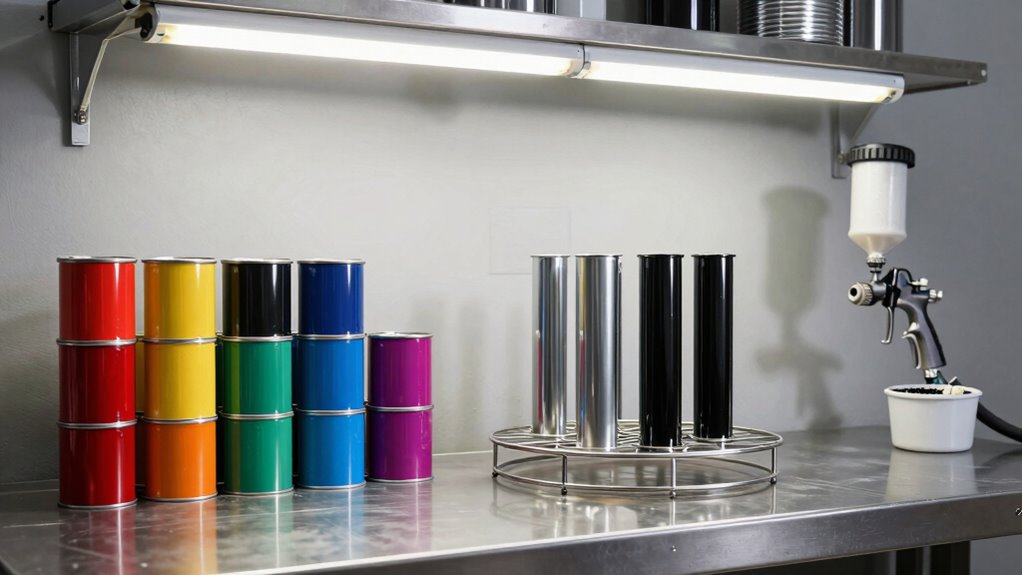

To create a powder coating setup that appeals to DIY fabricators, prioritize safety and efficiency with proper ventilation, exhaust systems, and personal protective gear like respirators and gloves. Make sure your equipment is thoroughly inspected and grounded regularly to prevent static and electrical hazards. Organize your workspace, keep tools maintained, and follow safety protocols for consistent results. With a well-planned setup, you’ll achieve professional finishes—keep exploring to discover how to optimize every aspect of your DIY powder coating system.

Get business pricing on garage and car supplies
- Business-only prices and quantity discounts
- Tax-exempt purchasing
- Multiple users, one account, clear invoices
Key Takeaways
- Choose a compact, portable powder coating booth with effective ventilation for easy setup in a home workshop.
- Use user-friendly, low-cost spray guns and simple grounding methods for safety and efficiency.
- Incorporate basic safety gear like respirators, gloves, and goggles for personal protection.
- Maintain organized workspace with proper storage for powders, tools, and safety equipment.
- Follow clear safety protocols and routine equipment checks to ensure a safe, consistent coating process.
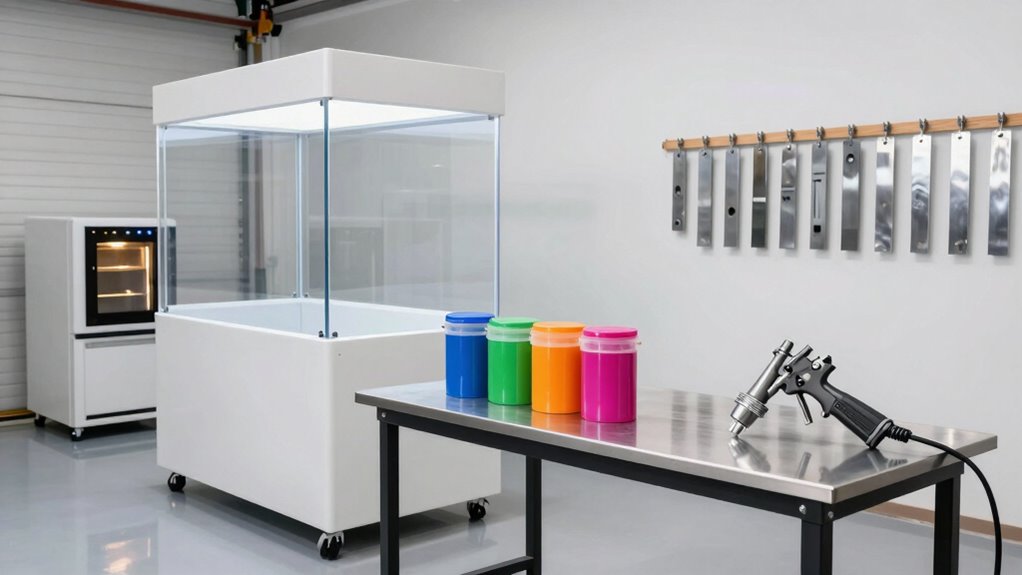
Setting up a powder coating station as a DIY fabricator can be a rewarding way to achieve professional-looking finishes at home. However, to do it right, you need to prioritize industrial safety and proper equipment maintenance. Safety isn’t just a suggestion—it’s essential when working with powders and high-voltage equipment. You’ll want to set up your workspace in a well-ventilated area, ideally with an exhaust system to remove any airborne particles. Wearing personal protective equipment like respirators, gloves, and safety glasses isn’t optional; it’s crucial to prevent inhalation or skin contact with potentially hazardous materials. Keep a fire extinguisher nearby, since powders can be flammable, especially when dispersed in the air. Handling powders carefully and understanding material safety data sheets (MSDS) will help you stay safe and avoid accidents. Regularly inspecting your equipment for proper grounding and electrical safety is also vital to prevent static buildup and electrical hazards. Incorporating grounding procedures into your routine can further enhance safety during operations. Additionally, using proper storage techniques for powders can help prevent spills and contamination that might compromise safety or finish quality. Proper ventilation in your workspace is vital to maintain air quality and reduce health risks associated with airborne particles.
Once safety measures are in place, focus on maintaining your equipment. Regular equipment maintenance is key to consistent, high-quality finishes and longevity of your setup. Clean your spray guns and filters after each use to prevent clogs and ensure even coating. Check the grounding of your powder booth and spray system to avoid static buildup, which can be dangerous and cause uneven application. Replace worn-out parts promptly—no shortcuts here—because faulty equipment can lead to poor finishes or safety hazards. Additionally, calibrate your spray gun regularly for consistent application thickness, which impacts both the finish quality and material efficiency. Incorporating preventive maintenance routines can significantly extend the lifespan of your equipment and improve safety. Remember, maintaining a clean workspace and proper airflow can also reduce the risk of accidents and ensure optimal coating results. Keeping your workspace organized and free of clutter can further mitigate potential hazards.
Investing in good-quality filters and properly sealing your booth helps contain overspray and airborne particles, making your workspace safer and cleaner. Remember, equipment maintenance isn’t just about repairs; it’s about preventing problems before they start. Keep a routine schedule to inspect and service your tools and systems, and document your maintenance activities to track their performance over time. This proactive approach reduces downtime and ensures your coatings are flawless and durable. Properly training yourself on the operation of your equipment and understanding safety protocols can also greatly enhance your work environment and outcomes.
As an affiliate, we earn on qualifying purchases.
Frequently Asked Questions
What Safety Precautions Are Essential for DIY Powder Coating?
You should always wear protective gear like a respirator mask, gloves, and goggles to shield yourself from harmful dust and fumes. Make sure your workspace has proper ventilation systems to prevent inhaling toxic particles. Keep the area well-ventilated, and consider using an exhaust fan to remove fumes efficiently. These safety precautions help you avoid health risks and create a safer environment for your DIY powder coating projects.
How Much Does a Basic Powder Coating Setup Cost?
A basic powder coating setup typically costs between $500 and $2,000. You’ll need equipment like a spray gun, oven, and prep area. Keep in mind, equipment maintenance is essential to guarantee consistent results and prolong your investment. When doing a cost comparison, consider not just the initial setup but also ongoing expenses like powders and electricity. This way, you’ll find a system that fits your budget and projects.
Can I Powder Coat All Types of Metals?
You can powder coat almost all metals, but success depends on proper metal preparation and coating durability. Steel, aluminum, and cast iron respond well when thoroughly cleaned and prepped, ensuring the coating adheres strongly. Some metals, like galvanized or zinc-coated, may require special primers for ideal results. If you prep correctly, your powder coating will last for years, transforming even the toughest metals into stunning, durable finishes.
What Are Common Mistakes to Avoid During Setup?
You should avoid common mistakes like neglecting proper equipment calibration and overlooking color matching. Make sure your spray gun and curing oven are calibrated for consistent coating thickness and finish. Double-check your color matching in different lighting conditions to prevent mismatched hues. Rushing setup or skipping thorough testing can lead to uneven coating or color inconsistencies. Taking time to calibrate equipment and meticulously match colors guarantees a professional, durable finish.
How Long Does a Typical Powder Coating Process Take?
A typical powder coating process takes about 1 to 2 hours, but it varies based on surface preparation and curing techniques. You’ll spend time thoroughly cleaning and prepping the surface to guarantee proper adhesion. After applying the powder, curing usually lasts 10-20 minutes at the recommended temperature. Proper surface preparation and following curing techniques help achieve a durable, professional finish efficiently, keeping your project on schedule.
Conclusion
Just like Icarus reaching for the sun, your powder coating journey takes flight with the right setup. Embrace the process, learn from each step, and don’t fear the heat—it’s your wings to a durable, professional finish. Keep refining your craft, for every masterpiece begins with a single coat. With patience and passion, you’ll craft creations that shine brighter than the stars. The sky’s the limit—dare to coat, dare to create.
Fall Picks
fall essentials
As an affiliate, we earn on qualifying purchases.