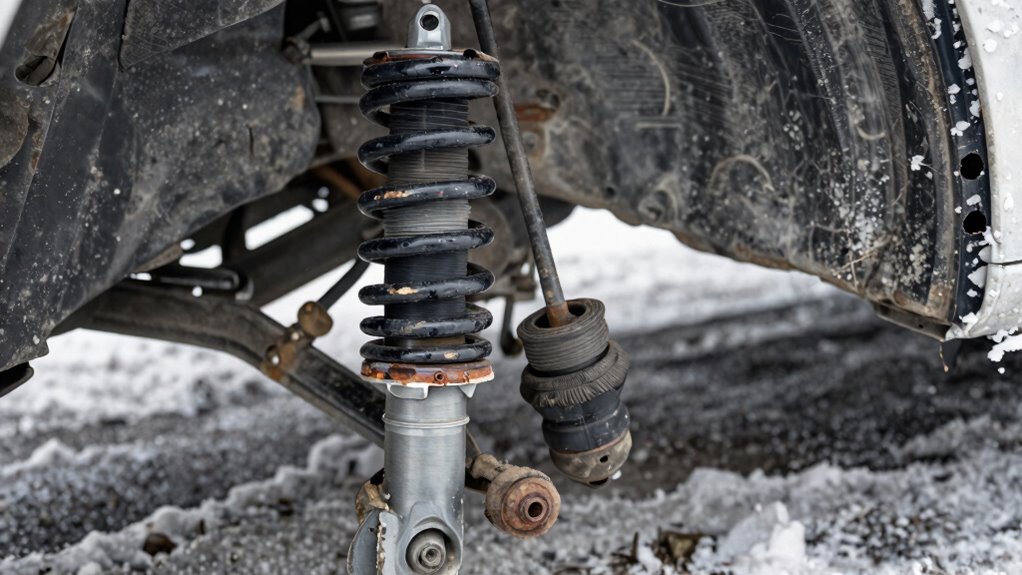
After a harsh winter or dusty season, start by checking if your coilovers are properly seated and look for uneven gaps or sagging in the springs. Inspect the entire assembly for rust, corrosion, or buildup, and clean any rust spots you find. Look for leaks around the shocks and tighten any loose hardware. Listen for unusual noises during a test drive, and, if you spot issues, addressing them early can save you from costly repairs later—learn more about maintaining your coilovers properly.

Get business pricing on garage and car supplies
- Business-only prices and quantity discounts
- Tax-exempt purchasing
- Multiple users, one account, clear invoices
Key Takeaways
- Check spring seating and tension for shifts, sagging, or uneven gaps.
- Inspect for rust, corrosion, and dirt buildup on all coilover components.
- Examine shock seals for leaks and tighten or replace hardware as needed.
- Look for physical damage, worn bushings, and listen for unusual noises during a test drive.
- Perform a test drive to assess handling, noise levels, and overall coilover performance.

After enduring the harsh conditions of winter or a dusty season, it’s crucial to inspect your coilovers to guarantee they’re still performing at their best. These elements endure a lot during tough seasons—exposure to moisture, dirt, and debris can take a toll on their functionality. Start by checking the spring adjustment, ensuring the springs are still seated correctly and haven’t shifted under extreme conditions. Proper spring adjustment is essential for maintaining ride comfort and handling, so if you notice any uneven gaps or sagging, make the necessary adjustments to restore proper tension. Remember, a well-adjusted spring can prevent premature wear and improve your vehicle’s stability.
Inspect coilovers after harsh seasons; ensure springs are seated and properly adjusted for optimal ride and stability.
Next, focus on corrosion prevention. Salt, mud, and moisture accelerate rust formation, especially on the metal components of your coilovers. Carefully inspect the entire coilover assembly, paying close attention to the threaded portions and the spring seats, where corrosion is most likely to develop. If you spot any rust or buildup, clean it off with a wire brush and apply a corrosion-inhibiting lubricant or protective spray designed for automotive parts. This simple step can markedly extend the lifespan of your coilovers and keep them functioning smoothly. Be thorough, especially around the adjustments and threaded areas, as corrosion here can hinder future spring adjustments and make adjustments more difficult. Regular corrosion prevention practices can significantly enhance the durability of your suspension components. Incorporating preventive maintenance routines can further safeguard your coilovers from severe damage.
While inspecting, also look for leaks or oil seepage from the shock absorbers. Any signs of fluid leakage indicate that the seals may be compromised, which can impair damping performance. If you find leaks, consider replacing the shock or having it professionally serviced. Check the mounting points and hardware for any signs of damage or looseness. Tighten any loose bolts and replace worn or damaged hardware to ensure your coilovers stay securely in place. Regular maintenance can help prevent costly repairs and keep your suspension system in optimal condition.
Finally, after cleaning and inspecting, perform a test drive to feel for any abnormal noises or handling issues. Listen for squeaks, clunks, or rattles that could point to worn bushings or loose components. Regular post-season inspections like these help catch potential problems early, saving you money and ensuring your coilovers perform reliably. By paying attention to spring adjustment and making corrosion prevention a priority, you help maintain ideal ride quality and extend the lifespan of your suspension system, so you can hit the road with confidence after every season. Additionally, considering proper maintenance practices can further enhance the longevity and performance of your coilovers.
coilover shock absorber repair kit
As an affiliate, we earn on qualifying purchases.
As an affiliate, we earn on qualifying purchases.
Frequently Asked Questions
How Often Should Coilovers Be Inspected After Winter?
You should inspect your coilovers at least once a month after winter to guarantee they’re in good shape. Focus on checking the spring tension and shock absorber performance, looking for any leaks, rust, or damage. Hard winter conditions can loosen or weaken components, so regular inspections help catch issues early, maintaining your ride’s handling and safety. Don’t forget to tighten any loose bolts or fittings during your check.
Can I Replace Coilover Parts Myself?
Yes, you can replace coilover parts yourself if you have DIY maintenance experience and the right tools. However, it’s crucial to follow proper procedures and safety precautions. After replacing parts, consider scheduling a professional inspection to ensure everything is correctly installed and functioning. This approach helps prevent potential issues and extends the lifespan of your coilovers, giving you peace of mind on the road.
What Tools Are Needed for Coilover Inspection?
You’ll need basic tools like a jack and jack stands to lift your vehicle safely. A wrench or socket set helps you loosen and check the spring tension and shock absorber mounts. A flashlight is useful for inspecting for corrosion or leaks. Additionally, a pry bar can test for play in the coilover parts. These tools allow you to assess if the spring tension remains consistent and the shock absorber operates smoothly.
How Do I Identify Internal Coilover Damage?
You can identify internal coilover damage by inspecting for leaks, corrosion, or unusual wear during your inspection. Use a flashlight to look inside the coilover for any signs of fluid leakage or metal debris. Feel for any roughness or inconsistent movement when compressing or extending the shock. These inspection techniques help you spot internal damage early, ensuring you address issues before they worsen and compromise your vehicle’s handling or safety.
Are There Specific Signs of Corrosion to Watch For?
Think of your coilovers as a shielded fortress; corrosion signs are like tiny cracks in the armor. Watch for flaky rust, discoloration, or pitting, especially around threaded areas and seals. These are signs of corrosion that threaten durability. To prevent this, apply corrosion prevention treatments regularly and address rust promptly with rust treatment. Doing so keeps your coilovers resilient, ensuring they perform smoothly and last longer through harsh seasons.
Conclusion
Think of your coilovers as the wings of your car’s spirit—after a harsh winter or dusty journey, they need care to keep soaring smoothly. A simple inspection is like tending to a trusted friend, ensuring they’re ready for the open road ahead. When you check for leaks, rust, or wear, you’re nurturing your car’s soul. Keep them in top shape, and you’ll always have the freedom to chase new adventures with confidence and ease.
Fall Picks
fall essentials
As an affiliate, we earn on qualifying purchases.