Quiet air compressors appeal to home garage owners because they let you work without disturbing your household or neighbors. You can finish tasks like inflating tires or powering tools without the loud noise of traditional models. This creates a more comfortable, less stressful environment and helps you avoid noise complaints. Plus, quieter compressors are easier to maintain and safer to use. Want to discover more about how they can improve your workspace? Keep exploring to find out!

Get business pricing on garage and car supplies
- Business-only prices and quantity discounts
- Tax-exempt purchasing
- Multiple users, one account, clear invoices
Key Takeaways
- They reduce noise disruption, enabling early morning or late-night work without disturbing household members or neighbors.
- Create a more comfortable and less stressful workspace by minimizing loud compressor noise.
- Support noise-sensitive activities like woodworking or inflating tires in a quieter environment.
- Promote better relationships with neighbors due to decreased sound levels.
- Offer safer, more reliable operation with less mechanical wear and maintenance.
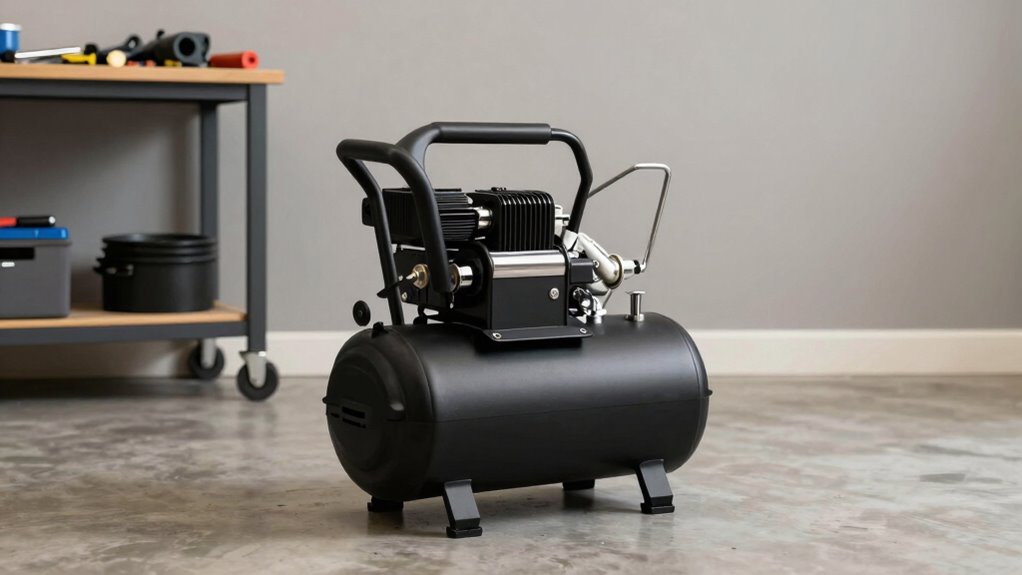
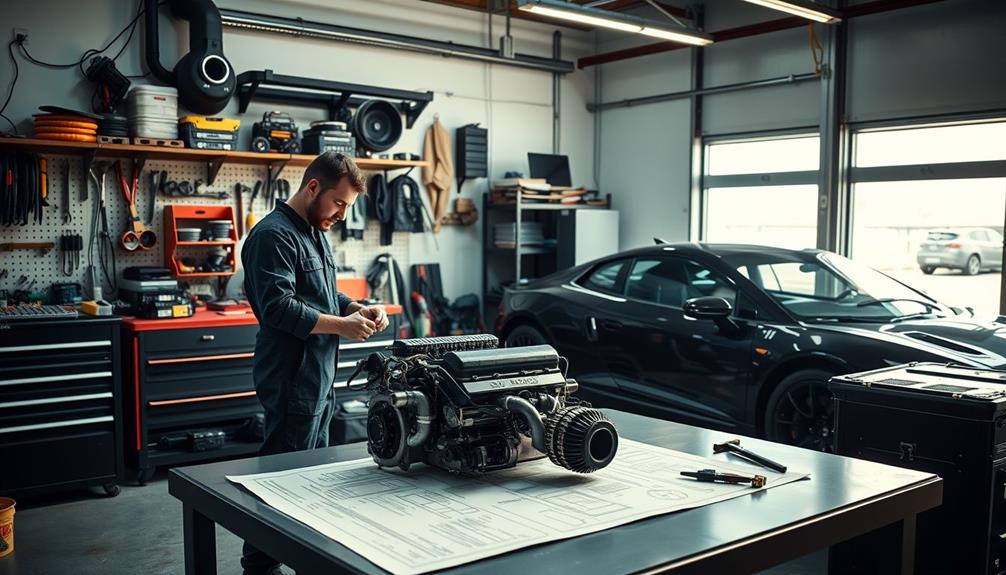
Are loud noise levels from traditional air compressors disrupting your home garage workspace? If so, you’re not alone. Many home garage owners find that the noise generated by standard compressors can be downright overwhelming, especially if you use your garage for hobbies, crafts, or working from home. That’s where quiet air compressors come into play. These models are designed specifically to reduce noise levels, making your workspace more comfortable and less intrusive for both you and your neighbors. With a quieter compressor, you can work longer without feeling exhausted by the constant racket, and you can even carry out tasks early in the morning or late at night without disturbing others.
One of the biggest appeals of quiet air compressors is their ability to improve noise reduction in your garage environment. Unlike traditional units that can reach decibel levels comparable to a lawnmower, these quieter models operate at a whisper-quiet volume. This benefit is especially significant if you share your garage space with other household members or if you live in close proximity to neighbors. Reduced noise not only enhances your comfort but also helps you maintain good relationships with those around you. Plus, a quieter compressor means fewer distractions, allowing you to focus better on your projects, whether it’s woodworking, inflating tires, or powering pneumatic tools. Additionally, some models feature advanced noise-reduction technology, further enhancing their quiet operation. Investing in a noise-reduction feature can significantly improve your overall experience and satisfaction with your compressor. Moreover, these models often incorporate soundproofing materials, which contribute to their ability to operate at lower noise levels.
Another reason these compressors are gaining popularity is that they tend to be easier to maintain. Many quiet air compressors feature simpler designs and fewer moving parts, which makes routine maintenance tips straightforward. Regularly checking and changing the air filters, draining moisture from the tank, and inspecting hoses are all simple tasks that help keep your compressor running smoothly. Because they operate more efficiently and generate less heat, these units often require less frequent maintenance. This means less downtime and longer-lasting equipment, saving you both time and money over the long term. Additionally, their design simplicity often results in quieter operation and fewer mechanical issues. Furthermore, their reduced noise levels can contribute to a safer working environment by minimizing auditory fatigue and stress. These advantages make quiet air compressors an appealing choice for those seeking reliable and low-maintenance equipment.
quiet air compressor for home garage
As an affiliate, we earn on qualifying purchases.
As an affiliate, we earn on qualifying purchases.
Frequently Asked Questions
How Long Do Quiet Air Compressors Typically Last?
Quiet air compressors typically last between 8 to 15 years, depending on usage and maintenance. Their noise reduction features often mean they operate more smoothly, which can enhance compressor durability. Regularly checking oil levels, cleaning filters, and avoiding overuse can extend their lifespan. You should expect a well-maintained quiet compressor to serve you reliably for many years, making it a smart investment for your home garage.
Can Quiet Compressors Handle Heavy-Duty Tasks?
Quiet compressors can handle heavy-duty tasks if they have enough power capacity, but their lower noise levels don’t mean they’re less effective. You need to check the compressor’s specifications, especially its PSI and CFM ratings, to guarantee it can handle demanding jobs. While quieter models are great for reducing noise, make sure their power capacity aligns with your heavy-duty needs before relying on them for tough tasks.
Are Quiet Air Compressors More Energy-Efficient?
Quiet air compressors are generally more energy-efficient because their noise reduction features often include better insulation and advanced motor designs, which minimize energy waste. When you’re using a quieter model, you tend to operate it more consistently and comfortably, leading to energy savings overall. Plus, these compressors often run more smoothly, reducing strain on the motor and enhancing their efficiency, making them a smart choice for home garage owners looking to save energy.
How Loud Are Quiet Compressors Compared to Standard Ones?
Quiet compressors usually operate around 60-70 decibels, markedly lower than standard models, which often reach 80-90 decibels. You’ll notice a clear difference in sound levels, thanks to noise reduction features built into quieter models. This lower noise level makes your workspace more comfortable and less disruptive, especially if you work in a shared garage or nearby living spaces. Overall, quiet compressors keep sound levels manageable, enhancing your garage environment.
Do Quiet Compressors Require More Maintenance?
Quiet compressors typically don’t require more maintenance; in fact, their noise reduction features often make inspections easier. You might find that maintenance frequency stays similar to standard models, but the quieter operation reduces the wear on components. With fewer vibrations and less noise, you can perform regular upkeep comfortably and efficiently. Overall, quiet compressors offer reliable performance without demanding extra maintenance, making them a smart choice for home garage owners.
Conclusion
So, if you value a peaceful, distraction-free workspace, quiet air compressors are your best bet—they turn your garage into a sanctuary of productivity rather than a noisy chaos zone. With noise levels so low, you’ll forget they’re even there—like a whisper in a hurricane. Investing in one transforms your DIY projects, making them more enjoyable and less stressful. Trust me, once you experience the serenity, you’ll wonder how you ever worked without it!
Fall Picks
fall essentials
As an affiliate, we earn on qualifying purchases.