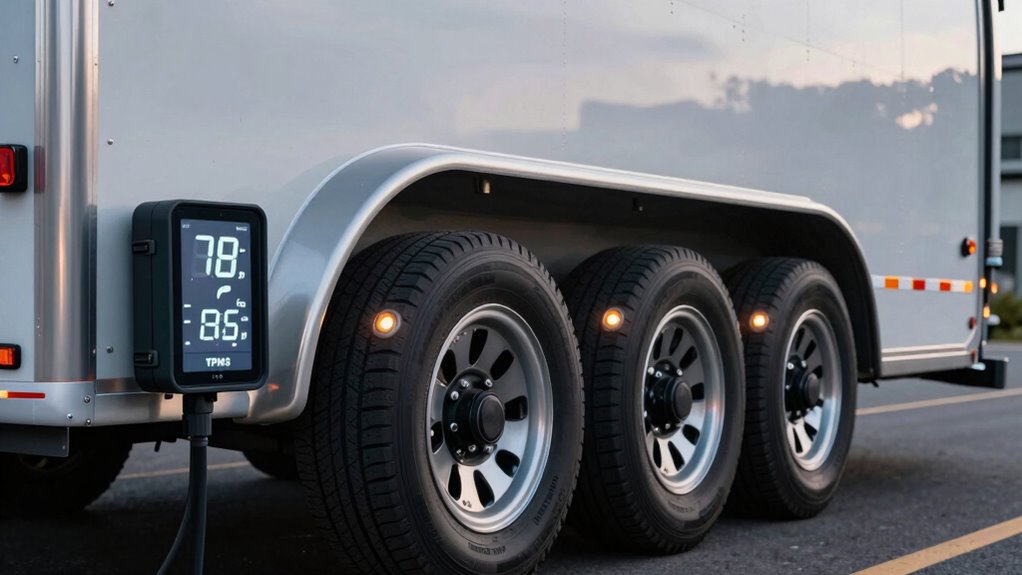
Trailer TPMS systems make more sense than ever for long trips because they provide real-time tire pressure and temperature updates, so you can catch issues early and prevent blowouts or failures. They reduce the need for manual checks, allowing you to focus on the road and stay safe. With reliable alerts, you’ll know the condition of your tires at all times. Keep going to discover how choosing the right system can make your journey safer and smoother.

Get business pricing on garage and car supplies
- Business-only prices and quantity discounts
- Tax-exempt purchasing
- Multiple users, one account, clear invoices
Key Takeaways
- Real-time alerts help prevent tire blowouts during extended travel, enhancing safety and reducing roadside emergencies.
- Wireless, automated monitoring minimizes manual checks, saving time and ensuring continuous tire condition awareness.
- Accurate pressure and temperature data optimize tire performance, reducing wear and improving fuel efficiency on long trips.
- Modern TPMS features smartphone alerts and reliable sensors support proactive maintenance and quick issue resolution.
- Prioritizing high-quality systems with long battery life and easy installation ensures consistent, trouble-free monitoring over miles.
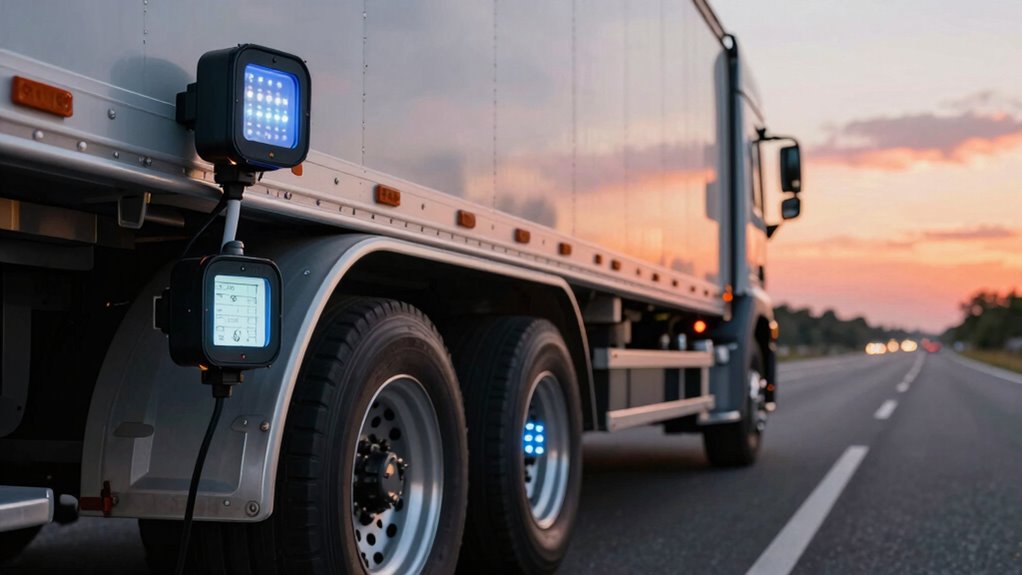
When you’re planning long trips with your trailer, maintaining proper tire pressure is essential for safety and performance. This is where a trailer TPMS (Tire Pressure Monitoring System) becomes a game-changer. Instead of manually checking each tire, a TPMS provides real-time tire pressure data, alerting you immediately if there’s a drop or spike. This constant tire pressure monitoring helps you avoid blowouts or tire failures that could turn a smooth trip into a dangerous situation. Properly inflated tires are crucial for vehicle safety, especially when you’re hauling heavy loads over long distances, unpredictable terrains, or through varying weather conditions. By keeping an eye on your tires’ pressure with a TPMS, you’re actively reducing the risk of accidents caused by under-inflated or over-inflated tires.
Maintaining proper tire pressure with a TPMS enhances safety and prevents dangerous blowouts during long trailer trips.
Long trips demand more than just good planning; they require reliable systems that keep you informed without constant manual checks. A trailer TPMS is designed to do just that. It continuously monitors each tire’s pressure and temperature, providing you with live updates through a display or even smartphone alerts. This proactive approach means you can catch issues early, before they escalate into serious problems. Imagine feeling confident knowing that your tires are being watched 24/7, allowing you to focus more on the road and less on tedious inspections. When tire pressure monitoring becomes automated, it enhances your overall vehicle safety by preventing sudden tire failures that could endanger you and your passengers. Incorporating real-time monitoring can significantly enhance your awareness of tire health, especially during extended trips where conditions can vary unexpectedly. Additionally, modern TPMS systems often utilize wireless technology, making installation more straightforward and reducing clutter around your trailer. Furthermore, understanding the importance of proper tire maintenance can help you maximize the benefits of your TPMS system for safer long-distance travel. Regularly checking your tires and understanding how to respond to alerts is vital for maintaining optimal tire pressure and overall safety. To further optimize your experience, choosing a reliable TPMS system with good battery life and accurate sensors can make all the difference in ensuring peace of mind during your journey.
Trailer TPMS system with smartphone alerts
As an affiliate, we earn on qualifying purchases.
As an affiliate, we earn on qualifying purchases.
Frequently Asked Questions
How Often Should Trailer TPMS Sensors Be Calibrated?
You should calibrate your trailer TPMS sensors at least once a year or whenever you notice inconsistent tire pressure readings. Regular calibration guarantees accurate sensor durability and reliable tire pressure monitoring, especially during long trips. Check your vehicle’s manual for specific recommendations, but don’t forget to verify sensor accuracy after tire changes or repairs. Proper calibration helps prevent tire issues, saving you time and money on the road.
Can TPMS Systems Detect Slow Leaks Effectively?
Yes, TPMS systems can effectively detect slow leaks by monitoring changes in tire pressure over time. When the system senses a gradual pressure drop, it alerts you early, preventing potential blowouts or damage. This leak detection feature is especially valuable during long trips, where maintaining proper tire pressure is vital for safety and fuel efficiency. Regularly checking your TPMS guarantees you stay ahead of slow leaks before they become serious problems.
Are Trailer TPMS Systems Compatible With All Vehicle Types?
Think of trailer TPMS compatibility as a key that grants peace of mind; it varies with vehicle types. You’ll find some systems are designed for specific trailers or trucks, while others are more universal. For best results, choose a TPMS with durable sensors that can withstand rough road conditions. Always check your trailer’s compatibility and sensor durability to guarantee a smooth ride and accurate tire monitoring, no matter your vehicle.
What Is the Typical Lifespan of a Trailer TPMS Sensor?
A trailer TPMS sensor typically lasts around 5 to 7 years, but sensor durability can vary based on usage and environmental conditions. You should check calibration frequency regularly to confirm accuracy, especially if you notice inconsistent readings. Proper maintenance, like keeping sensors clean and protected from extreme weather, helps extend their lifespan. Replacing sensors as needed ensures reliable tire pressure monitoring during long trips, keeping you safe on the road.
Do TPMS Systems Require Professional Installation or Maintenance?
You can install your trailer TPMS system yourself, especially with clear installation guidance, making it feel like a smooth ride through a well-lit path. While professional help isn’t always necessary, proper setup guarantees sensor accuracy, preventing surprises on long trips. If you’re comfortable with basic tools, you’ll appreciate how easy it is to maintain and trust your system, keeping your journey safe and worry-free.
Conclusion
Considering the benefits, it’s clear that trailer TPMS systems are more valuable than ever for long trips. They provide real-time tire pressure data, helping you avoid blowouts and costly repairs on the road. While some might think monitoring tires manually is enough, the truth is that technology offers peace of mind and safety you can’t afford to ignore. Investing in a TPMS system truly makes long journeys safer and more stress-free—so why not prioritize it?
Halloween Picks
halloween
As an affiliate, we earn on qualifying purchases.