
TL;DR

Get business pricing on garage and car supplies
- Business-only prices and quantity discounts
- Tax-exempt purchasing
- Multiple users, one account, clear invoices
Paul Seixas has called for better race organisation after 19-year-old Finlay Tarling died in August when a non-race vehicle entered the Volta a Portugal course and collided with him. A police investigation is ongoing, while riders and cycling officials continue to debate how to prevent vehicles from entering race routes.
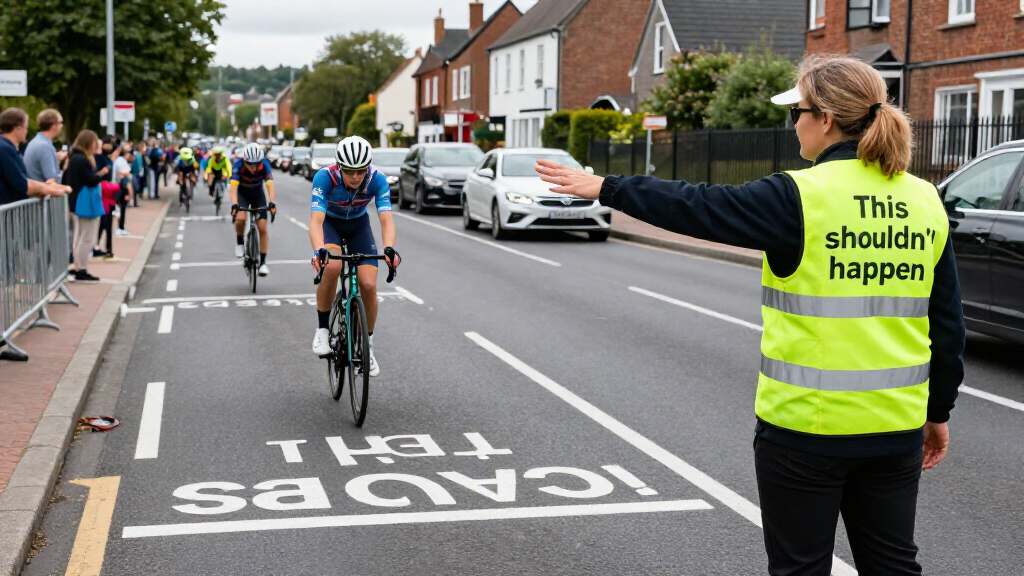
Paul Seixas has called for better race organisation after 19-year-old British rider Finlay Tarling died on August 14 in a collision with a non-race vehicle that had entered the Volta a Portugal course. Speaking to Canal+’s Clique this week, the Decathlon CMA CGM rider said vehicles striking cyclists during races “shouldn’t happen”; police are investigating Tarling’s death.
Seixas said Tarling’s death had affected him personally because they had raced together. He described the incident as “terrible” and said it had affected riders across the sport. His comments focus on the presence of ordinary vehicles on race routes and the standards used to secure courses, rather than making a finding about how the collision occurred.
“Sometimes there really are concerns about how races are organised,” Seixas said, while acknowledging that organisers are doing their best. He added that “sometimes there need to be better standards.” He also said families are affected when riders die and called the risks “frightening.”
Seixas took part in a five-minute safety protest before Il Lombardia this year, which he later won. Riders including Tom Pidcock and Ben Healy also posted a joint statement on social media calling on the UCI and race organisers to “take accountability and act” against cars on courses. The statement said: “We will not stand for this any longer.”
Pressure to Keep Cars Off Race Routes
Tarling’s death has sharpened concerns about the danger posed when vehicles enter roads being used by professional races. Seixas’s remarks add a prominent rider’s voice to calls for changes, while the reported incidents since Tarling’s death suggest the problem has not been eliminated.
The issue involves a practical challenge as well as a call for accountability. A race route can extend for hundreds of kilometres across public roads, where junctions and access roads may allow traffic onto the course. Riders, teams, organisers and governing bodies have different roles in managing that risk, but the consequences of a breach can be severe. The debate matters to riders and families, and to the public whose roads host races.
Products Worth Considering

VIOFO A229 Plus Dual-Channel 2K Dash Cam with Front and Rear HDR

Nextbase iQ 4K Smart HD Dash Cam Pro with 64GB microSD Card – Front and Rear View, 1440p, Smart Sense Parking, Emergency SOS, Roadwatch AI

DEWALT 20V MAX XR Impact Driver, 1/4 Inch High Torque Brushless 3-Speed Cordless with LED Light, Extended Runtime (DCF845B)
As an affiliate, we earn on qualifying purchases.
Safety Protests and Existing Measures
The UCI launched SafeR in 2023, a cycling safety body that it describes as independent. It is funded by the governing body, race organisers, riders and teams. In September, the UCI called for safety-tracking systems to be introduced across professional road races “as quickly as possible.” The source report does not specify a rollout timetable or explain which systems would be used.
Safety concerns have also prompted proposals beyond existing structures. Last month, British rider Matthew Brennan told BBC Sport that an independent safety body should be created, saying it was “disgraceful” that “nothing has changed” following Tarling’s death. That is Brennan’s assessment; the UCI’s SafeR body already exists, though its funding and independence have been debated.
Race organisers have pointed to the scale of road closures and course access as a major obstacle. Kiko García, technical director of the Vuelta a España and managing director of the International Association of Cycling Race Organisers, told Cycling Weekly that a 200-kilometre race can have more than 300, 400 or 500 small roads leading onto the course, depending on the region.
““We will not stand for this any longer.””
— Riders including Tom Pidcock and Ben Healy, in a joint social media statement
Investigation and Safety Changes Pending
The police investigation into Tarling’s death is ongoing. The available reporting does not give further findings about the collision, identify the driver, or state whether charges have been filed. Seixas’s comments call for better standards but do not establish the precise circumstances of the crash or assign responsibility.
It is also unclear what specific changes will follow the riders’ protest or the UCI’s call for safety-tracking systems. The source report does not set out a deadline, implementation plan or evidence that such systems have been adopted across professional races. Further vehicle incidents have been reported since Tarling’s death, including at the Sauerlandrundfahrt, Coppa Bernocchi and Eneco Tour, but the supplied account does not provide dates or full details for each incident.
Police Inquiry and UCI Follow-Through
The next confirmed step is the continuing police investigation into Tarling’s death. Any findings could clarify how the vehicle reached the course and what happened before the collision; no timetable for the investigation is provided in the source material.
Attention will also remain on whether the UCI, race organisers and SafeR turn safety proposals into operational changes. The UCI has called for tracking systems to be put in place quickly, but a schedule and specific measures have not been announced in the supplied report. Seixas’s remarks and the riders’ protest keep pressure on those groups to explain what action they will take.
Key Questions
Who was Finlay Tarling?
Finlay Tarling was a 19-year-old rider who died on August 14 after colliding with a non-race vehicle that had entered the Volta a Portugal course.
What did Paul Seixas say about race safety?
Seixas said that riders being struck by cars during races “shouldn’t happen” and called for better standards of race organisation. He also said Tarling’s death had affected him and other riders.
What is SafeR?
SafeR is a cycling safety body launched by the UCI in 2023 and described by the governing body as independent. It is funded by the UCI, race organisers, riders and teams.
Has the investigation into Tarling’s death concluded?
No. The source report says the police investigation is ongoing. It does not provide findings or a timetable for its conclusion.
What action has the UCI proposed?
In September, the UCI called for safety-tracking systems across professional road races to be put in place “as quickly as possible.” The report does not give a rollout schedule or describe the systems in detail.
Source: cyclingweekly.com