

For fueling an 800+ HP GM truck, in-tank pumps are often preferred because they handle high flow rates reliably and stay cool using the fuel as a natural coolant. Inline pumps can also work but may need extra cooling and proper sizing to prevent overheating under heavy loads. Installation complexity varies—you might find in-tank pumps more challenging but more durable. Keep exploring the options to choose the best setup for your power needs.

Get business pricing on garage and car supplies
- Business-only prices and quantity discounts
- Tax-exempt purchasing
- Multiple users, one account, clear invoices
Key Takeaways
- In-tank pumps provide reliable high flow rates and natural cooling, ideal for 800+ HP GM trucks.
- Inline pumps are easier to install and maintain but may require additional cooling solutions for high-performance setups.
- For maximum fuel delivery and consistent pressure, in-tank pumps are preferred in high-horsepower applications.
- Proper sizing and cooling are essential for inline pumps supporting 800+ HP engines to prevent overheating.
- Choice depends on vehicle space, ease of access, and desired reliability in supporting high-performance fuel demands.
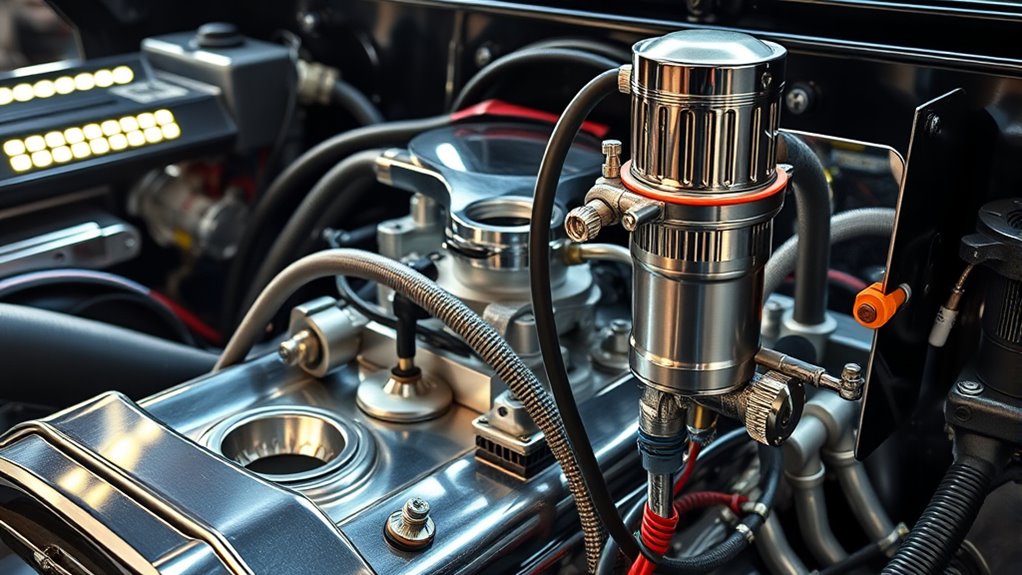
When choosing between in-tank and inline pumps, understanding their differences is crucial for selecting the right solution for your application. For a high-performance setup like fueling an 800+ HP GM truck, fuel flow rates and installation complexity are critical factors. In-tank pumps are designed to be submerged within the fuel tank, which allows them to operate efficiently at high fuel flow rates needed for powerful engines. They typically provide consistent pressure and volume because the fuel acts as a natural coolant, helping prevent overheating during extended or demanding runs. This stability is indispensable when you’re pushing the limits of your truck’s performance.
On the other hand, inline pumps are installed outside the fuel tank and draw fuel through a line. They’re often more straightforward to install since you don’t need to modify your tank or worry about fitting a pump inside it. This reduced installation complexity can save you time and effort, especially if you’re working with a vehicle that already has limited space or if you prefer a more accessible setup for maintenance. However, inline pumps might require additional cooling solutions, like external heat sinks or dedicated fuel coolers, to match the sustained fuel flow rates that in-tank setups naturally support.
Fuel flow rates are essential because your high-horsepower engine demands a steady, ample supply of fuel. In-tank pumps generally handle higher flow rates more reliably because they’re positioned directly in the fuel source, minimizing pressure drops and ensuring your engine gets the volume it needs. Inline pumps can also deliver high flow rates but often need to be sized correctly and paired with proper cooling to prevent overheating or pressure drops under heavy loads.
Choosing between the two hinges on your specific needs. If you prioritize reliability and maximum fuel flow rates for your high-performance truck, an in-tank pump might be the better choice—though it requires more complex installation. If you want a simpler, more accessible setup and are comfortable with managing additional cooling solutions, an inline pump could suffice. Both options can support 800+ HP setups, but your decision should balance the importance of installation complexity against the fuel demands of your engine. Ultimately, understanding these factors ensures you select a fueling system that’s both effective and durable for your truck’s performance goals.
Products Worth Considering

Autel MaxiCharger Level 2 EV Charger, 40A, 240V, 25-Foot Cable, NEMA 14-50 Plug

Vantrue N4 Pro S 4K 3-Channel Dash Cam with Triple STARVIS 2 Sensors

Autel MaxiCharger AC Home Level 2 EV Charger, 50A, J1772, Wi-Fi, Hardwired, 25 ft
As an affiliate, we earn on qualifying purchases.
Frequently Asked Questions
How Do Pump Choices Affect Fuel System Reliability?
Choosing the right pump directly impacts your fuel system’s reliability. A good pump guarantees consistent fuel pressure stability, preventing fluctuations that could harm your engine. It also minimizes pump noise, keeping your truck quieter under load. If you opt for a pump that’s not designed for high horsepower, you risk pressure drops and noise issues, which can lead to fuel delivery problems and potential engine damage.
Can Both Pump Types Be Used Together?
Imagine upgrading your truck’s fuel system by combining an in-tank and inline pump. Yes, you can do this, but it adds complexity and potential pump noise issues. You’ll need careful planning to make certain of proper installation and prevent fuel delivery problems. Combining both pumps can improve flow for high horsepower, but it’s essential to take into account installation difficulty and noise levels to keep your setup reliable and quiet.
What Maintenance Is Required for High-Performance Pumps?
You need to regularly check your fuel filter and replace it as recommended to prevent debris from damaging your pump. Keep an eye on pump performance; if you notice any issues, consider timely pump replacement. For high-performance pumps, maintenance is vital to guarantee peak fueling and avoid failures. Following manufacturer intervals and inspecting components help maintain your truck’s power and reliability, especially when pushing beyond standard horsepower levels.
How Does Fuel Pump Placement Impact Vehicle Weight Distribution?
You should consider how fuel pump placement affects your vehicle’s fuel weight distribution and chassis balance. Placing the pump in the tank helps keep the fuel weight centered, improving handling and stability. Conversely, inline pumps mounted outside the tank add weight higher up or at the rear, potentially shifting chassis balance and affecting cornering. Proper placement ensures *ideal* weight distribution, enhancing performance and safety.
Are Aftermarket Pumps Compatible With Stock Fuel Systems?
You’ll find that aftermarket pumps often offer better fuel compatibility for high-performance needs, but compatibility depends on matching pump specs with your stock system. Always check if the pump’s flow rate and pressure align with your vehicle’s requirements. Also, consider pump longevity; quality aftermarket options tend to last longer and perform more dependably, ensuring your truck maintains ideal fuel delivery even under demanding conditions.
Conclusion
Choosing between in-tank and inline pumps is like selecting the heartbeat of your truck’s performance. Each pump type symbolizes a different path—one steady and hidden, the other direct and bold. Whichever you pick, remember it’s the engine’s lifeblood fueling your 800+ hp dreams. Trust your vision, and keep the passion flowing—because a powerful truck isn’t just built; it’s fueled by the choice you make behind the scenes.


