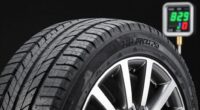
To protect your sidewalls and maximize grip, check your tire pressures and temperatures at least every few laps during your track day. Use a reliable gauge and infrared thermometer to measure cold pressures and initial temps, then monitor as tires warm up. Adjust pressures beforehand based on expected heat buildup to ensure ideal contact patch. Staying vigilant with quick checks helps prevent damage and boosts performance—keep going, and you’ll learn how to master this simple yet essential routine.

Get business pricing on garage and car supplies
- Business-only prices and quantity discounts
- Tax-exempt purchasing
- Multiple users, one account, clear invoices
Key Takeaways
- Check and record tire pressure at operating temperature before hitting the track.
- Use a quality gauge and infrared thermometer to monitor pressure and temperature during sessions.
- Adjust initial tire pressure lower than street levels to account for heat-induced pressure increase.
- Repeatedly measure tire temps and pressures every few laps to detect fluctuations early.
- Consistent monitoring and adjustments protect sidewalls, improve grip, and extend tire lifespan.
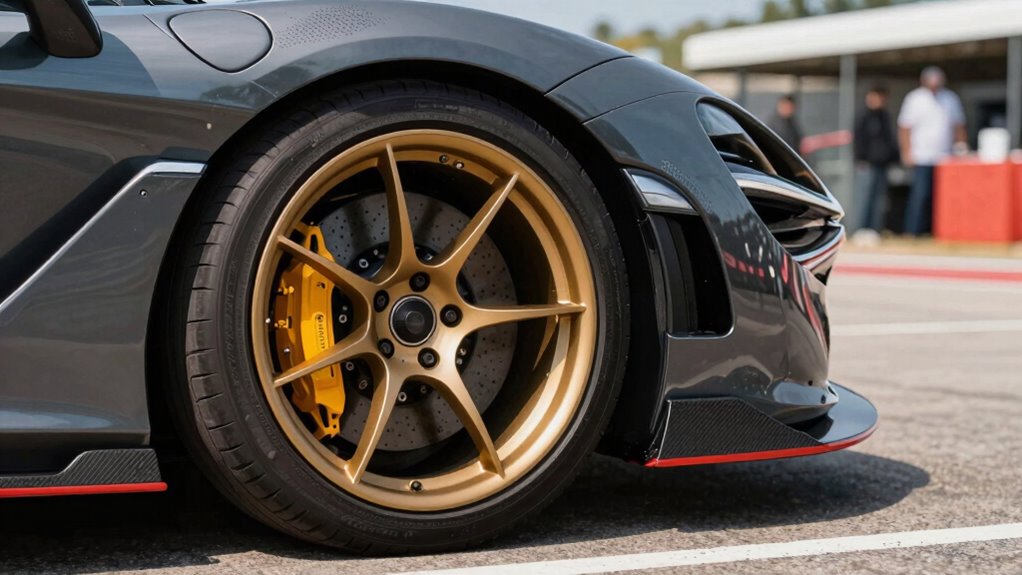
When heading to the track, maintaining the right tire pressure is essential for peak performance and safety. Your tires are the only contact point between your car and the asphalt, so getting this right can make all the difference. One critical aspect often overlooked is monitoring tire temperature, which directly influences tire pressure. As you push your car through corners and acceleration, the tires heat up. Increased tire temperature causes the air inside to expand, raising the pressure. If you don’t account for this, your tires could end up overinflated, reducing grip and increasing the risk of sidewall damage.
Proper tire pressure and temperature management are essential for safety and optimal track performance.
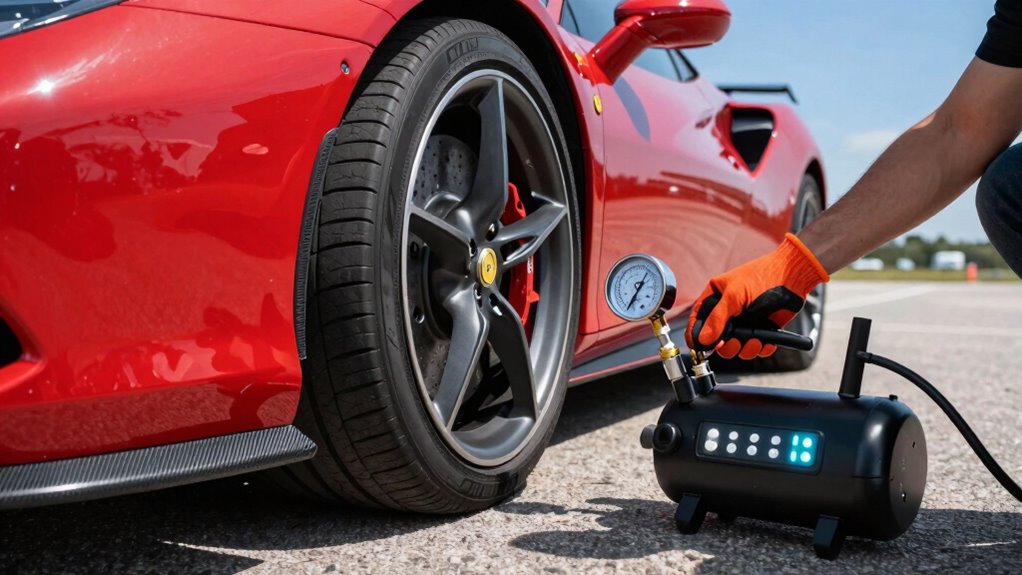
To avoid this, it’s crucial to incorporate pressure monitoring into your routine. Before hitting the track, check your tire pressure with a high-quality gauge. But don’t rely solely on a static reading; measure tire pressure when the tires are at their operating temperature, ideally after a few laps or a test run. This way, you get an accurate picture of how the tires perform under racing conditions. Many track enthusiasts use infrared thermometers or pressure sensors that provide real-time data, making it easier to spot when your tires are too hot or cold. Understanding tire behavior under load helps you better interpret your readings and make informed adjustments.
Once you’ve gathered your pressure and temperature readings, adjust your tire pressure accordingly. Lower initial pressures slightly compared to street driving because as the tires warm up, the pressure will naturally rise. This preemptive adjustment helps maintain ideal contact patch and grip during high-speed cornering. Remember, the goal isn’t just to set a number; it’s to understand how your tires behave under track conditions. Consistent pressure monitoring allows you to fine-tune your setup race after race, ensuring you’re always pushing with the best possible grip and sidewall protection.
Throughout your track session, keep an eye on tire temperatures and pressures at regular intervals—say every few laps—especially if conditions change or if you notice a sudden drop or spike. Small fluctuations can signal issues like uneven heat distribution or potential sidewall stress. By catching these signs early, you can make quick adjustments, preventing tire failure or excessive wear. This simple five-minute routine—checking, monitoring, and adjusting—can dramatically extend your tire’s sidewall life and improve your overall lap times.
In the end, mastering tire temperature management and pressure monitoring isn’t just about performance; it’s about safeguarding your investment and ensuring you stay safe on the track. It’s a quick, straightforward routine that pays off in better grip, longer tire life, and peace of mind during every lap.
digital tire pressure gauge for cars
As an affiliate, we earn on qualifying purchases.
As an affiliate, we earn on qualifying purchases.
Frequently Asked Questions
How Often Should I Check Tire Pressure During a Track Day?
You should check your tire pressure at least every 15-20 minutes during a track day. Many tire pressure myths suggest infrequent checks, but ideal pressure strategies demand constant monitoring to prevent sidewall damage. Keep an eye on your gauges, and adjust as needed to maintain consistent pressures. This routine helps you avoid overheating and ensures your tires perform safely, giving you better grip and control on the track.
What Tools Are Best for Quick Tire Pressure Adjustments?
Think of your tools as your pit crew’s secret weapons. A digital pressure gauge gives you quick, precise readings, while a portable air compressor is your trusty sidekick for fast adjustments. Together, they make fine-tuning your tire pressure a breeze, saving time and protecting your sidewalls. Keep these in your toolkit, and you’ll be ready to keep your tires in perfect shape—like a pro on the track.
Does Tire Pressure Affect Tire Wear During Track Sessions?
Yes, tire pressure directly impacts tire wear during track sessions. Proper pressure helps maximize your tire’s contact patch, considering the tire compound and tread pattern, which affects heat buildup and wear rates. Underinflated tires can cause excessive sidewall flex, leading to uneven wear, while overinflated tires reduce grip and cause flat spots. Regularly checking and adjusting pressure ensures even wear, prolongs tire life, and maintains peak performance on the track.
Should Tire Pressure Vary With Different Track Conditions?
Imagine your tires whispering secrets as you pivot on different tracks. You should vary tire pressure with track conditions because consistency matters. Softer surfaces demand lower pressure for better grip, while rougher ones need higher pressure to prevent sidewall damage. Adjusting for track surface effects guarantees peak performance and safety, giving you control and confidence. Keep an eye on tire pressure, and your tires will thank you with every turn.
How Does Ambient Temperature Influence Tire Pressure Readings?
Ambient temperature influences tire pressure readings by causing temperature fluctuations that affect the air inside your tires. As temperatures rise, the pressure increases, and when they drop, pressure decreases. You should regularly perform pressure calibration to account for these changes, especially before a track day. This ensures your tire pressures remain accurate, optimizing grip and sidewall protection, regardless of ambient temperature variations.
Conclusion
By spending just five minutes checking your tire pressure, you’re not just maintaining your car’s performance—you’re protecting your sidewalls from certain destruction. Skipping this routine could turn your perfect track day into a nightmare of shredded tires and costly repairs. Think of this simple habit as your secret weapon against disaster. Don’t let a tiny oversight ruin your day; make this quick check your weapon against the chaos lurking on every track.
Halloween Picks
halloween
As an affiliate, we earn on qualifying purchases.