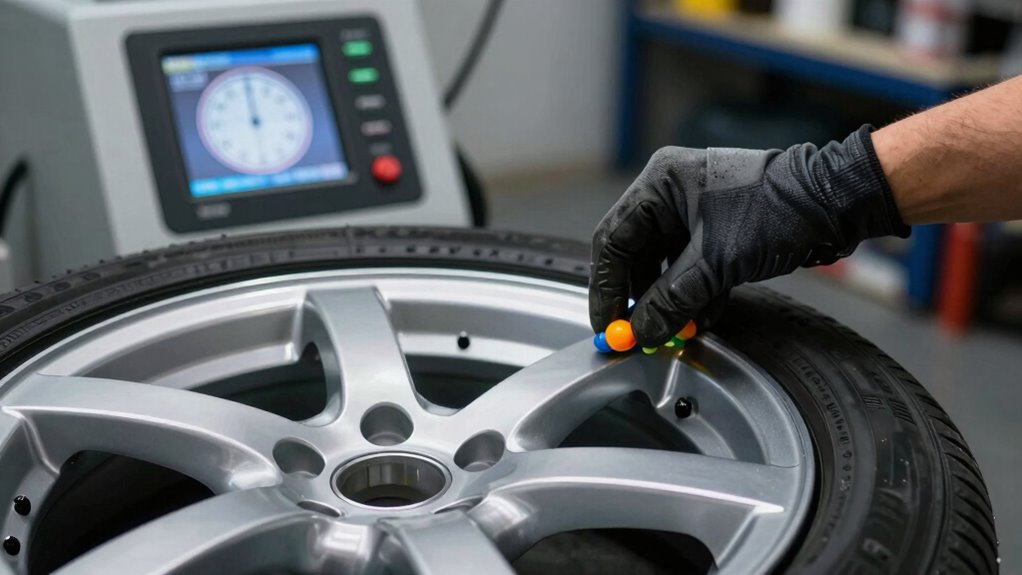
If normal tire balancing doesn’t eliminate vibrations or uneven wear, road force balancing can help. It uses specialized equipment to measure the actual forces exerted by each tire on the road, revealing subtle issues like imperfections or uneven contact that standard balancing might miss. Correcting these forces improves handling and extends tire life. Want to learn how this technique can solve persistent vibration problems and improve your drive? Keep exploring to find out more.
Key Takeaways
- Persistent vibrations despite standard balancing indicate underlying issues like uneven tire contact or imperfections.
- Road force balancing simulates road conditions, revealing forces and irregularities traditional methods may miss.
- It corrects misalignments and uneven force distribution, improving ride comfort and tire longevity.
- Combining road force balancing with wheel alignment ensures proper tire contact and optimal vehicle handling.
- Regular use helps detect problems early, preventing uneven tire wear and costly repairs.
Road force balancing is a specialized tire balancing method that guarantees your tires and wheels are perfectly calibrated for smooth driving. Unlike traditional balancing methods, it takes into account the actual forces exerted on your tires as they spin on the road. If you’ve noticed persistent tire vibration, even after regular balancing, it might be time to consider road force balancing. Tire vibration can stem from various issues, but often it’s caused by uneven tire contact with the road or slight imperfections that standard balancing doesn’t detect. This method measures the force exerted by each tire as it rotates and identifies unevenness that could lead to vibrations or uneven wear down the line.
Road force balancing ensures perfectly calibrated tires and wheels for smooth, vibration-free driving.
One common cause of tire vibration is misalignment of your wheels. When your wheels aren’t properly aligned, the tires don’t make uniform contact with the road, leading to vibrations and uneven tire wear. Even if your tires are balanced, misaligned wheels can cause persistent issues that standard balancing can’t resolve. Road force balancing goes a step further by addressing these underlying problems. During the process, a technician uses a specialized machine that simulates the force your tires experience on the road, revealing imperfections that might be invisible to traditional balancing methods. This allows for precise adjustments to ensure your tires sit perfectly on the road, reducing vibrations and extending tire life.
If you’re experiencing tire vibration despite having balanced your tires before, road force balancing can help pinpoint the root cause. It’s particularly effective when combined with a wheel alignment check. Proper wheel alignment ensures that your suspension components are correctly set, allowing your tires to contact the road evenly. When combined, these services optimize your vehicle’s handling, improve ride comfort, and prevent premature tire wear. This process isn’t just about smoother driving; it also enhances safety by maintaining proper contact between your tires and the road surface. Additionally, regular tire maintenance can help prevent issues that lead to vibrations and uneven wear.
In essence, if regular balancing hasn’t solved your tire vibration issues, road force balancing is a worthwhile investment. It ensures your wheels are perfectly aligned and your tires are balanced to handle the stresses of driving. This method not only smooths out your ride but also helps prevent costly repairs down the line by catching issues early. When you want a truly precise balance and to eliminate persistent vibrations, trust in road force balancing to deliver a safer, more comfortable drive.
Frequently Asked Questions
How Often Should I Have Road Force Balancing Performed?
You should have road force balancing performed whenever you notice uneven tire wear or if your vehicle vibrates at certain speeds. Regularly scheduling this service, especially after wheel alignment or tire replacement, helps confirm your tires wear evenly. It’s recommended every 6,000 to 8,000 miles or as advised by your mechanic. This keeps your wheels balanced precisely, improving ride comfort and extending tire life.
Can Road Force Balancing Fix All Types of Vibrations?
Road force balancing can considerably reduce most vibrations caused by uneven tire wear or wheel imbalance, but it doesn’t fix all types. If your vehicle vibrates due to wheel alignment issues or damaged tires, balancing alone won’t help. You’ll need to check your wheel alignment and inspect tires for wear or damage. Properly balancing and aligning your wheels ensures smoother rides and longer tire life, addressing most vibration problems effectively.
Does Road Force Balancing Require Special Equipment?
No, you don’t need a spaceship-grade device, but you do need specialized equipment to perform road force balancing effectively. It’s not a DIY project; it requires professional service to guarantee precision. This specialized gear measures tire and wheel conditions, identifying issues that regular balancing can’t fix. So, while it’s not rocket science, it’s definitely a job for trained technicians with the right tools to keep your ride smooth.
Is Road Force Balancing Suitable for All Vehicle Types?
Yes, road force balancing is suitable for all vehicle types, including cars, trucks, and SUVs. It effectively addresses issues like uneven tire wear and wheel imbalance that normal balancing might miss. You should consider it if you notice vibrations or uneven tire wear despite regular balancing. Plus, it helps guarantee your wheel alignment stays accurate, providing a smoother ride and extending tire life for any vehicle you drive.
How Long Does a Road Force Balancing Session Typically Take?
A road force balancing session usually takes about 45 minutes to an hour. During this time, you’ll notice improved tire wear and better ride quality, especially if your vehicle has uneven tire wear or wheel alignment issues. The process involves precise balancing to address imperfections that normal balancing can’t fix. It’s a quick yet effective way to make certain your tires roll smoothly and last longer, enhancing your driving experience.
Conclusion
So, next time you hit the road and feel that subtle vibration, remember—normal balancing might not be enough. Road force balancing can reveal hidden issues that could surprise you later. Are you truly prepared for what’s beneath the surface? Sometimes, the tiniest imbalance hides a bigger problem, waiting to disrupt your journey. Stay ahead, stay safe, and consider what’s really needed before that unexpected shake turns into a costly repair. The road’s secrets might be closer than you think.