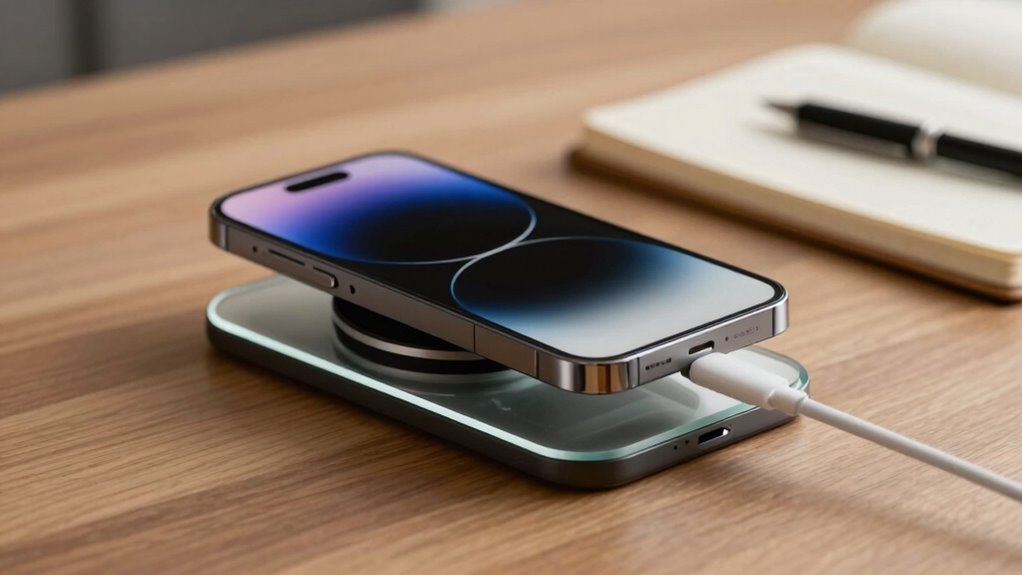
Your charging habits quietly impact your device’s long-term performance because frequent full discharges and charging to 100% accelerate battery wear. Keeping your battery between 20% and 80% and avoiding overnight charging can extend its lifespan. Hot environments and charging to full capacity often cause chemical stress, leading to capacity loss over time. If you want to understand how small changes in your routine can make a big difference, stick around for more tips.
Key Takeaways
- Frequent deep discharges accelerate battery wear, reducing long-term performance feel.
- Charging to 100% regularly causes gradual capacity loss, impacting device responsiveness.
- Keeping the charge between 20-80% minimizes chemical stress and preserves battery health.
- Charging in hot environments speeds up chemical reactions, leading to faster capacity degradation.
- Proper charging routines, like avoiding overnight charging, help maintain consistent device performance.
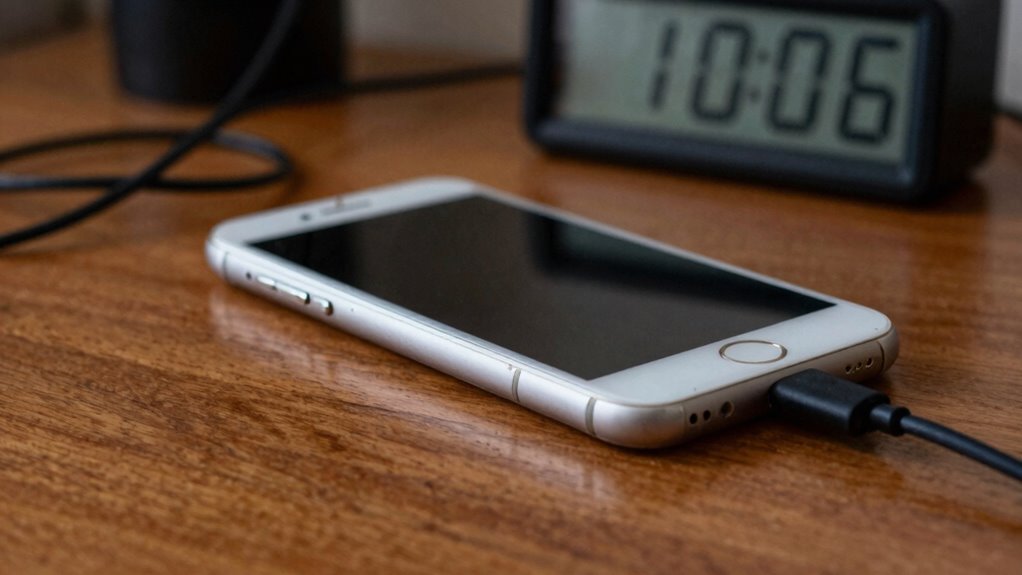
Charging habits substantially impact your device’s long-term performance. How you handle charging now can influence the lifespan of your battery and how well your device performs over time. Many people don’t realize that simple user behavior—like how often and how you charge—can cause battery degradation, which slowly diminishes your device’s capacity and efficiency. This deterioration happens gradually, often without noticeable symptoms until it’s too late, making it essential to understand the effects of your charging routines.
Frequent full discharges and recharges can accelerate battery wear. Lithium-ion batteries, which most devices rely on, aren’t designed for deep cycling every day. Instead, keeping the battery between about 20% and 80% charge can help preserve its health. When you regularly let your battery drain to 0%, you’re stressing the cells, speeding up deterioration. On the flip side, constantly charging to 100% can also be harmful, as high voltage levels contribute to wear over time. Your user behavior—such as unplugging at 80% or avoiding overnight charging—can make a significant difference in how long your battery remains healthy.
Keeping your battery between 20% and 80% and avoiding deep discharges helps extend its lifespan.
Another factor is the temperature during charging. If you frequently charge your device in hot environments or expose it to high temperatures while charging, you risk faster battery deterioration. Heat accelerates chemical reactions inside the battery, hastening capacity loss. So, being mindful of where and how you charge can help maintain ideal battery health. For instance, charging in a cool, ventilated space reduces stress on the battery, extending its lifespan and maintaining better long-term performance. Additionally, understanding the importance of battery chemistry can help users make smarter decisions about charging habits to prolong device longevity. Proper charging environment and avoiding temperature extremes are also crucial factors in preserving battery health over time. Being aware of battery degradation factors can help you adopt better charging practices and extend your device’s overall lifespan. Recognizing the impact of temperature on battery chemistry can further inform your charging choices and prevent premature wear.
Furthermore, being aware of battery management systems and their role in protecting battery health can assist in optimizing your charging routines for better longevity.
smartphone battery health monitor
As an affiliate, we earn on qualifying purchases.
As an affiliate, we earn on qualifying purchases.
Frequently Asked Questions
How Do Charging Habits Impact Battery Lifespan Over Years?
Your charging habits directly impact your battery lifespan over years. By practicing proper charging cycle management, you prevent overcharging and deep discharges, reducing wear. Regular battery calibration ensures accurate power readings, helping you avoid unnecessary recharges. Charging your device efficiently—avoiding extremes like 0% or 100%—keeps the battery healthy longer. Good habits extend your battery’s overall performance, saving you money and frustration over time.
What Are Signs of Poor Charging Habits Affecting Performance?
Your device’s battery may start to act like a stubborn mule when poor charging habits creep in. Signs include inconsistent performance, rapid battery drain, or sudden shutdowns. If your battery isn’t properly calibrated or you frequently skip full charging cycles, these issues can worsen. You might also notice inaccurate battery percentage readings, indicating your battery’s health is declining. Addressing these habits early can help maintain your device’s performance and lifespan.
Can Charging at Different Temperatures Influence Long-Term Battery Health?
Charging at different temperatures can substantially influence your battery’s long-term health. Temperature effects are essential; charging in extreme cold or heat can accelerate battery degradation. Maintaining charging consistency helps protect your battery, avoiding rapid cycles caused by temperature fluctuations. To optimize longevity, charge your device in moderate temperatures and avoid exposing it to extreme heat or cold during charging, ensuring your battery remains healthy and performs reliably over time.
Does Fast Charging Harm the Battery’s Long-Term Performance?
Fast charging can harm your battery’s long-term performance because it increases heat and stress on the battery chemistry. While convenient, frequent fast charging strains the charging infrastructure and accelerates capacity loss over time. To preserve your battery’s health, it’s best to use slower charges when possible and reserve fast charging for emergencies. This approach helps maintain ideal battery chemistry and prolongs overall battery lifespan.
Are There Optimal Charging Routines for Maintaining Peak Battery Efficiency?
To maintain peak battery efficiency, you should follow a consistent charging routine, avoiding extreme charge levels. Aim for partial charging cycles between 20% and 80%, which reduces stress on the battery. Regularly perform battery calibration by fully discharging and recharging your device monthly, ensuring accurate battery readings. These habits help preserve long-term performance, prevent capacity loss, and keep your device running smoothly over time.
Conclusion
By being mindful of your charging routines, you can master the subtle art of sustaining your device’s performance. Small shifts, like avoiding overcharging or letting batteries drain completely, make a mighty difference over time. Remember, consistent care creates a lasting legacy of longevity and performance. So, stay savvy, steer clear of shortcuts, and see how your smart habits subtly strengthen your device’s durability day after day. Keep charging conscientiously, and enjoy lasting performance that truly lasts!