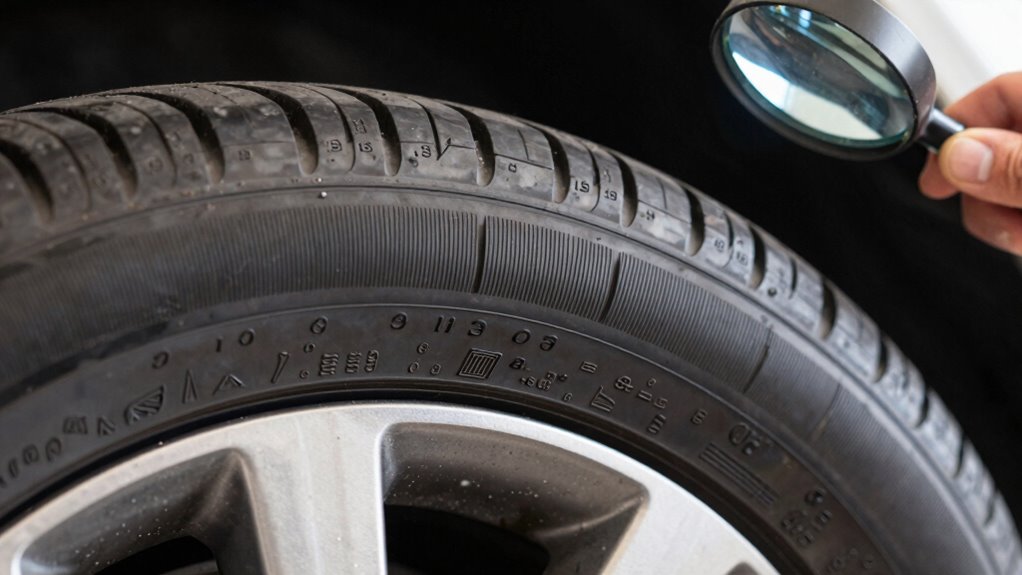
To interpret tire sidewalls accurately, focus on the standardized codes and markings. Look for the tire size, such as “P215/60R16,” which tells you about its type, width, aspect ratio, and diameter. Check the manufacturing date, often in a four-digit code like “2318,” indicating the week and year made. Additional info includes load capacity and construction type. If you want to understand all these details clearly, keep reading to discover more essential tips.
Key Takeaways
- Examine the tire sidewall for printed codes and markings clearly indicating size, date, and manufacturing details.
- Look for standardized sequences like “P215/60R16” for size and “2318” for manufacturing week/year.
- Use a tire sidewall chart or guide to interpret symbols and codes accurately.
- Focus on the tire’s sidewall markings rather than relying on visual or guesswork.
- Check the manufacturing date (week and year) to assess tire age and safety without guessing.
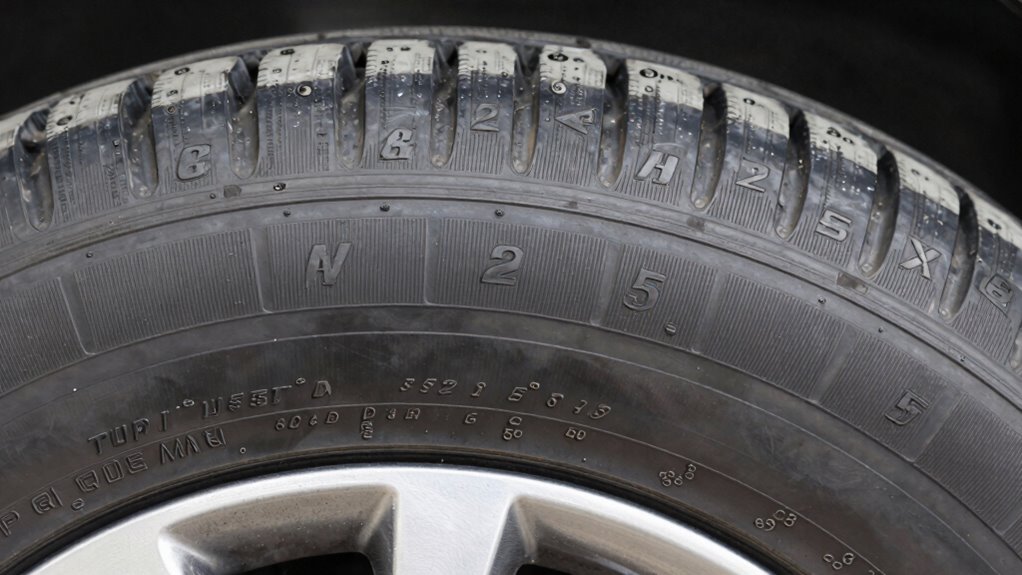
Understanding how to read tire sidewalls is essential for ensuring your vehicle is safe and performing ideally. The sidewall contains a wealth of information about the tire’s specifications, including size, type, manufacturing details, and safety ratings. When you familiarize yourself with these markings, you can make informed decisions, whether you’re replacing your tires or checking for safety compliance.
Understanding tire sidewalls ensures safety and optimal performance through informed decisions on replacements and maintenance.
Tire manufacturing plays a crucial role in understanding these markings. Each tire is stamped with codes that reveal its model, manufacturing date, and production location. For example, a series of numbers like “2318” indicates the tire was manufactured in the 23rd week of 2018. Recognizing this helps you track the age of your tires, which is vital because tires degrade over time even if they’re not heavily used. Worn or old tires can compromise your safety, especially on wet or icy roads. By understanding the manufacturing details, you guarantee you’re not driving on tires that are past their prime, reducing the risk of blowouts or loss of control. Additionally, tire age is an important factor in maintaining overall safety on the road, since aging tires can lose their elasticity and grip. Understanding the tire aging process can help you determine when it’s time to replace your tires for optimal safety. Moreover, keeping track of tire longevity helps extend the lifespan of your tires and ensures they perform correctly.
The tire size and type are also clearly marked on the sidewall. Look for a sequence like “P215/60R16.” The letter “P” indicates a passenger vehicle tire. The numbers “215” and “60” refer to the tire’s width in millimeters and the aspect ratio (height relative to width), respectively. “R” signifies radial construction, and “16” indicates the diameter of the wheel in inches. This information helps you select the right replacement or compatible tires for your vehicle. Using the correct size enhances safety, improves handling, and extends the lifespan of your tires. Proper understanding of tire specifications ensures you make the best choice for your vehicle’s performance and safety. Knowing these details allows you to better interpret tire markings and avoid potential mismatches or safety hazards.
As an affiliate, we earn on qualifying purchases.
Frequently Asked Questions
Can Tire Sidewall Markings Indicate Tire Age?
Yes, tire sidewall markings can indicate tire age, helping you assess tire aging and sidewall durability. Look for the DOT coding, which includes a four-digit number representing the week and year of manufacture. For example, “2519” means the tire was made in the 25th week of 2019. Knowing this helps you determine if your tires are aging and if their sidewall durability might be compromised over time.
What Do Different Tire Sidewall Symbols Mean?
Did you know that over 30% of tire failures are caused by misreading sidewall symbols? When you see symbols on your tire’s sidewall, they include tire tread patterns indicating grip and wear, and sidewall color codes, which can denote manufacturing details or special features. Understanding these symbols helps you assess your tire’s condition, ensuring safety and best performance, so always pay close attention to what those markings mean.
Are All Tire Markings Standardized Across Brands?
Not all tire markings are fully standardized across brands, but most adhere to industry norms for safety and clarity. You’ll find consistent symbols related to tire safety, like load capacity and speed ratings, while rubber composition details can vary. To guarantee safety, always check markings carefully, compare them across brands when possible, and understand the specifics like rubber quality and tread design, which impact tire performance and longevity.
How Can I Identify the Tire Load Capacity?
Think of the tire’s load capacity as its strength armor. To find it, look at the tire’s sidewall markings, often a number like 95 or 100, which indicates load index. The sidewall texture and the tire material can give clues about durability, but the load index is your key. Check the tire’s sidewall for this number, then reference a load index chart to determine the maximum weight it can carry safely.
Do Sidewall Numbers Reveal Tire Performance Ratings?
Yes, sidewall numbers can reveal tire performance ratings, including aspects like tire durability and safety. Look for the Tire Uniformity Grade or specific speed and load ratings, which indicate how well the tire performs under various conditions. Regular safety inspections help verify these ratings and guarantee your tire maintains peak performance, reducing risks during driving. Understanding these markings helps you choose tires that prioritize both safety and durability.
Conclusion
By mastering how to read your tire sidewalls, you’re not just becoming a car expert—you’re turning into a tire whisperer! Imagine confidently deciphering every number and letter, transforming your vehicle into a well-oiled, tire-savvy machine. No more guesswork or roadside surprises—just pure, tire-smart power in your hands. Soon, you’ll be the hero of every road trip, guarding your wheels like a tire-reading superhero, all thanks to knowing exactly what those sidewalls are telling you!