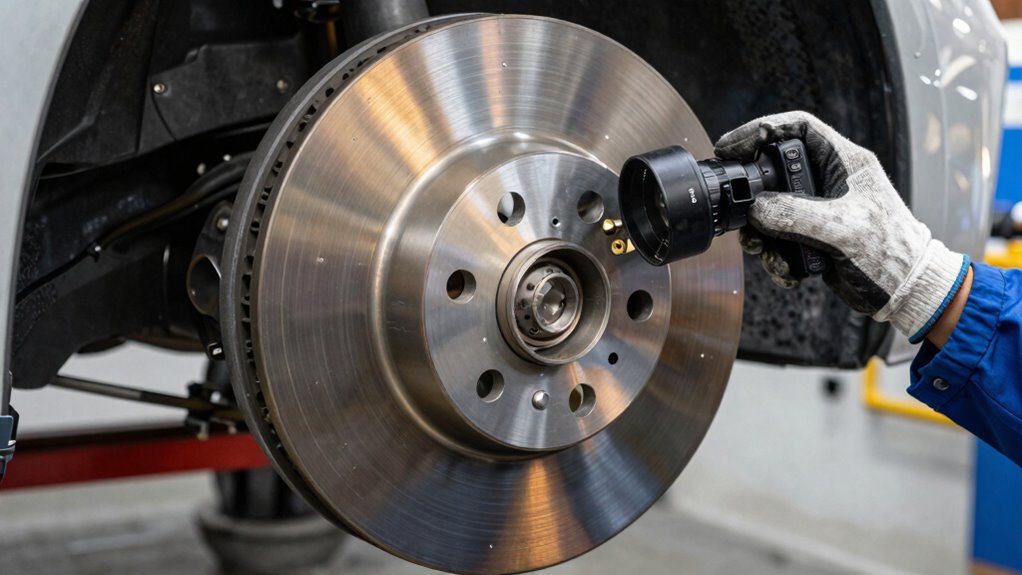
To prevent vibration surprises, make inspecting your brake rotors a regular habit. Look for signs like uneven wear, scoring, cracks, or bluish discoloration, and measure their thickness to verify they meet manufacturer specs. Keep an eye on vibrations in your brake pedal or steering wheel, as these indicate potential issues. Consistent inspections and timely maintenance, like resurfacing or replacing damaged rotors, keep your brakes smooth and reliable—discover more ways to stay ahead of problems.
Key Takeaways
- Schedule regular brake rotor inspections to detect uneven wear or damage early.
- Measure rotor thickness consistently and compare it to manufacturer specifications.
- Check for signs of overheating, scoring, cracks, or bluish tint during visual inspections.
- Monitor brake pedal and steering vibrations during braking as indicators of rotor issues.
- Replace or resurface rotors promptly when damage, warping, or excessive wear is identified.
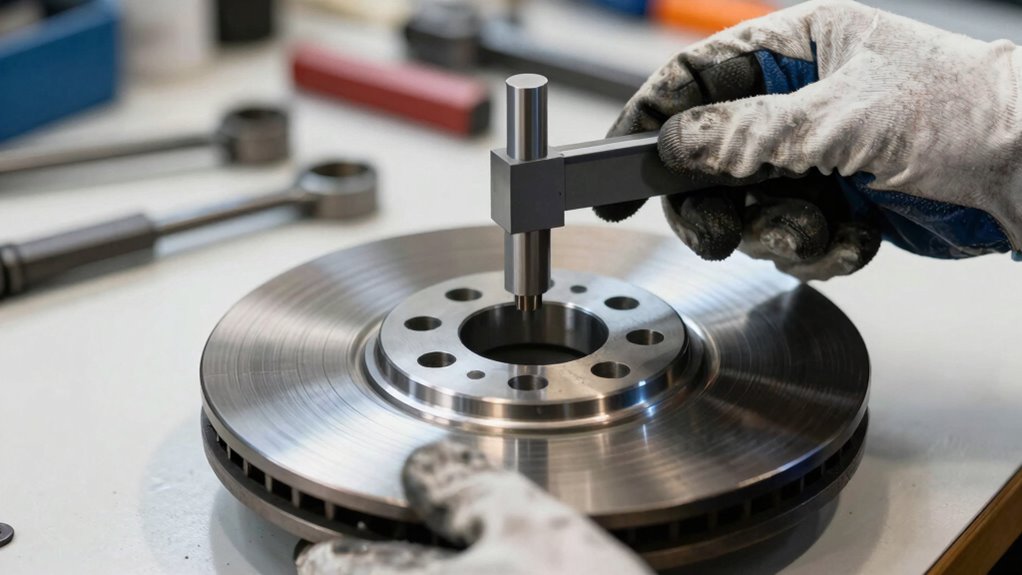
Regularly inspecting your brake rotors is essential for maintaining safe and reliable vehicle performance. When you keep an eye on the condition of your rotors, you can catch issues like uneven brake pad wear early before they turn into costly repairs or dangerous driving conditions. Brake pad wear is a natural part of brake system use, but if the pads wear unevenly, they can cause your rotors to develop grooves or become warped. If you notice vibrations when braking, it’s often a sign that your rotors might need attention. Addressing these signs early can save you from more extensive repairs down the line, such as rotor resurfacing or replacement.
Regular rotor inspections prevent costly repairs and ensure safe braking performance.
One of the most effective ways to prevent vibration surprises is to get into the habit of inspecting your brake rotors regularly. During these inspections, look for visible signs of damage like scoring, cracks, or a bluish tint, which indicates overheating. When the rotors become heavily scored or warped, they can cause your steering wheel or brake pedal to shake. In such cases, rotor resurfacing might be necessary to restore a smooth friction surface. Resurfacing can sometimes extend the life of your rotors, but it’s not always a permanent fix—if the damage is too severe, replacing the rotors might be the better option. Proper maintenance of your braking system is essential to prevent these issues from developing and to ensure consistent performance. Additionally, understanding how brake system components work together can help you better identify potential problems early.
Pay close attention to how your vehicle feels when you brake. If you start to notice pulsations or vibrations, it’s a clear sign that your rotors might be uneven or warped. These symptoms often develop gradually, so staying vigilant and inspecting your rotors periodically helps you catch issues early. It’s also a good idea to check the thickness of your rotors during each inspection. Many vehicles have minimum thickness specifications, and if your rotors fall below that, replacing them is safer than resurfacing. Remember, even with resurfacing, if the rotors are too thin or damaged, they won’t be able to perform properly, and you risk brake failure. Additionally, keeping an eye on brake pad wear can help prevent uneven rotor surfaces and vibrations.
In addition to looking for physical damage, consider how your brake pads are wearing. Uneven brake pad wear can transfer to your rotors, creating uneven surfaces that lead to vibrations. Regularly replacing brake pads before they become excessively worn helps maintain even rotor surfaces and reduces the need for resurfacing. Developing a routine of inspecting your rotors and brake pads not only enhances safety but also prolongs the lifespan of your braking system. Being proactive means fewer surprises and a smoother, safer driving experience. An understanding of brake rotor condition and proper maintenance can significantly improve your vehicle’s safety and performance.
As an affiliate, we earn on qualifying purchases.
Frequently Asked Questions
How Often Should Brake Rotors Be Inspected for Optimal Safety?
You should inspect your brake rotors every 10,000 to 15,000 miles or during each brake pad replacement. Regular inspections help you catch signs of rotor wear early, preventing vibrations and ensuring safety. Look for uneven wear, grooves, or warping, which can affect braking performance. Keeping an eye on your brake rotors and maintaining proper brake pad contact helps avoid costly repairs and keeps your vehicle stopping smoothly.
What Tools Are Best for Checking Rotor Surface Irregularities?
To check rotor surface irregularities, you should use a dial indicator or a straightedge for precise measurements and visual inspection tools like a flashlight and mirror. Inspection techniques involve feeling for roughness, grooves, or warping, and checking for uneven wear or cracks. These tools help you identify slight deviations and surface inconsistencies, ensuring your rotors are smooth and functioning correctly, preventing vibrations and maintaining safe braking performance.
Can a Warped Rotor Be Fixed Without Replacing It?
Did you know that around 60% of warped rotors can be fixed through rotor resurfacing? If you have a warped rotor, you can often avoid replacing it by opting for rotor resurfacing, which removes a thin layer of metal to restore flatness. However, if the rotor is too thin or damaged, replacement is necessary. Resurfacing is a cost-effective way to regain smooth braking and prevent vibrations.
Are There Signs Indicating Immediate Rotor Replacement Needed?
Yes, if you notice brake noise or sudden vibration when braking, it’s a clear sign you might need immediate rotor replacement. These symptoms indicate significant wear or warping, affecting safety. Don’t ignore them—schedule a thorough inspection promptly. Addressing these signs early prevents further damage to the braking system, guarantees peak performance, and keeps you safe on the road. Regular checks help catch issues before they become costly repairs.
How Does Rotor Material Affect Inspection and Longevity?
Did you know that cast iron rotors typically last 30-50% longer than ceramic ones? Material properties greatly influence inspection and longevity. Cast iron rotors, with their durability, withstand high heat and stress better, but may warp more over time. Manufacturing processes also impact quality; precision machining ensures smooth surfaces, reducing vibrations. Choosing the right rotor material based on your driving habits and regular inspections can prevent costly repairs and guarantee safe, reliable braking.
Conclusion
By making rotor inspections a regular part of your maintenance routine, you’re less likely to face those annoying vibrations on the road. It’s a simple habit that saves you time, money, and frustration down the line. Think about it—aren’t smooth, vibration-free drives worth a few minutes of your time? Stay proactive, stay safe, and enjoy the peace of mind knowing your brakes are in top shape. Ready to make rotor checks your new habit?