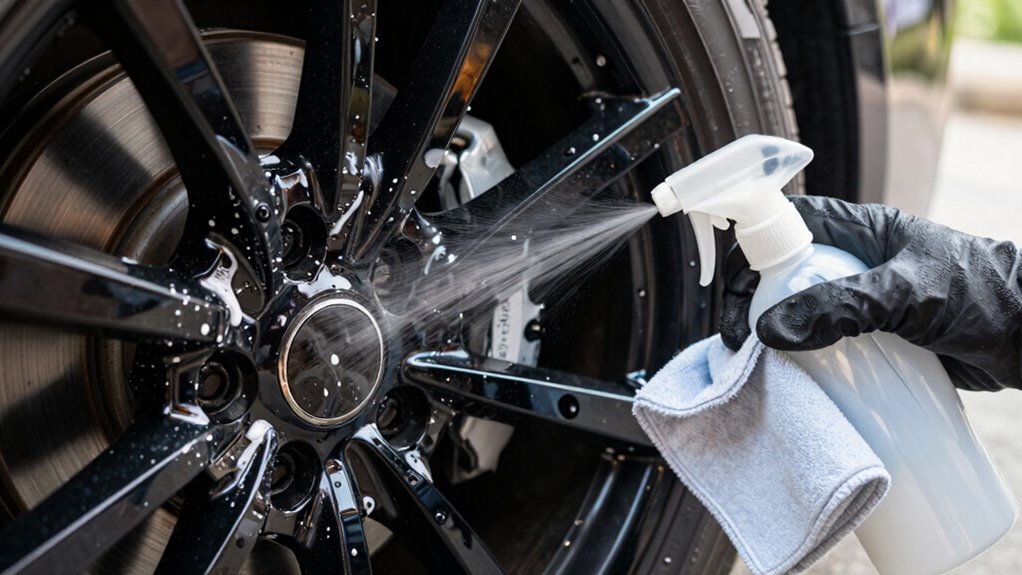
To protect your paint and wheels, start by rinsing off loose dirt with gentle water. Use a pH-balanced wheel cleaner and apply it generously to brake dust-prone areas, letting it sit for a few minutes. Agitate with soft brushes or microfiber mitts, then rinse thoroughly. Dry with microfiber towels, inspect, and spot-clean if needed. Finish by applying a quality sealant to repel dust and grime. Keep your routine consistent, and you’ll maintain a sleek, protected finish—if you want to learn more, keep going.

Get business pricing on garage and car supplies
- Business-only prices and quantity discounts
- Tax-exempt purchasing
- Multiple users, one account, clear invoices
Key Takeaways
- Use pH-balanced wheel cleaner and soft brushes to gently remove brake dust without damaging paint or wheel surfaces.
- Rinse thoroughly before cleaning to eliminate loose dirt, preventing scratching during scrubbing.
- Focus on brake dust-prone areas like lug nuts and inner barrels for thorough contamination removal.
- Dry wheels with microfiber towels to prevent water spots and inspect for any remaining grime.
- Apply a quality wheel sealant or wax to create a protective barrier, easing future cleaning and preserving wheel finish.
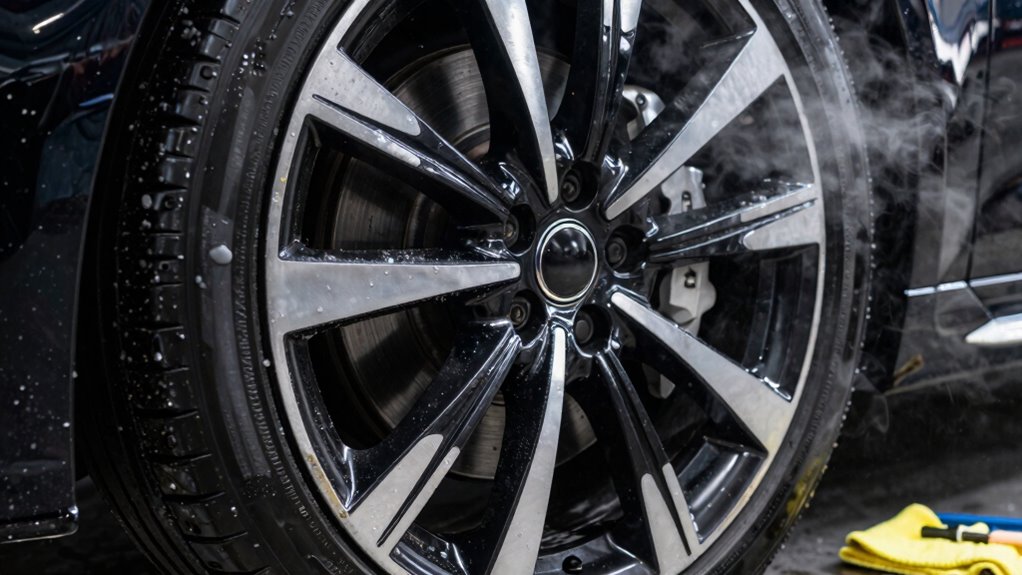
Are you tired of stubborn brake dust making your wheels look dull and dirty? That layer of grime not only ruins the appearance of your vehicle but can also damage your paint and wheels over time if not addressed properly. The key to maintaining a sleek look is establishing a consistent brake dust cleanup routine that emphasizes safe and effective techniques. Brake dust removal isn’t just about wiping down your wheels; it’s about using the right wheel cleaning techniques that protect your car’s finish while thoroughly cleaning every nook and cranny.
Start by choosing the right cleaning supplies. Use a pH-balanced wheel cleaner designed specifically for automotive finishes. Avoid harsh chemicals or abrasive brushes that can scratch or dull your paint and wheels. When it’s time to clean, rinse off loose dirt and debris with a gentle stream of water. This initial rinse helps prevent scratching during the actual cleaning process by removing loose particles that could act like sandpaper.
Next, apply the wheel cleaner generously, focusing on heavily soiled areas, and let it sit for a few minutes to break down brake dust and grime. Use a soft-bristled wheel brush or microfiber wash mitt to gently agitate the surface. Incorporate proper wheel cleaning techniques by cleaning from the top down and paying special attention to lug nuts, inner barrels, and vents where brake dust often accumulates. Consistent, gentle scrubbing guarantees thorough cleaning without risking damage to your wheels’ finish. Regularly maintaining a clean wheel surface helps prevent brake dust buildup and makes future cleaning easier.
After scrubbing, rinse everything off thoroughly with clean water, making sure no residue remains. Residual cleaner or brake dust left on the surface can cause streaks or spots once it dries. Once rinsed, dry your wheels with a microfiber towel to prevent water spots and to give you a chance to inspect for any remaining dirt. If you notice stubborn spots, repeat the cleaning process or spot-clean with a soft brush.
Finally, protect your wheels with a quality wheel sealant or wax. This creates a barrier that repels brake dust and grime, making future cleaning easier and helping preserve your paint. Maintaining a regular cleaning schedule, ideally every few weeks, will keep brake dust from building up and ensure your wheels stay shiny and protected.
Frequently Asked Questions
How Often Should I Perform Brake Dust Cleaning?
You should clean brake dust regularly, ideally every 2-4 weeks, depending on your driving habits. Frequent cleaning prevents brake dust buildup from damaging your paint and wheels. Follow a consistent cleaning frequency schedule, especially if you notice more dust after heavy driving or in dusty conditions. Regular maintenance keeps your wheels looking new and prevents long-term damage, ensuring your vehicle stays protected and visually appealing.
Can Using Water Damage Brake Components?
Using water on brake components can cause water corrosion, which accelerates brake deterioration over time. While occasional rinsing with water to remove dust isn’t harmful, prolonged or excessive exposure can lead to rust and compromise brake performance. To protect your brakes, avoid soaking parts, especially in salty or dirty environments. Instead, use appropriate brake cleaners and dry thoroughly to prevent water-related damage and maintain best brake function.
Are There Eco-Friendly Brake Dust Removal Options?
Did you know that traditional brake dust cleaners often contain harmful chemicals? You can choose eco-friendly cleaners to reduce environmental impact. These options include biodegradable solutions that effectively clean brakes without releasing toxins. Using eco-friendly cleaners not only protects your car’s paint and wheels but also supports sustainability. Look for biodegradable solutions designed specifically for brake dust removal, ensuring a safer, greener way to maintain your vehicle’s appearance.
What Products Are Safest for Ceramic Brake Pads?
You should choose products specifically designed for ceramic brake pads, as they’re gentle and effective. Look for brake dust cleaners that avoid harsh chemical cleaning agents, which can pose health risks and damage your wheels or pads. Opt for eco-friendly, non-abrasive cleaners that safely remove brake dust without compromising your brake system or contributing to brake dust health concerns. Always follow the manufacturer’s instructions for best results.
Should I Wear Protective Gear During Cleanup?
Yes, you should wear protective gear during cleanup to guarantee safety. Protective gear, like gloves and goggles, shields your skin and eyes from brake dust, which can be harmful if inhaled or contact your skin. Always follow safety precautions when cleaning wheels and brake components. Proper gear helps prevent irritation and potential health risks, making your cleaning routine safer and more effective.
Conclusion
By following this routine, you’re not just cleaning—you’re defending your car’s beauty. Think of brake dust as the villain trying to tarnish your ride, but with these simple steps, you become the hero safeguarding your paint and wheels. Regular maintenance isn’t just a chore; it’s a shield that preserves your car’s shine and value. So, gear up and take charge—because a spotless, protected car isn’t just a dream, it’s your daily victory.
Fall Picks
fall essentials
As an affiliate, we earn on qualifying purchases.