
In high-performance builds, you need to check your coolant more often than you might expect, usually at least once a month under intense driving conditions. Regular inspections help spot contamination, leaks, or corrosion early, preventing overheating and engine damage. Using the right coolant type and ensuring proper maintenance keeps your system efficient. If you’re serious about performance, maintaining your coolant regularly is essential—keep going, and you’ll discover how to optimize your cooling system even further.

Get garage and car supplies delivered free — and shop member deals
- Fast, free delivery on millions of items
- Access to Prime Big Deal Days deals on October 6–7
- Prime Video, Amazon Music and more included
Key Takeaways
- High-performance builds generate more heat, requiring more frequent coolant level and condition checks.
- Regular coolant testing ensures optimal pH and prevents corrosion, crucial for sustained engine performance.
- Overlooked coolant contamination can lead to overheating risks during intense driving sessions.
- Increased coolant maintenance helps detect leaks or system issues early, avoiding costly engine damage.
- Frequent coolant replacement maintains proper heat transfer and prevents sludge buildup in high-stress setups.

When building a performance vehicle, making certain your cooling system is in top shape is essential for peak operation. A key part of that is regularly checking your coolant. You might think that once you fill your radiator, you’re set for a long time, but radiator efficiency can drop if you don’t stay on top of coolant levels and quality. Over time, coolant can become contaminated or lose its ability to absorb heat effectively, which can lead to overheating, especially during high-performance driving. That’s why routine coolant checks are more critical in performance builds than many realize.
You need to pay attention to your coolant types and make sure they’re suitable for your specific setup. There are different kinds—conventional, extended-life, and specialized coolants—each with varying properties and maintenance intervals. Using the wrong type can reduce radiator efficiency, causing your engine to run hotter and potentially damaging essential components. When checking your coolant, verify it’s the right type as recommended by your vehicle’s manufacturer or your build specifications. Mixing incompatible coolant types can lead to chemical reactions that form sludge or reduce heat transfer, defeating the purpose of a well-maintained cooling system.
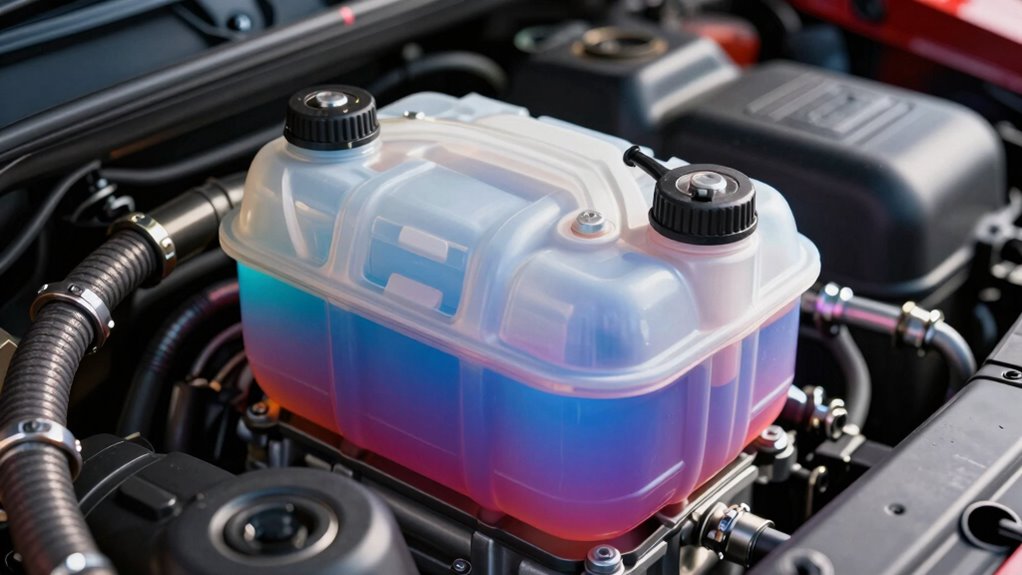
Frequent coolant checks help you catch issues early. For performance builds, you should check coolant levels at least once a month, especially if you’re pushing the engine hard or running in extreme conditions. Keep an eye on the color and clarity of the coolant; if it’s dark, murky, or has debris, it’s time for a flush and refill. Also, check for signs of leaks or corrosion around hoses and radiator connections. These small issues, if ignored, can compromise radiator efficiency and cause uneven cooling, which impacts overall performance. Regularly inspecting coolant contamination can help prevent long-term damage caused by degraded fluids. Additionally, monitoring coolant system pressure can reveal hidden leaks or blockages that might not be immediately visible.
Another important aspect is verifying the coolant’s pH level and temperature stability. Over time, coolant can break down, losing its ability to prevent corrosion and maintain proper heat transfer. Regular testing or replacing coolant according to manufacturer recommendations ensures your system stays in prime condition. Proper coolant maintenance intervals are crucial because neglecting them can lead to coolant degradation, reducing its effectiveness. Ensuring proper coolant circulation within the system is also vital for maintaining consistent engine temperatures, especially in high-performance setups. Additionally, staying aware of coolant quality can help you prevent potential damage caused by degraded or contaminated fluids. Remember, performance builds often operate at higher temperatures, so neglecting routine coolant checks can lead to overheating, engine damage, or even catastrophic failure during intense driving.
As an affiliate, we earn on qualifying purchases.
Frequently Asked Questions
How Does High-Performance Driving Affect Coolant Longevity?
High-performance driving stresses your cooling system, reducing coolant longevity. As you push your vehicle, it generates more heat, making temperature management vital. You need to prioritize cooling system maintenance to prevent overheating and coolant degradation. Regularly checking and replacing coolant ensures peak performance and protects engine components. Neglecting this can lead to overheating, engine damage, and costly repairs, especially when you’re driving aggressively or on demanding tracks.
What Specific Coolant Type Is Best for Performance Builds?
You should choose a high-quality, long-life coolant with a bright color like green, orange, or purple, as these indicate specific formulations suitable for performance builds. Look for coolants with advanced additives that prevent corrosion and improve heat transfer, especially under intense driving conditions. Avoid plain water or basic coolants, and always verify compatibility with your vehicle’s manufacturer recommendations to guarantee ideal cooling and longevity.
Can I Use Regular Coolant in a Performance Vehicle?
Think of using regular coolant in a performance vehicle like trying to run a race with everyday shoes—sure, it might work, but it won’t give you the edge you need. Regular coolant can compromise radiator maintenance and lack the specialized cooling properties of performance coolants. For peak performance, invest in high-quality coolant additives designed to handle the heat and stress your build demands, keeping your engine running smoothly under pressure.
How Often Should I Replace the Coolant in a Performance Build?
You should replace the coolant in your performance build every 30,000 to 50,000 miles or every 2 to 3 years, whichever comes first. Regular radiator maintenance helps prevent engine overheating and keeps your system running smoothly. Fresh coolant guarantees ideal heat transfer and reduces corrosion. Don’t ignore signs of coolant degradation, like overheating or leaks, as neglect can lead to serious engine damage.
Are There Signs Indicating My Coolant Needs Immediate Attention?
Your coolant system is screaming for help if you notice coolant leaks or sudden temperature fluctuations. These signs mean your engine’s overheating threat is imminent, risking catastrophic damage. Don’t ignore these warning signs—act fast! Leaks can rapidly deplete your coolant, while temperature swings signal your cooling system isn’t working properly. Address these issues immediately to protect your engine and maintain peak performance—delaying could lead to costly repairs.
Conclusion
Don’t underestimate the power of regular coolant checks—skipping them can turn your performance build into a scorching disaster faster than you can say “engine meltdown.” Keep an eye on your coolant levels more often than you’d check your phone and stay ahead of overheating issues. A simple check could save your ride from turning into a fiery inferno on wheels. Trust me, your engine will thank you, and your adrenaline-fueled drives will stay smooth and cool.
Fall Picks
fall essentials
As an affiliate, we earn on qualifying purchases.