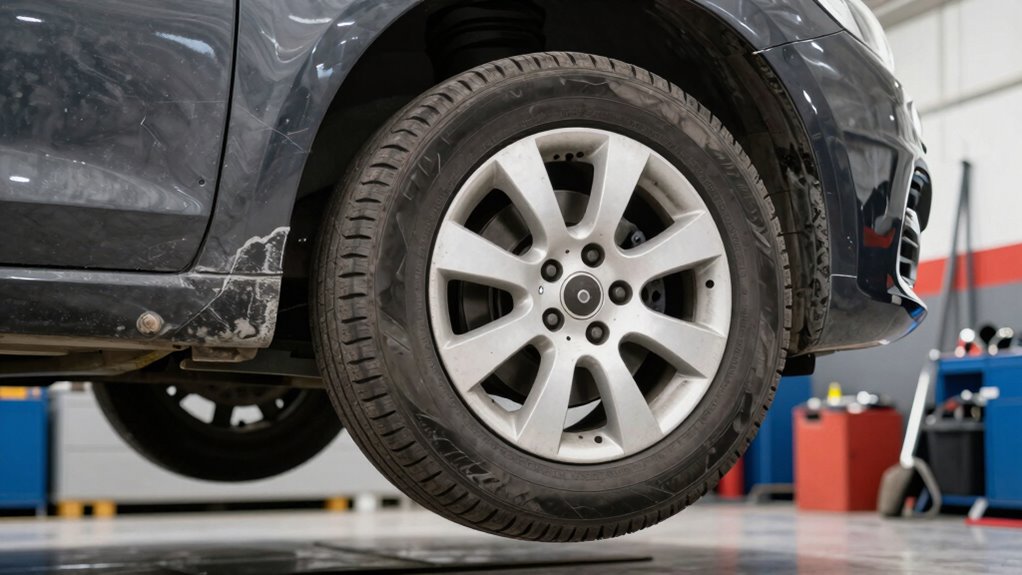

Many performance drivers make the mistake of rotating tires too infrequently or only based on mileage, ignoring how their driving style accelerates wear. They often overlook signs of uneven wear and fail to check tire conditions regularly. Ignoring the importance of proper alignment, balance, and adapting rotation schedules to driving conditions can also harm tire life. To keep your tires performing their best, it’s essential to understand and monitor these issues—there’s more to discover about optimizing your tire care.

Get business pricing on garage and car supplies
- Business-only prices and quantity discounts
- Tax-exempt purchasing
- Multiple users, one account, clear invoices
Key Takeaways
- Rotating tires too infrequently or solely based on generic schedules without considering driving habits.
- Ignoring uneven wear patterns and neglecting regular tire inspections for early detection of issues.
- Overlooking the importance of comprehensive tire system checks like alignment and balance.
- Failing to adapt rotation routines for performance driving conditions and aggressive driving styles.
- Not monitoring wear patterns closely to adjust rotation practices and optimize tire lifespan.
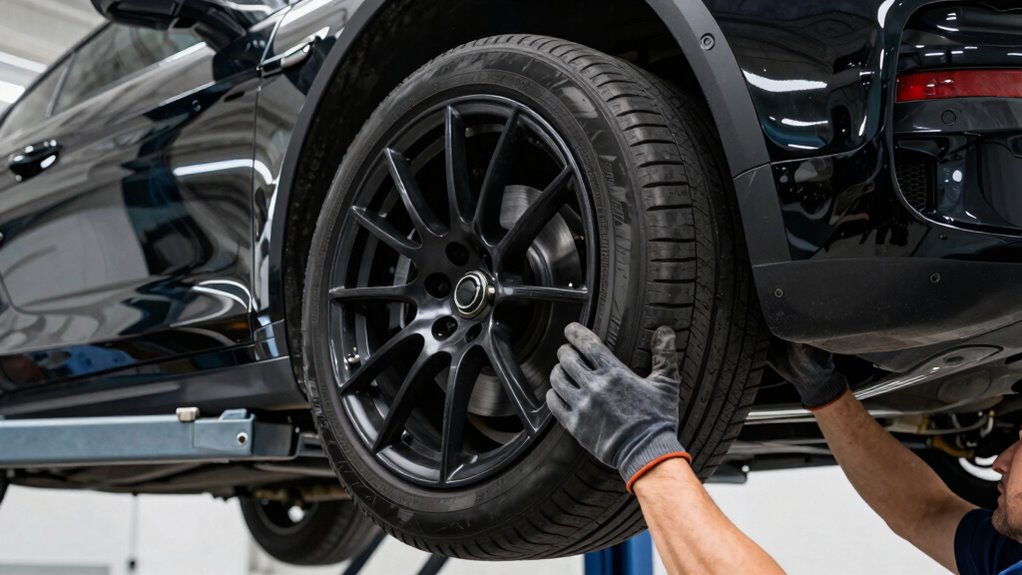
Many drivers also fall into the trap of rotating their tires too infrequently or following a generic schedule without considering their driving habits or tire condition. Performance driving, heavy acceleration, or frequent cornering can cause tires to wear differently across the axles. By sticking to a strict schedule without considering these factors, you risk uneven wear and reduced grip during high-performance maneuvers. It’s better to inspect your tires regularly and rotate them based on actual wear patterns rather than just time intervals or mileage. Additionally, neglecting to check tire maintenance practices can lead to overlooked issues that compromise safety and efficiency. Proper tire maintenance isn’t just about moving tires from one position to another; it’s about making certain the entire system—alignment, balance, and overall condition—is designed for both safety and performance. Regularly monitoring wear patterns can help identify issues early and ensure your tires perform optimally. Understanding the impact of driving style on tire wear can help you develop a more effective rotation routine. Incorporating tire rotation schedules tailored to driving styles, especially for performance-oriented vehicles, can significantly extend tire life and improve handling. Additionally, being aware of how driving conditions influence tire wear allows for more precise adjustments to your rotation practices.
Products Worth Considering

DEWALT 20V MAX Brushless 3-Tool Cordless Combo Kit with Drill, Impact Driver, Oscillating Multi-Tool, 3 Batteries, and Charger

Chemical Guys TORQX Random Orbital Polisher Kit, 9-Piece

Innova 5610 OBD2 Bidirectional Scan Tool
As an affiliate, we earn on qualifying purchases.
Frequently Asked Questions
How Often Should Performance Tires Be Rotated for Optimal Grip?
You should rotate your performance tires every 5,000 to 7,500 miles for ideal grip. Regular tire rotation helps prevent uneven wear, maintaining consistent traction. Before rotating, check your tire pressure to confirm proper inflation, and make sure your wheel alignment is correct to avoid premature tire wear. Proper maintenance like this keeps your tires performing at their best, giving you better handling and safety on the road.
Does Tire Rotation Affect Vehicle Handling During High-Speed Driving?
Think of your tires as the heartbeat of your car—when properly rotated, they keep your handling smooth, especially during high-speed drives. Yes, tire rotation influences handling by ensuring even tire pressure and tread pattern wear, which maintains grip and stability. Ignoring rotation can cause uneven wear, leading to unpredictable handling and reduced performance. Regularly rotating your tires keeps your vehicle responsive, helping you stay confident on the road’s sharp turns and straightaways.
Are Specific Rotation Patterns Better for Performance Tires?
Yes, certain tire rotation techniques are better for performance tires. You should follow the recommended patterns, like the forward cross or the crisscross, to guarantee even wear. Proper rotation extends the performance tire lifespan and maintains peak handling. Avoid neglecting rotation, as uneven wear can compromise grip and safety. Regularly rotating your tires according to these techniques keeps your high-performance tires in top shape longer.
Can Improper Rotation Lead to Uneven Tire Wear in Performance Vehicles?
Like a dance gone wrong, improper rotation can cause your tires to wear unevenly, especially in performance vehicles. When you neglect to check tire pressure and maintain proper wheel alignment, the wear pattern becomes chaotic, reducing grip and compromising handling. This uneven wear shortens tire lifespan and affects overall performance. Regular rotation, along with precise tire pressure and alignment checks, keeps your tires dancing smoothly on the road.
What Are Signs That My Performance Tires Need Rotation Sooner?
You’ll want to rotate your performance tires sooner if you notice uneven tread depth or irregular tire pressure across all tires. When tread wears unevenly, it affects grip and handling. Also, if some tires lose pressure faster, it’s a sign they need checking and rotation. Keeping an eye on tire pressure and tread depth helps guarantee peak performance and prevents premature tire wear, keeping your vehicle running smoothly.
Conclusion
Avoid common tire rotation mistakes to release your car’s true potential. Check your tires regularly, follow the recommended rotation schedule, and pay attention to uneven wear. By doing so, you extend tire life, improve handling, and boost safety. Don’t let small oversights hold back your performance. Keep your tires balanced, your focus sharp, and your driving experience smooth. Because when you care for your tires, you’re not just driving — you’re dominating the road.