TL;DR
An American company has developed a new battery technology that could reduce US dependence on China for electric vehicle supply chains. While still in early stages, this innovation has attracted significant attention amid ongoing geopolitical tensions. Confirmed details are limited, but industry experts see potential for a major shift.
An American company has announced a breakthrough in battery technology that could significantly reduce reliance on China for critical components in electric vehicle supply chains. This development, if proven scalable, could alter the geopolitical landscape of EV manufacturing and supply chain dependencies. Industry observers and policymakers are closely monitoring the progress, as it may impact global trade dynamics and supply security.
The breakthrough involves a new type of battery chemistry developed by a U.S.-based firm, which claims to offer comparable performance to current lithium-ion batteries but with reduced dependence on imported materials, notably those sourced from China. While the company has not disclosed detailed technical specifications or timelines for commercial deployment, early testing indicates promising energy density and durability metrics. Industry insiders suggest this innovation could enable domestic production of batteries at scale, decreasing the need for Chinese raw materials and manufacturing capacity.
Search interest in this technology has surged over recent weeks, driven by broader concerns about supply chain vulnerabilities amid ongoing geopolitical tensions between the U.S. and China. Analysts note that the development aligns with recent U.S. government initiatives aimed at boosting domestic battery manufacturing and reducing strategic dependencies. However, the company has not yet provided a timeline for commercial rollout or detailed technical validation, and experts caution that scaling laboratory results into mass production remains a significant challenge.
Potential Impact on Global EV Supply Chains
If this American battery technology proves scalable and cost-effective, it could significantly weaken China’s current dominance over critical EV supply chain components, including raw materials and manufacturing capacity. This shift could lead to increased domestic manufacturing in the U.S., reduce geopolitical risks associated with supply disruptions, and influence global trade policies. However, experts emphasize that the transition from prototype to mass production involves hurdles, and the timeline for widespread adoption remains uncertain. Still, the development has heightened industry and government interest in diversifying supply sources and fostering local innovation.
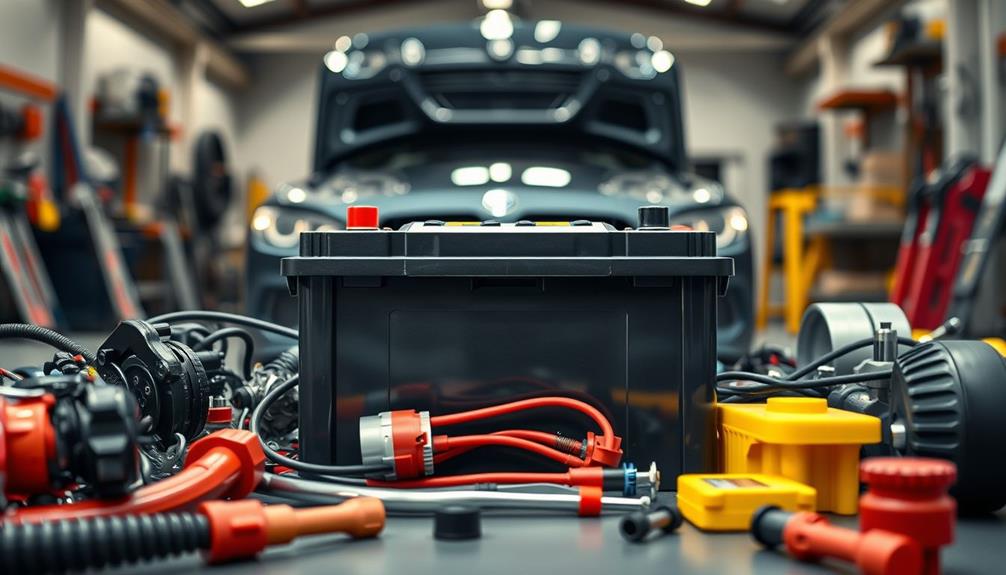
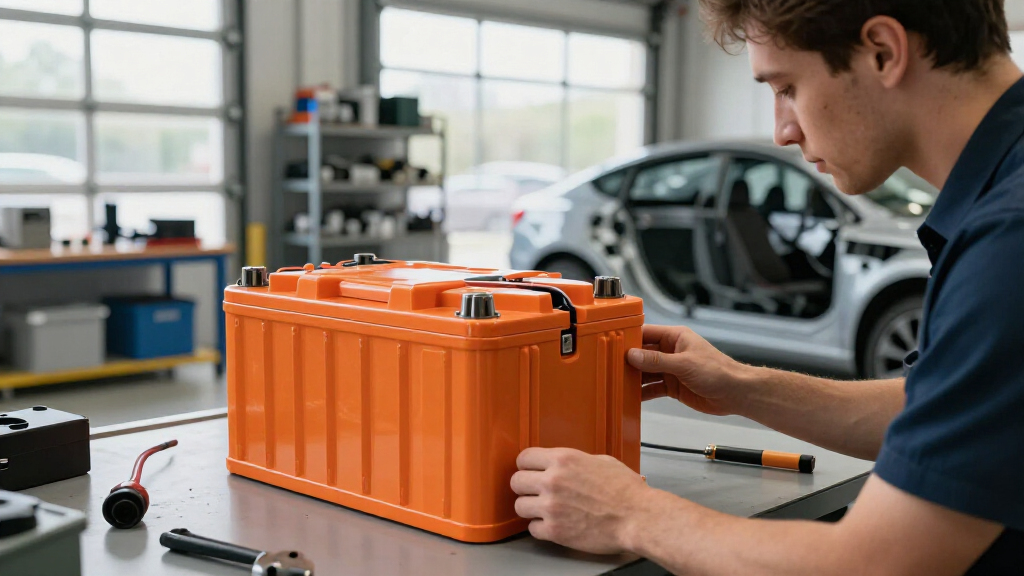
electric vehicle battery replacement
As an affiliate, we earn on qualifying purchases.
As an affiliate, we earn on qualifying purchases.
US Efforts to Reduce Dependence on Chinese EV Supply Chain
Over the past few years, the U.S. government has prioritized reducing reliance on Chinese imports for critical EV components, including batteries, raw materials, and manufacturing equipment. Initiatives such as the Inflation Reduction Act and the Bipartisan Infrastructure Law have allocated billions of dollars toward domestic battery manufacturing and raw material processing. Meanwhile, China continues to dominate the global supply chain for EV batteries, controlling a significant share of raw material extraction, refining, and cell production. This reliance has raised concerns about supply security, especially amid geopolitical tensions and trade restrictions. The new American battery development is seen as part of a broader effort to shift the balance of power in EV manufacturing.
Unconfirmed Details and Development Challenges
Details about the specific chemistry, scalability, and cost of the new battery technology remain undisclosed. It is unclear how soon the technology could be commercialized or whether it can achieve the performance levels necessary for mass-market EVs. Experts caution that transitioning from laboratory results to large-scale manufacturing can take several years, and unforeseen technical or economic hurdles may arise. Additionally, the extent to which this development will truly diminish China’s dominance in the supply chain is still uncertain, given China’s entrenched infrastructure and resource control.
Next Steps for Validation and Commercialization
The company behind the innovation is expected to publish further technical data and seek partnerships with automakers and battery manufacturers to test the technology at pilot scale. Regulatory approvals, funding for scaling production, and supply chain integration will be critical milestones. Industry analysts will be watching for announcements regarding prototypes, pilot projects, or potential commercial rollout timelines within the next 12 to 24 months. Policymakers may also accelerate efforts to support domestic manufacturing based on early results.
Key Questions
What makes this American battery technology different from existing batteries?
The company claims its new chemistry reduces dependence on Chinese raw materials and offers comparable performance to current lithium-ion batteries, though detailed specifications are not yet publicly available.
Can this development truly reduce US reliance on China for EV supply chains?
Potentially, if the technology can be scaled effectively and at competitive costs, it could enable more domestic production. However, the timeline and technical feasibility are still uncertain.
When might this technology be available for commercial use?
It is too early to specify a timeline. Industry sources suggest that pilot testing could occur within the next year, with commercial deployment possibly taking several years depending on scaling success.
What are the main hurdles for this American battery technology?
Major challenges include scaling laboratory results to mass production, ensuring cost competitiveness, and establishing a reliable supply chain for raw materials outside China.
Why is this development attracting so much attention now?
Growing geopolitical tensions and supply chain vulnerabilities have increased interest in domestic alternatives, making this breakthrough particularly timely and relevant.
Source: rss