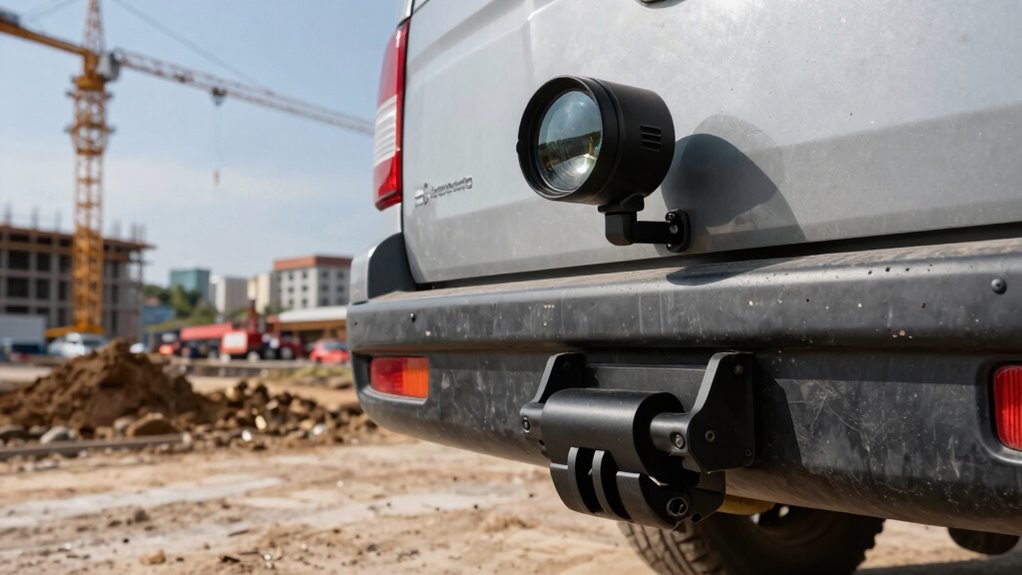

Backup camera kits matter more on tow rigs because their large size creates significant blind spots, making safe reversing more difficult. Unlike city cars, which rely on mirrors and quick glances, tow rigs need real-time views to avoid obstacles, trailers, or pedestrians. Proper camera placement enhances visibility, boosts safety, and prevents costly accidents. If you’re curious about how to maximize your system’s effectiveness, there’s more to discover that can help you tow confidently and safely.

Get business pricing on garage and car supplies
- Business-only prices and quantity discounts
- Tax-exempt purchasing
- Multiple users, one account, clear invoices
Key Takeaways
- Tow rigs have larger blind spots, making backup cameras essential for safe maneuvering.
- Proper camera placement on tow rigs improves visibility of trailers and hitch areas.
- Larger vehicles require real-time, wide-angle views to prevent accidents during reversing.
- Backup cameras help avoid costly damage to trailers, cargo, and surrounding vehicles.
- Enhanced safety features on tow rigs reduce long-term accident risks and associated costs.
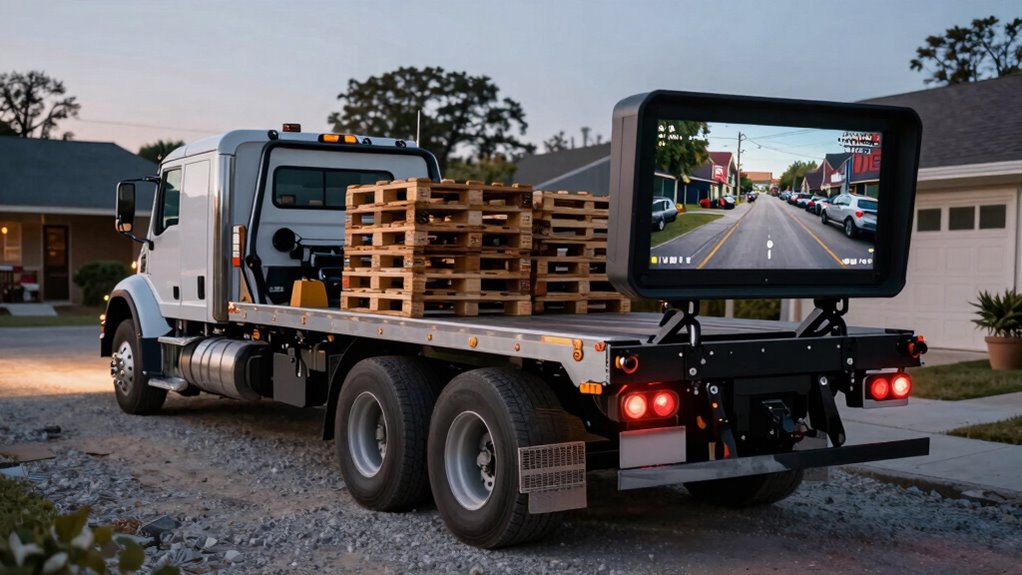
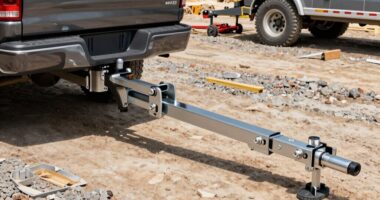
If you tow large rigs regularly, installing a backup camera kit can considerably improve your safety and convenience. When you’re handling a big trailer or heavy-duty rig, the risks involved in parking and maneuvering increase markedly. City cars are small enough that you can usually rely on your mirrors and a quick glance to park or reverse, but with tow rigs, your visibility is limited, and blind spots are much larger. That’s where a good camera installation becomes indispensable. It helps you see obstacles behind your rig that might otherwise go unnoticed, dramatically enhancing parking safety.
A backup camera kit on a tow rig isn’t just about convenience; it’s about avoiding costly accidents and potential injuries. When you’re backing up or parking in tight spots, the camera provides a clear, real-time view, reducing the guesswork. Unlike city cars, where a quick check or mirror adjustment might suffice, your rig’s size makes it harder to see everything from the driver’s seat. Installing a backup camera allows you to monitor your trailer, hitch, and surroundings effortlessly, giving you peace of mind and reducing the chances of hitting objects, other vehicles, or pedestrians. Additionally, proper camera placement is crucial to maximize the safety benefits of your setup. Proper installation techniques can ensure your camera remains effective over time and adapts to different towing scenarios.
A backup camera reduces guesswork, prevents accidents, and makes parking large rigs safer and more confident.
Camera installation on a tow rig isn’t complicated, but it’s essential to do it right. Proper placement of the camera is critical for maximum visibility—usually, it’s mounted near the rear license plate or on the trailer itself. This ensures you get an unobstructed view of what’s directly behind you. Once installed, the camera works in tandem with your monitor, giving you a wide-angle view that’s especially helpful when maneuvering in confined spaces or uneven terrain. The visibility provided by a backup camera can help prevent accidents before they happen, saving you time and money in the long run. Considering weather resistance during installation is also important to ensure the camera functions reliably in various conditions. Incorporating proper maintenance of your camera system can further extend its lifespan and reliability.
As an affiliate, we earn on qualifying purchases.
Frequently Asked Questions
How Do Backup Camera Kits Handle Different Trailer Sizes?
Backup camera kits handle different trailer sizes through adjustable camera angle adjustments, allowing you to tailor the view for various trailer dimensions. You can easily tilt or rotate the camera to get the best perspective. Additionally, consider battery life considerations, as larger or extended use might drain the battery faster. Ensuring your kit has reliable power and adjustable angles helps you safely maneuver trailers of all sizes with confidence.
Are There Specific Camera Features Best Suited for Tow Rigs?
For tow rigs, the best camera features include high durability and sharp lens clarity. You want a camera built to withstand tough weather and rough handling, ensuring it lasts long. Clear lens imagery helps you judge distances precisely, especially with large or varying trailer sizes. These features make your towing experience safer and more manageable, giving you confidence in tight spots or challenging conditions.
What Are the Installation Requirements for Towing Backup Cameras?
You’ll need to guarantee your towing backup camera kit is properly installed by connecting it to your trailer hitch area and securing the camera in a clear, stable spot. You’ll also want to connect the power supply, usually from your vehicle’s electrical system or reverse light circuit, to activate the camera when reversing. Make certain all wiring is protected from damage and that the system is tested thoroughly before hitting the road.
How Do Weather Conditions Affect Camera Performance on Tow Rigs?
Weather conditions can turn your backup camera into a fickle friend, affecting its performance like foggy glasses blurring your view. Heavy rain, snow, or mud can impair visibility, so choose cameras with weather resilience and rugged camera durability. These features guarantee your system withstands the elements, maintaining clear visuals no matter the storm. Investing in weatherproof cameras guarantees you stay confident behind the wheel, no matter how harsh the weather gets.
Can Backup Camera Kits Be Integrated With Existing Vehicle Systems?
Yes, you can integrate backup camera kits with your existing vehicle systems, but it requires careful planning. You’ll want to guarantee vehicle security by choosing compatible models and installing proper wiring. Regular camera maintenance is essential to keep the system functioning smoothly, especially in rough weather. Integration enhances safety, making it easier to monitor your tow rig and avoid accidents, ultimately protecting your investment and ensuring reliable performance.
Conclusion
So, while city cars benefit from backup cameras, your tow rig truly appreciates that extra pair of eyes. Think of a backup camera kit as your trusty sidekick, helping you navigate the twists and turns effortlessly. It’s not just about convenience, but about keeping everything—your load, your journey, and everyone around you—smoother and safer. Embracing this tech isn’t just smart; it’s like giving your rig a little extra peace of mind on every adventure.
Halloween Picks
halloween
As an affiliate, we earn on qualifying purchases.