To stop brake squeal on performance pads, first check if the wear indicators are touching the rotor, and replace the pads if needed. Inspect the rotor surface for roughness or glazing and have it resurfaced or replaced if necessary. Applying high-temp brake lubricant to the back of new pads helps dampen vibrations. Maintaining your brake system guarantees quieter, more efficient braking—continue with these tips to get the full fix and enjoy noise-free stops.
Key Takeaways
- Check if brake pad wear indicators are contacting the rotor and replace pads if necessary.
- Inspect and smooth rotor surface finish through resurfacing or replacement to reduce vibrations.
- Ensure proper installation of high-temperature brake lubricant on pad backing to dampen vibrations.
- Confirm that rotors are free of corrosion, glazing, or uneven wear, and address these issues promptly.
- Regularly maintain and inspect brake components to prevent squealing and ensure optimal braking performance.
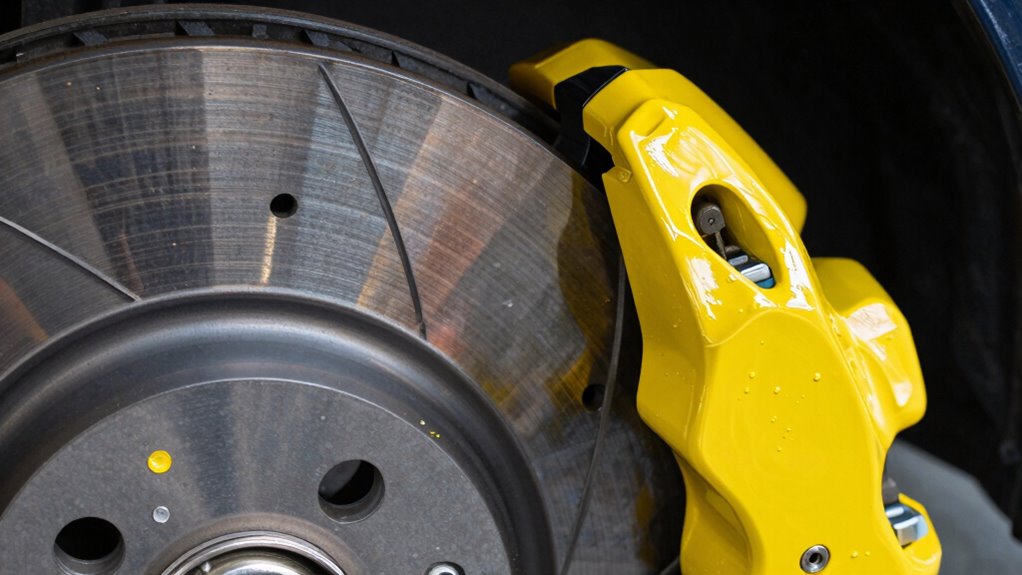
If your vehicle’s brakes are squealing, it’s more than just an annoying noise; it’s a sign you need to take action. Squealing brakes often stem from worn brake pads or issues with the rotor surface finish. One common cause is the presence of brake pad wear indicators—small metal tabs designed to produce a high-pitched squeal when your pads are nearing the end of their lifespan. These indicators serve as built-in alerts, letting you know it’s time for a brake pad replacement before the pads are completely worn out. If you hear a persistent squeal when braking, it’s likely these indicators are making contact with the rotor, signaling that your brake pads have reached their minimum thickness.
However, the rotor surface finish also plays a crucial role in brake noise. A rotor with a rough or uneven surface can cause vibrations and noise during braking. Ideally, the rotor surface should be smooth and well-machined to ensure proper contact with the brake pads. When the rotor surface finish is compromised—perhaps due to corrosion, uneven wear, or glazing—the pads can’t grip smoothly, resulting in squealing. Sometimes, this noise isn’t just annoying; it can reduce braking efficiency and accelerate rotor wear. If you’re experiencing persistent squeals despite replacing your brake pads, it’s worth inspecting the rotor surface finish and considering resurfacing or replacing the rotors altogether.
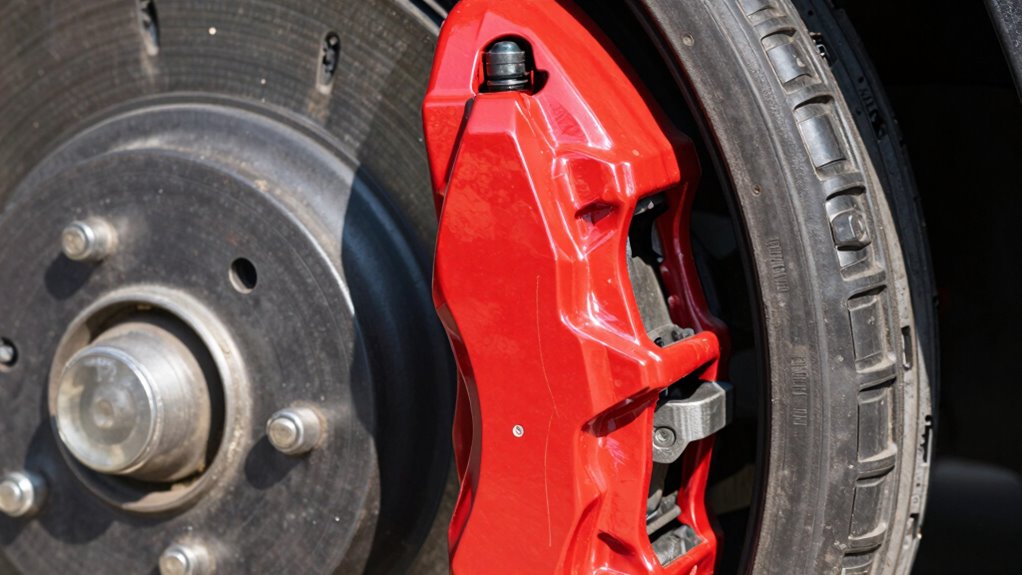
To stop the squeal, start by checking the brake pad wear indicators. If they’re touching the rotor, replacing your brake pads should resolve the noise and prevent further damage. If the rotors are rough or glazed, a professional resurfacing or replacement might be necessary. Confirming that the rotor surface finish is smooth will help your brake pads make better contact, reducing vibrations and noise. Applying a high-temperature brake lubricant to the back of the new pads can also help dampen vibrations that cause squealing. Remember, a well-maintained braking system not only stops the squeal but also improves your vehicle’s overall safety and performance.
Frequently Asked Questions
Can Noise-Canceling Brake Pads Eliminate Squeal Completely?
Noise-canceling brake pads can considerably reduce squeal, but they might not eliminate it entirely. These pads are designed with special shims and materials to dampen vibrations that cause noise. However, factors like rotor condition, brake installation, and driving habits also influence squealing. So, while noise-canceling brake pads improve comfort and reduce noise, some minor squeal may still occur depending on your vehicle’s specifics and maintenance.
How Often Should Brake Pads Be Inspected for Noise Issues?
You should inspect your brake pads at regular intervals—about every 10,000 miles or during routine oil changes. Don’t wait until you notice squealing or reduced performance; early signs of brake pad wear can be subtle. Staying vigilant ensures you catch noise issues before they worsen, saving you from costly repairs. Keep an eye on brake pad wear and stick to inspection intervals to maintain ideal braking performance and safety.
Are Ceramic Brake Pads Quieter Than Semi-Metallic Ones?
Yes, ceramic brake pads are quieter than semi-metallic ones because of their material composition, which reduces noise and vibration. Ceramic pads generally produce less squeal and brake dust, enhancing your driving experience. However, they tend to be more expensive due to material costs. If noise reduction is a priority, ceramic pads are a better choice, but consider the cost differences when making your decision.
Does Driving Style Affect Brake Squeal Frequency?
Your driving style can dramatically change how often your brakes squeal, almost as if it’s a mind of its own! Aggressive driving habits and heavy vehicle weight crank up the squeal frequency, turning every stop into a noisy spectacle. Gentle braking and smooth driving reduce vibrations, leading to quieter performance pads. So, if you want peace and quiet, adapt your driving habits and consider your vehicle’s weight for a squeal-free ride.
Can Aftermarket Brake Pads Cause More Noise Than OEM?
Yes, aftermarket brake pads can cause more noise than OEM ones, especially if they use different brake pad materials. Some aftermarket pads are made from harsher compounds, increasing squeal. To reduce noise, you should apply noise reduction techniques like anti-squeal lubricants or shims. Choosing high-quality aftermarket pads designed for noise reduction can also help, ensuring quieter braking without sacrificing performance.
Conclusion
If you skip these fixes, your brakes will squeal so loudly, they’ll wake the neighbors, shatter glass, and summon the local authorities. No matter how much you ignore it, that noise will become an unstoppable symphony of chaos, turning every drive into a public spectacle. So, don’t let your performance pads turn your car into a rolling concert of noise. Take action now—because silence isn’t just golden; it’s essential for peace of mind and social sanity.