
TL;DR

Get business pricing on garage and car supplies
- Business-only prices and quantity discounts
- Tax-exempt purchasing
- Multiple users, one account, clear invoices
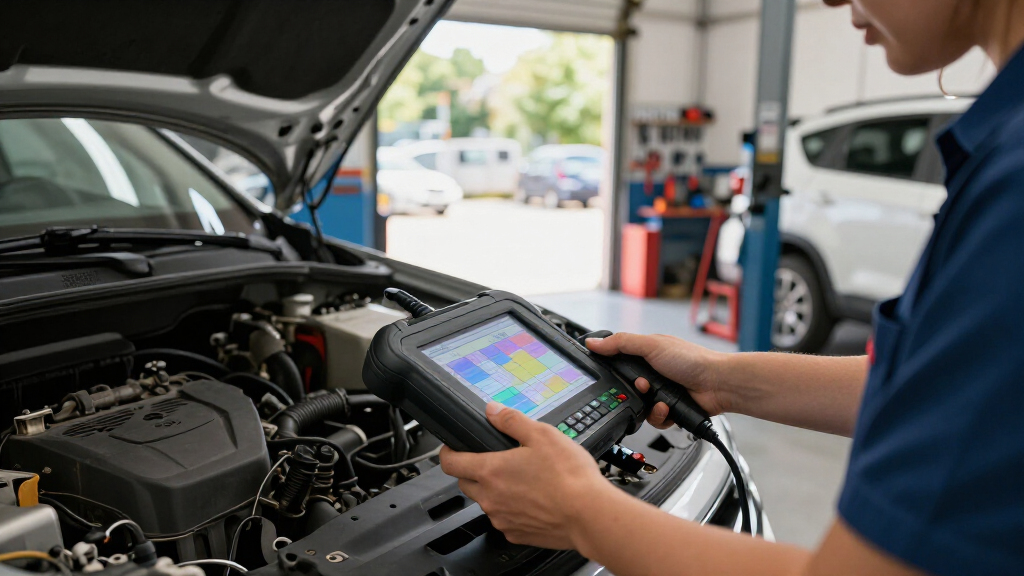
Car diagnostic scanners, or OBD scanners, read and interpret your car’s computer data, helping you identify issues early. Recent models connect via Bluetooth or Wi-Fi to smartphones, offering detailed insights and ease of use—saving time and money on repairs.
Imagine this: your check engine light flickers on while you’re cruising home. Instead of panicking or rushing to the mechanic, you pull out your smartphone-connected scanner. Within minutes, you see the trouble code and get a sense of what’s wrong. That’s the power of a good car diagnostic scanner.
These tiny devices have transformed how everyday drivers handle car issues. No more guessing games or costly trips to the shop for simple problems. Today, I’ll show you what makes a scanner worth having, the latest tech upgrades, and how to pick one that fits your needs. Whether you’re a seasoned DIYer or just want to understand your ride better, this guide will get you up to speed.
A quality car diagnostic scanner provides quick, clear insights into vehicle issues, saving time and money.
Wireless scanners paired with smartphones make diagnostics accessible for everyday drivers.
Latest models include cloud updates, bi-directional controls, and manufacturer-specific code interpretation.
Choosing the right scanner depends on your vehicle, budget, and how deep you want to go into diagnostics.
Always keep your scanner’s firmware updated to ensure compatibility with newer vehicle models.
What Exactly Is a Car Diagnostic Scanner and Why Should You Care?
At its core, a car diagnostic scanner is a device that taps into your vehicle’s onboard computer, known as the ECU (Engine Control Unit). It reads the codes stored when something’s wrong—like a misfire or a sensor glitch—and shows you what’s happening under the hood.
For example, if your car suddenly loses power or your check engine light blinks, a scanner can pinpoint the exact issue—say, a faulty oxygen sensor or a loose gas cap. This saves you from blind guessing and helps you decide whether it’s a quick fix or a trip to the mechanic is needed.
Think of it as a translator between your car’s complex language and your understanding. Without it, you’re flying blind, relying on guesswork or costly diagnostics. With one, you gain clarity and control. This clarity can prevent minor issues from escalating into expensive repairs, and understanding the root cause can help you make informed repair decisions—saving both time and money. Moreover, knowing what’s wrong before visiting a mechanic can give you confidence during discussions, possibly leading to more accurate estimates and quicker fixes.
As an affiliate, we earn on qualifying purchases.
Which Features Make a Car Diagnostic Scanner Worth Buying?
Not all scanners are created equal. The best ones combine ease of use with powerful diagnostics. Here’s what to look for:
- Compatibility: Most support OBD-II protocols, essential for vehicles from 1996 onward. Some also handle manufacturer-specific codes for newer or luxury cars. This ensures you can diagnose a broad range of vehicles, but be aware that more advanced features may be limited to higher-end models.
- Live Data Streaming: Real-time sensor info like RPM, coolant temp, and throttle position helps you see how your car performs on the road. This data is crucial for diagnosing intermittent issues or understanding how different conditions affect your vehicle’s behavior. Without live data, you might miss subtle problems that don’t trigger a code but still impact performance or safety.
- Connectivity: Wireless options like Bluetooth or Wi-Fi connect to your smartphone or tablet, making data easy to read and save. This reduces clutter and makes diagnostics more accessible, especially for those who prefer using their devices rather than a dedicated screen. However, wireless connections can sometimes introduce lag or compatibility issues, so choosing a reputable brand matters.
- User Interface: Touchscreens, app integration, and clear menus make it simple to interpret results without frustration. An intuitive interface can significantly reduce the learning curve, especially for beginners. Additionally, some apps offer guided troubleshooting or repair suggestions, which can help you understand the problem more deeply and decide on the appropriate action.
- Price Range: Entry-level models start around $20, enough for basic code reading. Mid-range ($50–$200) adds features like live data and freeze frame info. Professional tools above $200 dive deep into diagnostics like ABS, airbags, and transmission codes. When choosing, consider whether the extra features are necessary for your needs or if a simpler device suffices. Sometimes, investing in a slightly more advanced scanner can save money in the long run by providing more comprehensive diagnostics.
For example, a mechanic-grade scanner might cost $500 but provide bi-directional controls and detailed troubleshooting—great if you run a shop. For everyday drivers, a $50 Bluetooth device paired with an intuitive app is often plenty, especially if you only need basic error codes and live data to guide minor repairs.
How Modern Car Scanners Use Wireless Tech to Make Your Life Easier
Wireless connectivity has turned diagnostic scanners into your car’s best friend. Instead of bulky cables, many now connect via Bluetooth or Wi-Fi, streaming data directly to your phone or tablet. It’s like giving your car a high-tech checkup from your living room.
Imagine troubleshooting a mysterious rough idle. With a Bluetooth scanner, you open an app, and live graphs display your engine’s RPM, throttle position, and sensor readings. You can even record logs to analyze later or share reports with a mechanic. This instant access allows you to address issues promptly, often before they become serious enough to cause breakdowns or safety concerns.
This ease of use encourages more frequent checks, catching issues early before they turn into costly repairs. Plus, cloud updates keep your device current, and firmware upgrades improve compatibility and features over time. Such seamless updates mean your scanner adapts to new vehicle models and diagnostic codes, extending its usefulness and saving you future upgrade costs.
What Are the Most Exciting Recent Upgrades in Car Diagnostic Tech?
In just a few years, car scanners have evolved rapidly. Here’s what’s new:
- Smartphone Integration: Bluetooth and Wi-Fi adapters turn your phone into a diagnostic hub, with dedicated apps offering detailed info and troubleshooting tips. This integration makes diagnostics accessible to non-experts and allows for quick, on-the-go troubleshooting.
- Expanded Data Access: Advanced scanners interpret manufacturer-specific codes and provide guided repair instructions, not just generic errors. This deeper insight can help diagnose complex issues that basic scanners might miss, reducing unnecessary parts replacements and trial-and-error repairs.
- Cloud Connectivity: Data logs can be stored online, helping you track issues over time or share info with a mechanic remotely. This feature is invaluable for ongoing diagnostics and for maintaining a history that can reveal patterns or recurring problems.
- Over-the-Air Updates: Firmware updates are now delivered wirelessly, ensuring your scanner stays current with the latest vehicle tech and code libraries. This reduces the need for manual updates and guarantees compatibility with new models and features.
- Bi-Directional Control: Some professional tools can command certain vehicle functions, like resetting sensors or activating components, making troubleshooting faster and more precise. This capability can significantly cut down repair times and help verify fixes immediately after repairs.
For instance, a recent model might tell you that a misfire on cylinder 3 is caused by a faulty coil, then let you reset the sensor after repairs—saving a trip back to the shop and giving you immediate confirmation of your repair success.
What Are the Key Facts Every Car Owner Should Know About Diagnostic Scanners?
Understanding some core facts helps you pick the right tool. First, the OBD-II standard is mandatory for cars sold in the U.S. after 1996, meaning most vehicles speak the same diagnostic language. This standardization simplifies the selection process, but it also means that some advanced features might only be available on newer or higher-end scanners.
Second, error codes—called DTCs—are like the car’s way of telling you what’s wrong. For example, P0300 indicates a random misfire, often caused by spark plugs or coils. Recognizing these codes and understanding their implications can help you decide whether a simple fix is enough or if professional intervention is needed.
Third, these scanners can tell you if your car is ready for emissions testing, a handy feature if you’re planning to renew your registration. This can help avoid surprises at the testing station and ensure your vehicle passes without issues. And finally, while entry-level scanners are perfect for DIY fixes, more advanced models can diagnose ABS, airbags, and transmission issues—though those are usually best handled by pros. Knowing your vehicle’s specific needs helps you choose a scanner that provides the appropriate depth of diagnostics, avoiding overspending or inadequate tools.
Which Questions Do Car Owners Usually Ask About Diagnostic Scanners?
Q: Do I really need a scanner? If you want quick answers for check engine lights or want to understand your car’s health, then yes. It’s a handy tool for DIY fixes and saving money on minor repairs. Without one, you’re relying solely on guesswork or costly diagnostic visits, which can lead to unnecessary expenses or missed early signs of trouble.
Q: Can my smartphone replace a dedicated scanner? For many, yes. Bluetooth adapters paired with apps like Torque or OBD Link make diagnostics straightforward. However, compatibility issues may arise with certain vehicles or apps, and some advanced features are only available on dedicated hardware. This means that while your phone can handle basic diagnostics, more complex or manufacturer-specific issues might require specialized tools. Weighing the convenience of mobile diagnostics against the potential limitations of smartphone apps helps you decide whether a simple setup suffices or if investing in a dedicated scanner is worthwhile.
Q: Are cheap scanners worth it? They work for reading basic codes, but lack features like live data or manufacturer-specific codes. For serious troubleshooting, investing in a mid-range model pays off by providing deeper insights and reducing guesswork, ultimately saving you time and money.
Q: Can I fix my car myself with a scanner? No, but you can identify what’s wrong. Repair often needs professional skills, especially for complex systems like ABS or airbags. A scanner is a diagnostic tool, not a repair device, but knowing the problem helps you decide whether a DIY fix is feasible or if professional help is necessary.
Q: How often should I scan my car? Use it when the check engine light appears or periodically if your car’s performance drops. Regular checks can reveal issues early, preventing costly repairs and ensuring safety. Frequent diagnostics also help you understand your vehicle’s normal behavior, making it easier to spot anomalies. Developing a routine of periodic scanning can give you peace of mind and keep your vehicle running smoothly, especially as it ages or if you notice subtle changes in how it drives.
Conclusion
Having a reliable car diagnostic scanner turns you from a passive bystander into an active participant in your vehicle’s health. It’s like giving your car a checkup whenever you want, right from your phone. That peace of mind, plus the ability to catch problems early, can save you hundreds in repairs.
Before buying, consider your vehicle’s make and your tech preferences. A smart scanner isn’t just a gadget—it’s a smart investment in your car’s longevity and your wallet’s health. Now, ask yourself: are you ready to take control of your ride?
Halloween Picks
halloween
As an affiliate, we earn on qualifying purchases.