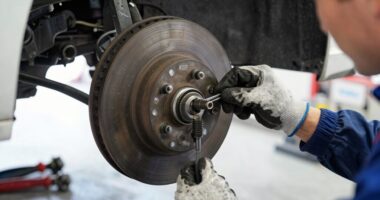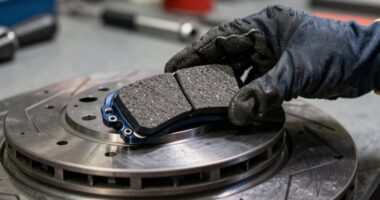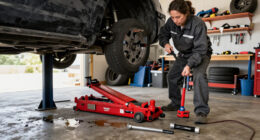
To check for brake pad tapering early, safely lift your vehicle and remove the wheel to access the brakes. Visually inspect the pads for uneven wear or thinning on one side, and run your finger along the surface to feel for roughness or irregularities. Look for grooves or ridges that indicate uneven wear. Staying on top of these checks helps prevent bigger issues later, and if you keep exploring, you’ll discover more tips for safe brake maintenance.

Get business pricing on garage and car supplies
- Business-only prices and quantity discounts
- Tax-exempt purchasing
- Multiple users, one account, clear invoices
Key Takeaways
- Visually inspect brake pads for uneven thickness or tapering edges during regular maintenance.
- Run your finger along the pad surface to feel for roughness or irregular wear patterns.
- Check for uneven grooves or ridges indicating irregular wear early on.
- Remove the wheel periodically to thoroughly examine calipers, pistons, and rotor surface.
- Compare both sides of each brake pad to identify any discrepancies in wear.
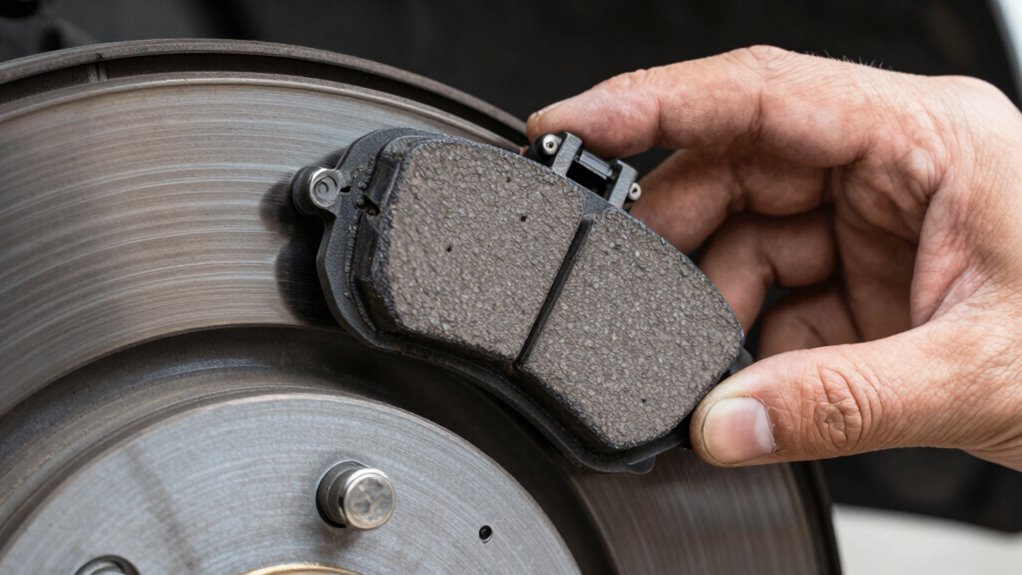
If you suspect your brake pads are tapering, checking them promptly can prevent uneven wear and potential brake failure. Tapered brake pads are a sign that your braking system isn’t functioning properly, and ignoring this issue could lead to costly repairs or dangerous driving situations. The key to avoiding these problems is understanding how to perform an effective taper inspection and recognizing the signs of brake wear early on. When inspecting, look for uneven thickness on the brake pads, especially if one side appears more worn than the other. This unevenness often indicates tapering, which occurs when the brake pad wears at an angle rather than evenly across its surface.
To start your taper inspection, safely lift your vehicle using a jack and secure it with jack stands. Remove the wheel to access the brake caliper and pads. Once exposed, examine the brake pads for any visible signs of tapering—this means the pad material is thinner on one edge compared to the other. You might also notice uneven grooves or ridges that suggest irregular brake wear. It’s important to compare both sides of each pad, as tapering might only be present on one side. A visual inspection is usually enough to identify tapering, but you can also run your finger along the surface to feel for roughness or unevenness. Additionally, understanding brake system components can help you better diagnose the root cause of uneven wear. Regularly inspecting your brake system and understanding brake system maintenance can help extend the lifespan of your brake pads and improve overall safety. Familiarity with typical brake wear patterns can also aid in early detection before issues worsen. Being aware of brake system functionality can further assist in diagnosing underlying problems that lead to uneven wear.
If you detect signs of brake wear or tapering, it’s vital to address the issue immediately. Uneven brake wear can be caused by several factors, including misaligned calipers, sticking pistons, or uneven rotor surfaces. Conducting a proper taper inspection regularly helps catch these problems early, saving you from more extensive repairs later. Keep in mind that tapering can sometimes be subtle, so don’t dismiss minor irregularities—they often develop into more significant problems over time. Maintaining your brake system involves not only inspecting for taper but also ensuring your brake fluid is fresh and your rotors are in good condition.
Products Worth Considering

Milwaukee 2697-22 M18 18-Volt Lithium-Ion Cordless Hammer Drill/Impact Driver XC Combo Kit (2-Tool)

Chemical Guys 16-Piece Arsenal Builder Car Wash Kit with Foam Cannon & Bucket

DEWALT 20V MAX Cordless 1/2-Inch Impact Wrench Kit (DCF900P1)
As an affiliate, we earn on qualifying purchases.
Frequently Asked Questions
How Often Should I Inspect Brake Pad Taper?
You should inspect your brake pad taper every 10,000 to 15,000 miles or during regular brake service. The taper inspection frequency depends on your brake pad materials and driving habits. If you notice uneven wear or reduced braking performance, check the taper sooner. Regular inspections help catch taper issues early, preventing uneven brake pad wear and potential damage to rotors, ensuring your brakes stay reliable and safe.
Can Brake Pad Taper Cause Uneven Tire Wear?
Yes, tapered brake pads can cause uneven tire wear because they don’t apply even pressure on the rotors. When brake pad replacement isn’t done timely, the taper worsens, leading to misalignment. This uneven pressure transfers to your tires, causing uneven wear. Regularly inspecting tapered brake pads and replacing them promptly helps maintain even tire wear and guarantees your braking system functions properly.
What Tools Are Best for Measuring Brake Pad Taper?
Did you know that uneven brake pad wear can reduce braking efficiency by up to 20%? To measure brake pad taper accurately, use specialized taper measurement tools like dial indicators or brake pad gauges. These tools help you assess taper levels during brake pad replacement, ensuring even wear and best safety. Regular checks with these tools allow you to catch issues early, preventing costly repairs and maintaining your vehicle’s braking performance.
Does Brake Pad Taper Affect Braking Distance?
Yes, brake pad taper can affect braking distance. When brake pads wear unevenly due to materials or taper, you might experience reduced braking efficiency. Conducting taper inspection techniques helps identify uneven wear early, ensuring peak performance. Using the right tools to measure brake pad materials and checking for taper can prevent longer stopping distances, keeping you safe on the road. Regular maintenance and inspections are key to maintaining effective braking.
Can I Fix Brake Pad Taper Myself?
Around 60% of car owners attempt DIY brake repairs, so yes, you can fix brake pad taper yourself. Start with brake pad materials suited for your vehicle, then use taper inspection techniques like visual checks and measuring with a feeler gauge. If you’re comfortable with basic tools and safety precautions, you can address minor taper issues. However, for severe taper or unfamiliarity, consulting a professional guarantees safety and proper repair.
Conclusion
If you ignore brake pad taper, you’re risking a disaster worse than a car crash at a rollercoaster ride’s peak. Left unchecked, uneven wear can turn your brakes into a ticking time bomb, ready to blow at the worst moment. So, check that taper regularly—think of it as your car’s personal health alarm. Catch it early, before it spirals into chaos, and keep your rides smooth, safe, and worry-free!