
To choose jack points without guessing and risking damage, always consult your owner’s manual for the exact locations of reinforced support points. Look for notches, marks, or rubber pads that indicate the proper spots. Make sure your vehicle is on a flat, solid surface, and use correct lifting equipment rated for your vehicle’s weight. Follow these guidelines carefully, and if you keep exploring, you’ll find all the tips you need to lift safely.

Get garage and car supplies delivered free — and shop member deals
- Fast, free delivery on millions of items
- Access to Prime Big Deal Days deals on October 6–7
- Prime Video, Amazon Music and more included
Key Takeaways
- Consult the vehicle’s owner’s manual for designated, reinforced jack points to avoid guesswork.
- Identify reinforced support areas marked by notches, rubber pads, or specific symbols.
- Use the recommended lifting equipment rated for your vehicle’s weight.
- Ensure the vehicle is on a flat, stable surface before positioning the jack.
- Avoid placing the jack on non-reinforced or soft areas to prevent bending or damage.

Have you ever wondered how to safely lift your vehicle without causing damage? Choosing the right jack points is essential for maintaining lifting safety and ensuring vehicle stability. When you lift your car, improper placement can lead to slipping, bending, or even damaging expensive components. That’s why understanding where to position your jack is key to a successful, damage-free lift.
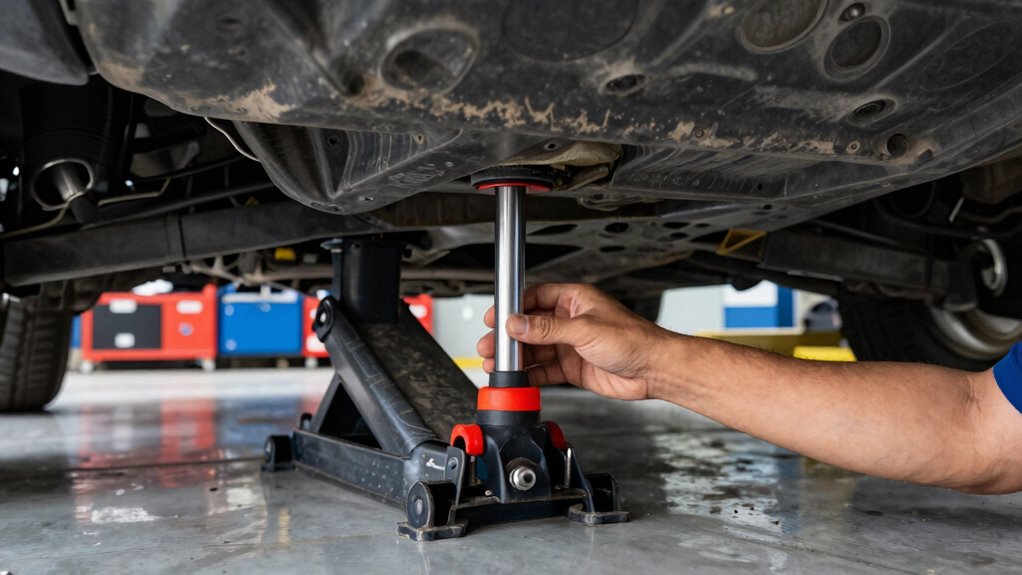
First, always consult your vehicle’s owner’s manual. It provides specific guidance on the designated jack points designed to support the weight without risking damage. These points are reinforced areas, often indicated with notches, marks, or a small rubber pad. Ignoring these recommendations and guessing can compromise vehicle stability, making your lift unsafe and risking slips or falls. Remember, the goal is to lift with precision, not guesswork.
Always consult your owner’s manual for precise, reinforced jack points to ensure safe lifting without damage.
Before you begin, guarantee your vehicle is on a flat, solid surface. Uneven ground or soft terrain can destabilize the lift, increasing the risk of accidents or damage. Engage the parking brake and, if necessary, use wheel chocks on the opposite end to prevent rolling. This setup creates a stable environment that supports safe lifting. Additionally, understanding the correct jack placement can help prevent damage and ensure safety during the lift. Being familiar with vehicle weight distribution can also assist in choosing the optimal support points. Knowing the safe lifting techniques can further help you avoid common mistakes and maintain stability. Furthermore, using the proper lifting equipment designed for your vehicle type can significantly reduce the risk of mishaps.
As an affiliate, we earn on qualifying purchases.
Frequently Asked Questions
Can I Use a Regular Jack for All Vehicle Types?
You can’t use a regular jack for all vehicle types safely, especially for tasks like tire replacement. Different vehicles require specific jack types designed for their weight and frame. Using the wrong jack can compromise jack safety and cause damage. Always check your vehicle’s manual to find the right jack point and verify the jack’s capacity matches your vehicle. Properly choosing and using the correct jack prevents accidents and protects your vehicle.
How Do I Identify the Proper Jack Points on a New Car?
You identify proper jack points on a new car by examining the vehicle chassis for reinforced areas, often marked with notches or stickers. Check your owner’s manual for specific guidance, as these points are designed with structural reinforcement to support weight safely. Avoid guessing; instead, utilize these designated spots to prevent bending or damaging the vehicle’s frame. Proper identification ensures safe lifting and maintains your car’s integrity.
Are There Risks in Using Incorrect Jack Points?
Using incorrect jack points can pose risks to your vehicle’s safety during lifting. Poorly chosen spots may cause instability, risking damage to the vehicle’s structure or even falling. Prioritizing proper jack point safety guarantees a smooth vehicle lifting process, preventing unnecessary stress on key components. Always double-check your vehicle’s designated lifting points and use the right equipment to avoid accidents, keeping your work safe and damage-free.
What Tools Help Locate Hidden Jack Points?
To locate hidden jack points, you can use tools like a flashlight to spot jack point markings on the vehicle’s frame. Lifting pad adapters are also helpful, as they provide a secure contact point if the original jack points are hard to see or access. Carefully inspect the area for stamped or painted markings indicating safe jack points, and use these tools to guarantee you lift your vehicle safely without risking damage.
How Often Should I Inspect Jack Points for Damage?
You should inspect your jack points regularly, ideally every few months or before any major work. Think of it as protecting your investment—damage prevention is worth the effort. Frequent jack point inspection helps catch rust, cracks, or wear early, avoiding costly repairs and safety risks. By staying vigilant, you’re ensuring stability and safety during every lift, giving you peace of mind and preventing minor issues from turning into big problems.
Conclusion
Choosing the right jack points is essential to avoid costly damage and guarantee safety. Remember, improper lifting can cause vehicle damage or personal injury. Did you know that over 30% of car repairs related to improper jacking are due to incorrect jack point selection? By understanding your vehicle’s specifications and following proper guidelines, you can confidently lift without guessing or risking expensive repairs. Stay informed, be precise, and lift smart—your vehicle and wallet will thank you.
Halloween Picks
halloween
As an affiliate, we earn on qualifying purchases.