
A cooling system pressure test helps you catch problems early by checking for leaks, weak hoses, or radiator issues before they cause costly damage. You use a specialized pump to pressurize the system and monitor the gauge for pressure drops, which indicate leaks. Ensuring your coolant is in good condition during the test boosts accuracy and prevents overheating. Keep in mind, maintaining this test regularly can save you money and prevent breakdowns—learn more about how it works.
Key Takeaways
- Pressure testing identifies leaks and weaknesses before they cause engine overheating or costly repairs.
- It monitors system pressure stability to detect hidden issues like hose or radiator leaks early.
- Using proper coolant ensures accurate test results and reveals potential air pockets or contamination.
- Regular pressure tests help maintain radiator efficiency and prevent unexpected cooling system failures.
- Detecting weakened radiator caps or pressure drops early extends radiator lifespan and avoids engine damage.
Have you ever wondered how to guarantee your vehicle’s cooling system is functioning properly? Performing a cooling system pressure test is one of the most effective ways to do so. This test helps identify potential issues before they turn into costly repairs or cause your engine to overheat. When you understand how this process works, you can catch problems early and keep your vehicle running smoothly.
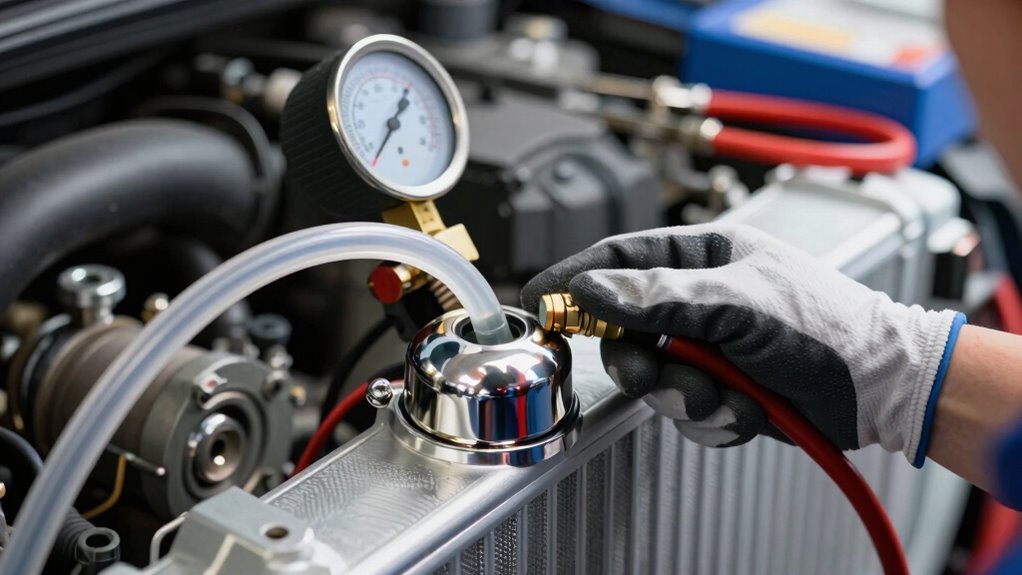
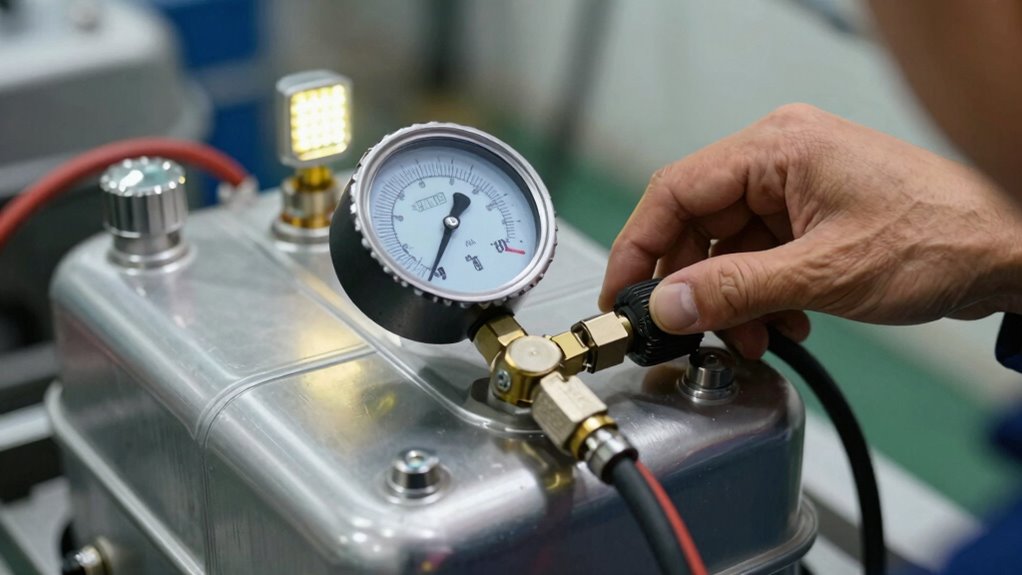
The core of a cooling system pressure test is to evaluate the radiator efficiency and ensure that the system maintains proper pressure without leaks. The radiator is the heart of your cooling system, and its ability to dissipate heat depends heavily on maintaining the right pressure. If the pressure drops unexpectedly, it usually indicates a leak somewhere in the system—be it in hoses, the radiator itself, or the water pump. During the test, a specialized pump attaches to the radiator or coolant reservoir, pressurizing the system to the manufacturer’s specified level. If the pressure holds steady, it suggests that your radiator and hoses are intact, and the radiator efficiency is preserved. However, if the pressure drops, it’s a clear sign something isn’t right.
Coolant composition plays a crucial role in the overall health of your cooling system. When conducting a pressure test, it’s a good opportunity to verify that your coolant is in good condition. Old, contaminated, or improper coolant can compromise radiator efficiency, leading to overheating issues. During the test, you might notice bubbles or see the pressure gauge fluctuate, which could indicate air pockets or a coolant leak. If the coolant is dirty or low, it’s best to drain and replace it with a fresh mixture recommended by your vehicle’s manufacturer. Proper coolant composition ensures ideal heat transfer and prevents corrosion inside the radiator, extending its lifespan. Regularly checking the coolant quality can help maintain optimal system performance and prevent corrosion inside the radiator. Additionally, understanding the importance of radiator cap integrity can prevent pressure loss and overheating issues.
Performing a cooling system pressure test isn’t just about spotting leaks; it’s also about maintaining overall system integrity. Regular testing can reveal hidden problems, such as a weakened radiator cap, which might not seem like a big deal but can cause pressure loss and overheating. Analyzing system pressure helps identify weaknesses before they become major failures. It’s a simple yet powerful diagnostic step that can save you from unexpected breakdowns. When you monitor your cooling system’s pressure, you’re proactively safeguarding your engine’s health. It’s a quick, efficient way to confirm that radiator efficiency remains high and that coolant composition is supporting your vehicle’s cooling needs. In the long run, this simple test keeps your engine cooler, running better, and avoiding costly repairs caused by overlooked issues.
cooling system pressure test kit
As an affiliate, we earn on qualifying purchases.
As an affiliate, we earn on qualifying purchases.
Frequently Asked Questions
How Often Should I Perform a Cooling System Pressure Test?
You should perform a cooling system pressure test at least once a year or during routine cooling system maintenance. Regular testing helps maintain vehicle cooling efficiency and catch potential leaks or issues early. If you notice overheating or coolant leaks, perform a pressure test sooner. Consistent testing guarantees your cooling system stays in top shape, preventing costly repairs and keeping your engine running smoothly.
Can a Pressure Test Detect Hidden Radiator Leaks?
A pressure test can reveal hidden radiator leaks like a lighthouse piercing through fog. During radiator inspection, you apply pressure and monitor it closely. If the pressure drops unexpectedly, it signals a leak somewhere in the system. This method effectively detects hidden radiator leaks that aren’t visible to the naked eye, saving you from potential engine damage. Regular pressure monitoring guarantees your cooling system stays in top shape and prevents costly repairs.
What Tools Are Needed for a Cooling System Pressure Test?
To perform a cooling system pressure test, you’ll need a radiator cap designed for pressure testing and a pressure gauge. First, remove the radiator cap and attach the pressure tester, which often has a built-in gauge. Pump the tester to pressurize the system, observing the gauge for drops indicating leaks. This setup allows you to identify issues early, preventing costly repairs and ensuring your cooling system functions properly.
Is a Pressure Test Safe for All Vehicle Types?
A pressure test isn’t safe for all vehicle types, especially older or delicate models. Before you start, you should do a thorough radiator inspection and coolant analysis to identify any existing issues. If your vehicle isn’t suitable, or if you’re unsure, consult a professional. Proper testing helps catch problems early and prevents damage, ensuring your cooling system works efficiently without risking safety during the process.
How Long Does a Typical Cooling System Pressure Test Take?
A typical cooling system pressure test takes about 30 to 60 minutes. During this time, you can perform radiator maintenance, like checking for leaks, and confirm your coolant replacement is effective. You’ll want to monitor the pressure gauge closely, as it helps identify potential issues early. This quick test helps maintain ideal engine temperature and prevents overheating, saving you time and avoiding costly repairs down the line.
Conclusion
Regularly performing a cooling system pressure test can catch issues before they turn into costly repairs. Studies show that early detection of leaks or weak spots reduces repair costs by up to 30%. By staying proactive and testing your cooling system, you guarantee your vehicle runs smoothly and avoids unexpected breakdowns. Don’t wait for overheating—schedule a pressure test today and keep your engine running efficiently for miles to come.