To extend your tuned engine’s lifespan, focus on regular maintenance, like replacing spark plugs, filters, and inspecting belts and hoses. Manage fluids carefully, ensuring proper levels and quality, and keep your cooling system in top shape. Practice smooth driving habits, avoiding sudden acceleration or heavy loads, and tune supporting components properly. Staying proactive with scheduled tune-ups and protective measures helps prevent early wear. If you keep these tips in mind, you’ll release even more ways to keep your engine running smoothly.

Get business pricing on garage and car supplies
- Business-only prices and quantity discounts
- Tax-exempt purchasing
- Multiple users, one account, clear invoices
Key Takeaways
- Regularly perform maintenance, including oil changes, spark plug replacements, and fluid checks, to prevent premature engine wear.
- Avoid aggressive driving and sudden accelerations to reduce stress on the tuned engine components.
- Use high-quality, compatible parts and tune the engine carefully to prevent over-stressing modified components.
- Keep the cooling system and air filtration well-maintained to manage heat and debris effectively.
- Track modifications and maintain detailed records to ensure ongoing reliability and identify potential issues early.
Regular Maintenance and Inspection

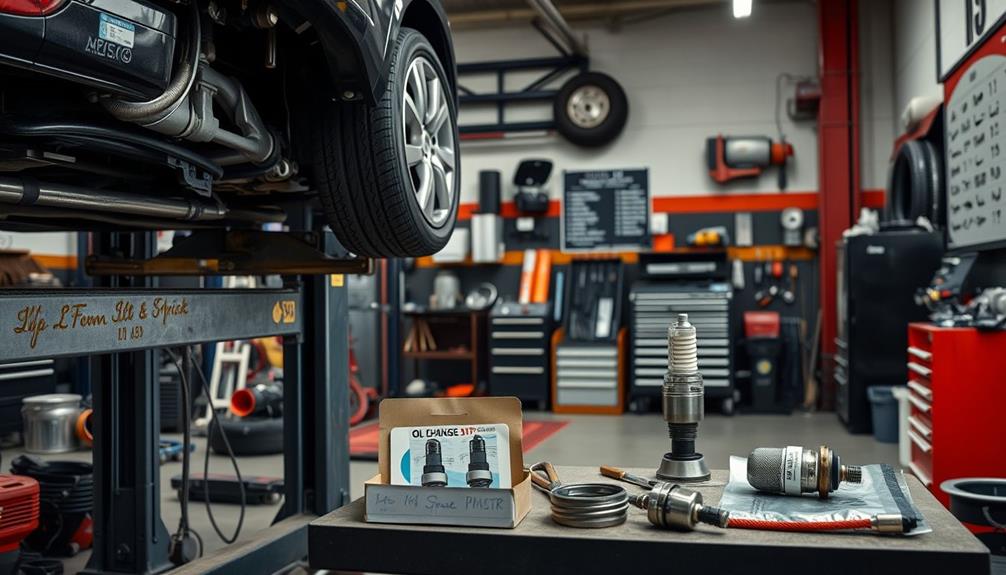
Regular maintenance and inspection are essential for extending your engine’s lifespan. You should replace spark plugs every 30,000 to 100,000 miles, depending on your vehicle’s guidelines. Check them regularly for corrosion, carbon buildup, or worn electrodes, and verify you use the manufacturer-recommended type. Proper gap spacing during installation is vital to prevent misfires that could damage your catalytic converter. This helps maintain optimal combustion and efficiency. Keep an eye on your air and fuel systems; replace the air filter every 12,000 to 15,000 miles and change the fuel filter at recommended intervals. Clean fuel injectors to maintain proper spray patterns and check for vacuum leaks in the intake manifold. Regularly inspect belts and hoses for signs of wear, cracks, or leaks to avoid costly breakdowns.
Proper Fluid Management

Effective fluid management is essential for keeping your engine running smoothly and preventing costly damage. Regularly check your coolant levels and ensure the mixture is correct—usually 50/50 coolant and water—to prevent overheating and corrosion. Replace coolant as it degrades over time, and inspect hoses, clamps, and the radiator for leaks or damage. Incorporating proper maintenance routines can further extend your engine’s lifespan and ensure optimal performance. Proper engine oil is equally vital; use high-quality synthetic oils suited for your tuned engine, and follow recommended change intervals to remove contaminants and maintain lubrication. Don’t forget to monitor transmission and drivetrain fluids; keeping these clean and at proper levels reduces friction and prevents wear. Additionally, maintain your cooling system’s flow and pressure, upgrading components if necessary, to guarantee consistent heat transfer and engine health. Regularly inspecting fluid quality helps identify potential issues before they lead to major repairs.
Smart Driving Practices
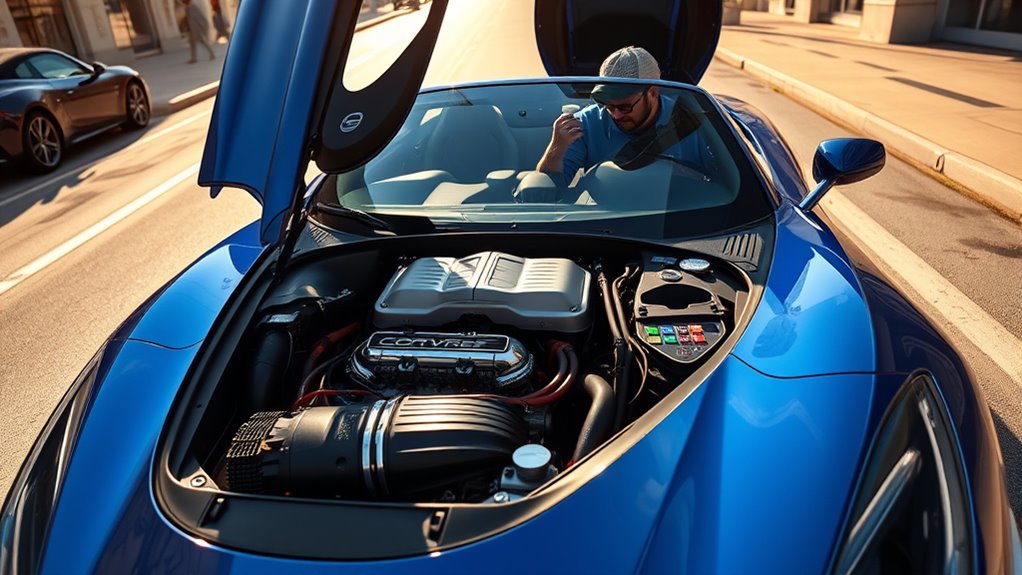
Practicing smart driving habits can considerably extend your engine’s lifespan by reducing unnecessary stress and wear. Accelerate gradually to lessen strain on the engine and transmission, and avoid sudden starts that can cause rapid engine wear. Brake smoothly to minimize stress on the brakes and engine mounts, preventing faster component deterioration. Smooth driving reduces mechanical strain, which is essential for maintaining engine health over time. Regularly shifting gears efficiently in manual transmissions and maintaining a steady speed on highways help lower RPMs and fuel consumption. Always keep your vehicle within its load capacity—overloading forces the engine to work harder, risking overheating. Staying aware of city traffic patterns can help you plan routes that minimize stop-and-go driving, further reducing engine stress. Stay alert to road hazards like potholes; driving over them slowly reduces potential damage. Using high-quality fuel and avoiding extreme temperatures also support engine health. Recognizing angel number patterns can help you stay aligned with your vehicle maintenance goals and overall well-being. These practices keep your engine running smoothly and last longer.
Tuning and Supporting Modifications
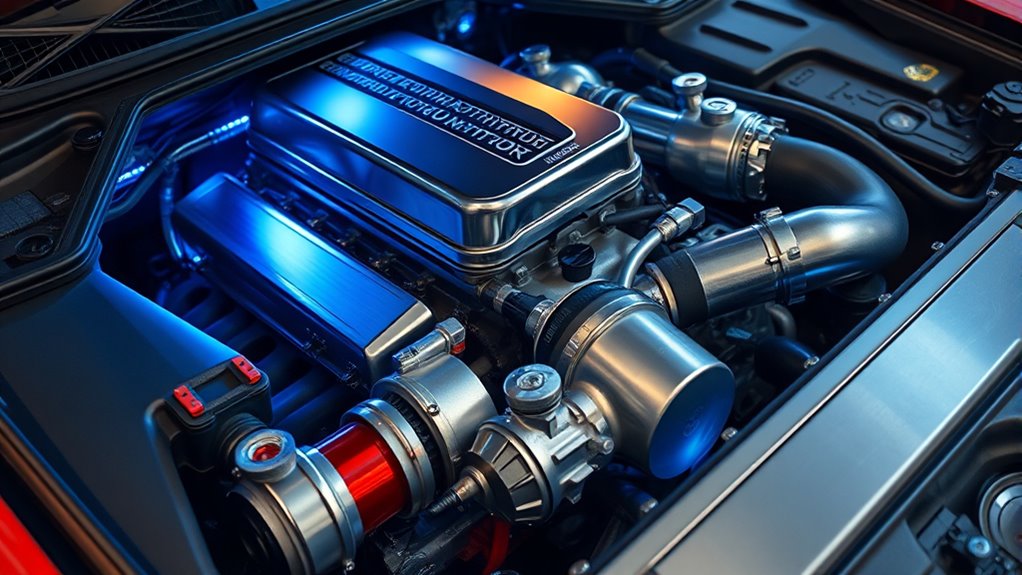
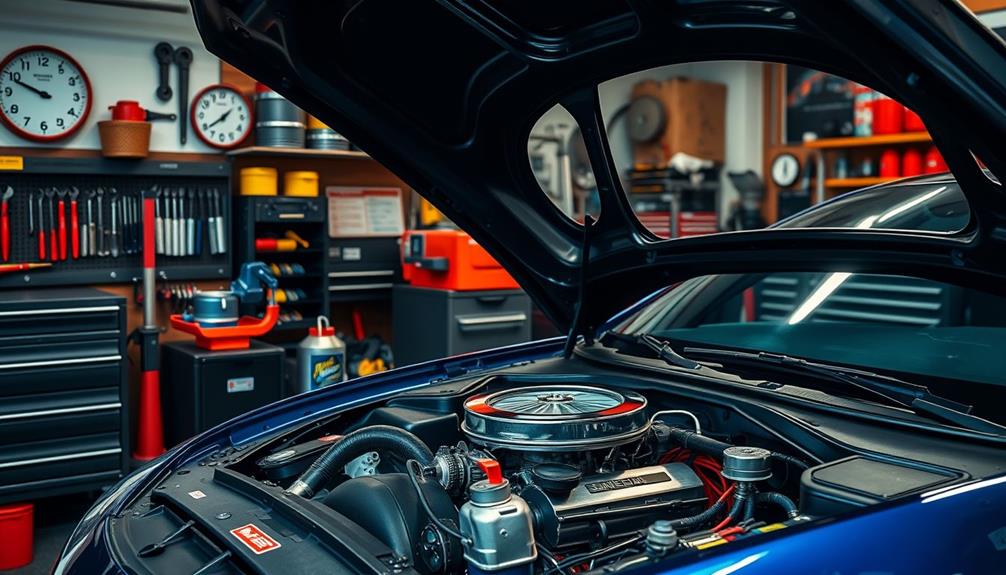
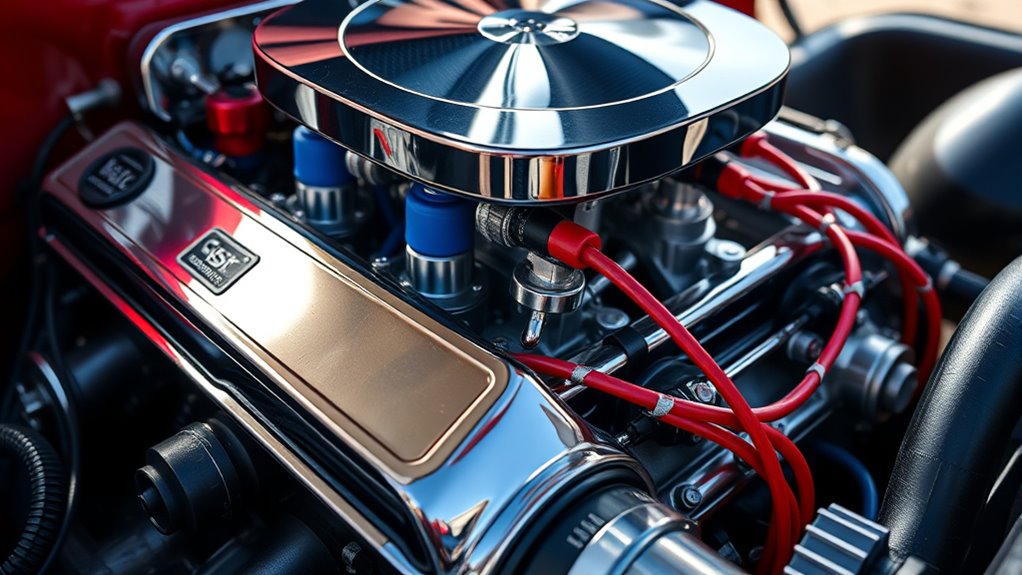
Tuning your engine and adding supporting modifications can boost performance, but they also introduce new stresses that may affect longevity. Increased power output puts extra pressure on engine parts, so careful tuning of air-fuel ratios is essential to prevent premature wear. Overstressed components may fail prematurely, reducing engine lifespan. Upgraded components like high-performance spark plugs, pistons, and rods help handle the added stress, while strengthened engine mounts stabilize the engine during aggressive driving. Supporting modifications such as improved airflow systems and performance engine oils assist in managing heat and pressure. Regular maintenance becomes even more critical after tuning; inspecting cooling systems, fuel components, and engine health ensures issues are caught early. Additionally, utilizing proper filtration can prevent debris from causing damage to sensitive engine parts. Implementing effective cooling solutions can further help manage increased heat generated by tuned engines, supporting durability. Tracking modifications and maintaining detailed records support ongoing reliability, helping your tuned engine perform at its best without sacrificing lifespan.
Preventative and Protective Measures
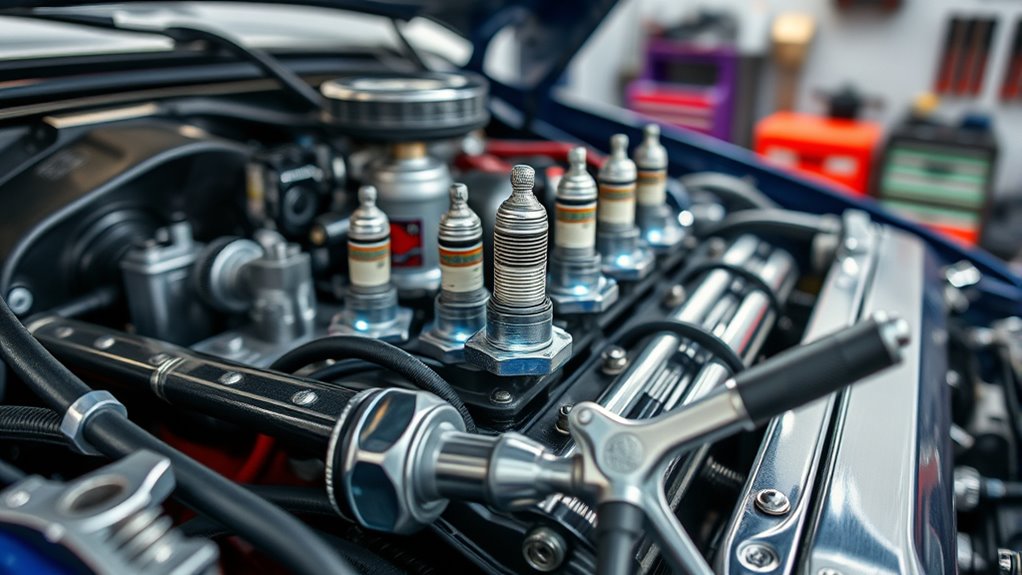
Maintaining your engine’s longevity requires implementing preventative and protective measures that address potential issues before they escalate. Regular fluid management is essential—change your oil on schedule, and keep transmission, coolant, brake, and power steering fluids topped up and fresh. These checks prevent overheating, reduce friction, and avoid costly repairs. Proper fluid levels help maintain engine efficiency. Follow your vehicle’s maintenance schedule for tune-ups, belt and hose replacements, and inspections to catch problems early. Keep your vehicle clean, especially after harsh weather, to prevent rust and corrosion, and use rust inhibitors on crucial parts. Additionally, adopting a minimalist lifestyle can help reduce unnecessary expenses that might lead to neglecting routine maintenance. Maintaining proper electrical system checks, including batteries and wiring, is also vital to prevent unexpected failures. Ensure proper airflow and cooling to prevent overheating. By staying proactive, you extend your tuned engine’s lifespan and keep it running smoothly.
Frequently Asked Questions
How Often Should I Perform a Compression Test on My Tuned Engine?
You’re wondering how often to perform a compression test on your tuned engine. Typically, you should do it during routine tune-ups or if you notice issues like misfires or decreased performance.
Regular checks, especially after modifications or repairs, help catch problems early. For most engines, testing every 10,000 to 15,000 miles is a good rule of thumb, but always follow your mechanic’s specific recommendations for your engine’s needs.
What Are Signs of Early Turbocharger or Supercharger Wear?
They say, “A stitch in time saves nine,” and spotting early signs of turbo or supercharger wear can save your engine.
Watch for power loss, strange noises, excessive smoke, and increased oil consumption.
Keep an eye on the check engine light and unusual engine temperature.
Regular inspections and maintenance, like oil changes and boost checks, help catch issues early, ensuring your turbo or supercharger keeps performing at its best longer.
Can Aftermarket Exhaust Systems Harm Engine Longevity?
Aftermarket exhaust systems can harm your engine’s longevity if you don’t choose quality components or install them properly. Poor-fitment, low-grade materials, or improper tuning can cause stress, leaks, or backpressure issues.
Oversized piping may reduce exhaust velocity, affecting low-end torque and engine health. Regular maintenance, professional installation, and ensuring compatibility with your vehicle help prevent these problems, ultimately protecting your engine from premature wear.
How Does Ambient Temperature Affect Tuned Engine Durability?
Ambient temperature plays a big role in your tuned engine’s durability. When it’s cold, your engine runs cooler, reducing thermal stress and helping components last longer.
Hot temperatures, however, cause increased heat buildup, which can lead to premature wear and potential failures. To keep your engine healthy, you should adjust tuning settings with seasonal changes, guarantee proper cooling, and regularly monitor engine temperatures, especially during extreme weather conditions.
Is It Necessary to Recalibrate Sensors After Modifications?
Think of your engine as a finely tuned orchestra. When you make modifications, it’s like adding new instruments—without recalibrating, the harmony falls apart.
You need to reset sensors and the ECU to guarantee all parts work together smoothly. Recalibration keeps the engine performing at its best, prevents warning lights, and maintains efficiency.
Skipping this step risks misreads and potential damage, so always recalibrate after modifications for peak performance.
Conclusion
By following these tips, you can greatly extend your tuned engine’s lifespan. Regular maintenance and smart driving reduce wear and tear, while proper fluid management keeps everything running smoothly. Did you know that engines with routine care last up to 50% longer? Staying proactive with protective measures and supporting mods ensures your engine stays reliable and powerful for miles to come. Keep these habits in mind, and enjoy the ride with confidence.
Fall Picks
fall essentials
As an affiliate, we earn on qualifying purchases.