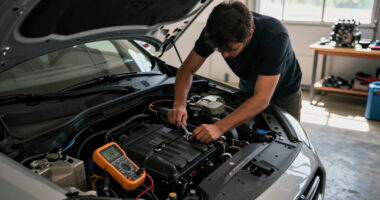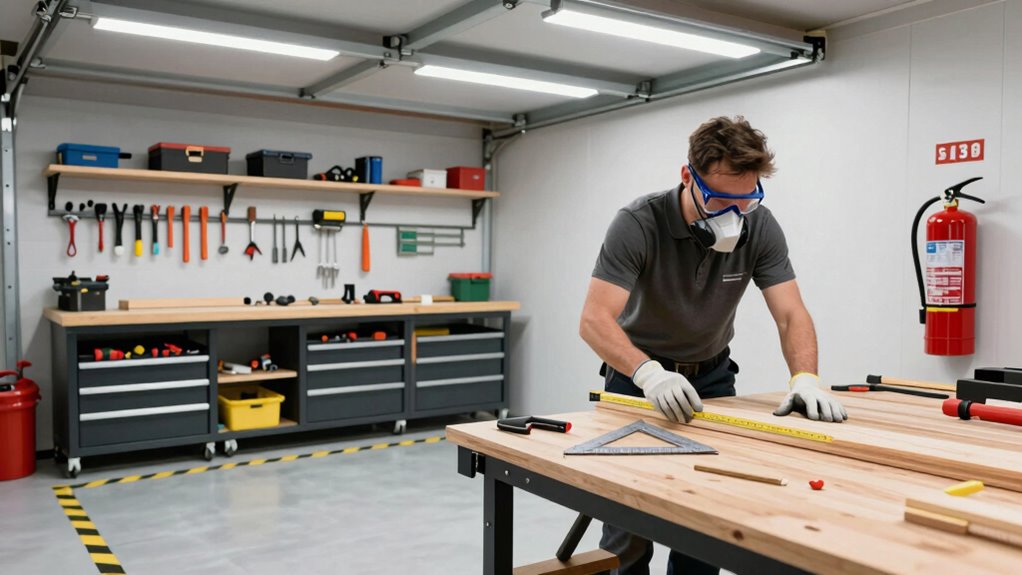

Smart DIYers protect themselves by maintaining organized, clean workspaces, and inspecting tools regularly for damage. They wear proper safety gear and follow safety protocols before using power tools or chemicals. Emergency preparedness, like keeping a first aid kit and fire extinguisher nearby, keeps accidents manageable. Fixing hazards promptly and practicing routine inspections create a safer environment, preventing costly mistakes. Keep going to discover essential tips that will help you work smarter and safer every time.

Get business pricing on garage and car supplies
- Business-only prices and quantity discounts
- Tax-exempt purchasing
- Multiple users, one account, clear invoices
Key Takeaways
- Regularly inspect and maintain tools to prevent accidents caused by faulty equipment or dull blades.
- Keep an organized workspace to minimize tripping hazards and improve safety efficiency.
- Always wear appropriate protective gear when handling tools, chemicals, or performing risky tasks.
- Develop and practice emergency plans, including first aid, fire safety, and spill response.
- Follow proper procedures, read instructions carefully, and avoid shortcuts that compromise safety.
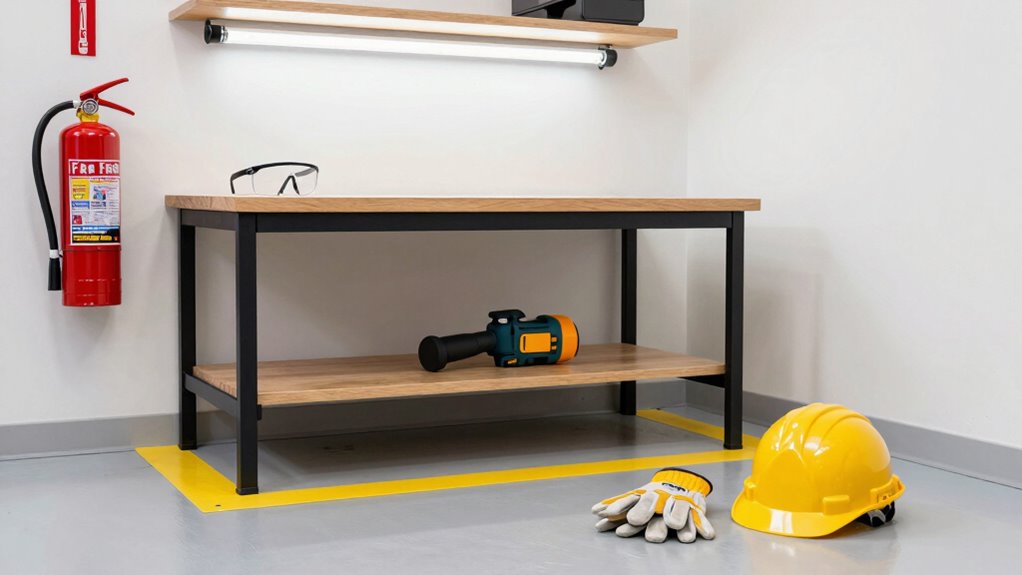
Your garage is a convenient space for storage and projects, but without proper safety habits, it can quickly become a hazard. One of the most essential habits you can develop is regular tool maintenance. Well-maintained tools not only perform better but also reduce the risk of accidents. Dull blades, loose parts, or faulty wiring can cause injuries or damage to your projects. Take the time to clean, sharpen, and inspect your tools regularly. Store them properly, ensuring they’re organized so you don’t have to scramble to find what you need in a hurry. When tools are in good condition, you lessen the chance of slips, cuts, or other injuries, making your workspace safer and more efficient. Regular inspections are crucial for identifying potential hazards early and ensuring your tools operate safely.
Regularly inspect and maintain tools to ensure safety and efficiency in your garage workspace.
Emergency preparedness is another key safety habit that sets smart DIYers apart. You should always have a well-stocked first aid kit easily accessible, along with knowledge of basic first aid procedures. Keep a fire extinguisher nearby and know how to use it. In the event of an accident, quick action can prevent minor injuries from becoming more serious. Make sure your garage has proper ventilation, especially when working with chemicals, paints, or fumes, to prevent inhalation hazards. Additionally, having a clear plan for emergencies—like electrical fires or chemical spills—can save lives and reduce property damage. Practicing safety drills periodically can help you respond more effectively when it counts. Regularly reviewing safety protocols and emergency response plans ensures you’re prepared for unexpected incidents. Incorporating hazard identification into your routine can further help you spot risks before they lead to accidents. Remember, being proactive about safety can also extend to educating yourself on proper procedures for handling tools and chemicals.
Safety isn’t just about handling tools carefully; it’s about creating a space where hazards are minimized. You should always wear appropriate protective gear, such as safety glasses, gloves, and ear protection, depending on the task. Keep your workspace organized to prevent tripping over clutter or accidentally knocking over hazardous materials. Regularly check your garage for potential hazards, like loose wiring or unstable shelves, and fix problems promptly. Developing these habits of routine inspection and maintenance keeps your environment safe and reduces costly accidents. Remember, a safe workspace is a productive workspace, and taking proactive safety measures is essential. Additionally, understanding safety procedures thoroughly can help you avoid common mistakes and respond effectively in emergencies.
Finally, educating yourself on proper procedures and safety protocols is essential. Don’t operate power tools or handle chemicals without understanding their risks and correct usage. Read labels, follow instructions, and don’t take shortcuts. Staying informed and prepared makes you a smarter DIYer, capable of tackling projects safely and effectively. When you prioritize tool maintenance and emergency preparedness, you’re not just avoiding accidents—you’re creating a space where you can work confidently, knowing you’re protected and ready for anything. These habits distinguish responsible DIYers from those who frequently face costly mistakes or injuries, ensuring your garage remains a safe, productive environment.
As an affiliate, we earn on qualifying purchases.
Frequently Asked Questions
How Often Should I Inspect My Garage Safety Equipment?
You should inspect your garage safety equipment monthly to guarantee it’s in top shape. Regularly check fire extinguishers for pressure and accessibility, review garage fire prevention measures, and test smoke alarms. For electrical safety tips, inspect wiring and outlets for damage or wear. Staying proactive helps prevent accidents, keeps your garage safe, and makes sure your safety equipment functions properly during emergencies. Consistent inspections are key to avoiding costly mistakes.
What Are Common Hidden Hazards in a Garage?
You should watch out for hidden hazards like garage fire hazards from overloaded outlets or flammable materials stored improperly. Chemical spill prevention is key—store chemicals in labeled, sealed containers away from heat sources. Keep clutter to a minimum, and regularly check for leaks or corrosion. These hidden dangers can cause fires or health issues, so stay vigilant and prioritize safety to keep your garage a secure workspace.
How Do I Dispose of Hazardous Garage Materials Safely?
Did you know that improper disposal of hazardous materials causes thousands of fires annually? You should store chemicals properly in labeled, sealed containers, away from heat sources. When disposing of hazardous garage materials, take them to a licensed disposal facility or hazardous waste collection event. Never pour chemicals down the drain. Focus on fire prevention by safely handling and disposing of these substances, protecting your home, family, and environment.
Are There Specific Safety Rules for Children in the Garage?
Yes, you should set specific safety rules for children in the garage. Start with child-proofing measures like locking cabinets and securing hazardous materials out of reach. Create a designated safety zone setup, keeping tools and chemicals away from children’s play areas. Always supervise kids closely, and educate them on garage dangers. These steps help prevent accidents and guarantee their safety while allowing them to learn about the space responsibly.
What Essential Safety Gear Should Every DIYER Have?
Every DIYer needs a superhero arsenal, starting with protective eyewear—you’d hate to lose an eye over a spilled paint or flying debris. Don’t forget a fire extinguisher, because sparks happen, and fire’s only fun in fireworks. These essentials keep you safe while you conquer projects, ensuring mishaps don’t turn into costly mistakes. Gear up, stay smart, and turn your garage into a fortress of safety!
Conclusion
By adopting these garage safety habits, you’re not just protecting your workspace—you’re safeguarding yourself and your loved ones. Sure, it might seem like extra effort at first, but the peace of mind is worth it. Remember, even small precautions can prevent costly mistakes or injuries down the line. So, stay vigilant, stay safe, and turn your garage into a smart, secure space where DIY projects are fun, not risky.
Fall Picks
fall essentials
As an affiliate, we earn on qualifying purchases.