Hub‑centric rings may be small, but they’re essential for a smooth, safe drive. They fill the gap between your wheel’s center bore and the vehicle’s hub, ensuring proper alignment and reducing vibrations. Without the right rings, your wheels may sit improperly, causing imbalance, uneven tire wear, and potential damage. Overlooking this simple part can lead to costly repairs and unsafe driving conditions. Keep going to discover how these tiny rings make a big difference.
Key Takeaways
- Hub‑centric rings ensure wheels sit flush on the hub, preventing misalignment and vibrations during driving.
- Improperly fitted rings cause wheels to be off-center, leading to imbalance and increased vibration issues.
- Small parts like hub‑centric rings significantly impact ride comfort, safety, and tire wear.
- Correct ring size verification is essential to avoid vibrations and ensure proper wheel alignment.
- Proper installation of hub‑centric rings minimizes vibrations and prolongs wheel and vehicle component lifespan.
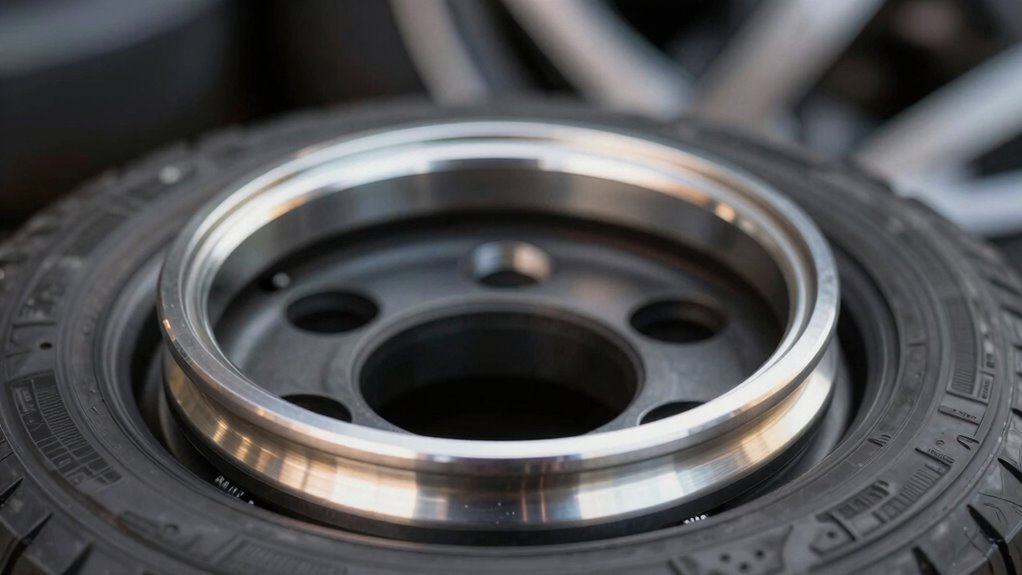
Ever wondered how to guarantee your wheels fit perfectly on your vehicle’s hub? It all starts with understanding hub‑centric rings. These tiny, often overlooked components play a vital role in making sure your wheels sit flush and true on your vehicle’s hub. When installing new wheels or changing tires, you might notice vibration issues or uneven wear. That’s where hub‑centric rings come into play—if they’re not properly fitted, they can cause significant problems that affect your driving experience.
Hub‑centric rings are designed to fill the gap between the wheel’s center bore and the vehicle’s hub. Without these rings, the wheel might not be perfectly centered, leading to an imbalance that can cause vibrations while you’re driving. These vibrations are not just annoying; they can also accelerate tire wear and strain other suspension components. Proper wheel alignment and tire balancing are essential to maintaining smooth handling, but they can only do so much if your wheels aren’t properly seated on the hub. That’s why hub‑centric rings are often recommended during wheel installation, especially with aftermarket wheels that might not match your vehicle’s hub specifications.
When your wheels aren’t properly centered, even the best wheel alignment can’t fully mitigate the vibrations caused by an imbalance. Tire balancing, which involves equalizing the weight distribution around your wheel and tire assembly, is critical for smooth rides. However, if the wheel isn’t properly seated because of a misfit hub bore, balancing efforts might be compromised. This can lead to persistent vibrations at certain speeds, uneven tire wear, and increased stress on suspension parts. Installing the correct hub‑centric rings ensures that the wheel sits perfectly centered, allowing your wheel alignment and tire balancing efforts to work effectively. Additionally, understanding the field‑of‑view and imaging‑scale concepts from deep-sky imaging can help illustrate how even small misalignments can cause significant issues, similar to how tiny parts like hub‑centric rings impact vehicle performance.
Many drivers overlook these tiny rings, assuming they’re unnecessary or optional. But neglecting proper hub fitment can result in significant vibration issues that degrade your driving comfort and safety. It’s a simple step that can save you from costly repairs down the line. When installing new wheels, always verify that the hub‑centric rings are the right size for your vehicle’s hub and the wheels. Proper fitment guarantees your wheels are perfectly aligned with the hub, reducing vibrations and ensuring a smoother ride. Remember, even small parts like hub‑centric rings have a big impact on your vehicle’s overall performance and comfort, especially when paired with good wheel alignment and tire balancing practices.
Frequently Asked Questions
How Do Hub-Centric Rings Affect Wheel Balance Over Time?
Hub-centric rings can affect your wheel balance over time if they don’t fit perfectly or shift, causing vibrations. These vibrations can throw off your wheel alignment and lead to uneven tire pressure, which worsens the imbalance. Regularly check the fit of your hub-centric rings and make certain your wheels are properly balanced. Maintaining correct tire pressure and alignment helps prevent vibrations and keeps your ride smooth.
Can Hub-Centric Rings Cause Premature Tire Wear?
Like a tiny misstep can throw off a dance, poor hub-centric accuracy can lead to premature tire wear. If your hub-centric rings don’t fit perfectly, they can cause subtle imbalances, stressing your tires over time. This also affects wheel alignment, leading to uneven tread wear and reduced tire life. Ensuring proper fit and regular wheel checks helps prevent early tire damage caused by these small but impactful parts.
Are There Specific Vehicle Models More Prone to Vibration Issues?
Certain vehicle models are more prone to vibration issues, especially those with aftermarket wheels that don’t perfectly match stock hubs. The compatibility of hub-centric rings plays a key role, as poor fit or low-quality materials can cause vibrations. Look for rings made from durable materials like aluminum or high-grade plastics, and confirm they’re designed specifically for your vehicle to minimize vibrations and improve ride comfort.
How Do I Choose the Right Size Hub-Centric Ring?
Choosing the right size hub-centric ring is vital to prevent vibrations that feel like a earthquake on wheels. Measure your wheel fitment accurately, including the hub diameter and the center bore, to guarantee perfect compatibility. Consult your vehicle’s specifications or aftermarket parts to match the exact size. Using the wrong size can cause serious issues, so double-check to keep your ride smooth and vibration-free.
What Are Signs of Improper Hub-Centric Ring Installation?
You’ll notice improper installation signs like uneven tire wear, vibrations while driving, or a wobbling wheel. If the hub centric ring isn’t aligned properly, it can cause these issues. Make sure the ring fits snugly and seats evenly against the hub and wheel. Misalignment or incomplete seating often leads to vibrations and uneven wear, so double-check that the hub centric ring is properly installed and aligned during installation.
Conclusion
Think of hub-centric rings as the small keystones in a grand arch; when they’re perfect, everything stays steady and true. But if they’re off, even just a little, your ride becomes a shaky bridge, trembling with every mile. Don’t overlook these tiny parts—they’re the silent guardians of smoothness. Pay attention to them, and you’ll keep your journey stable and vibration-free, like a fortress built on solid ground. Small parts, big impact.