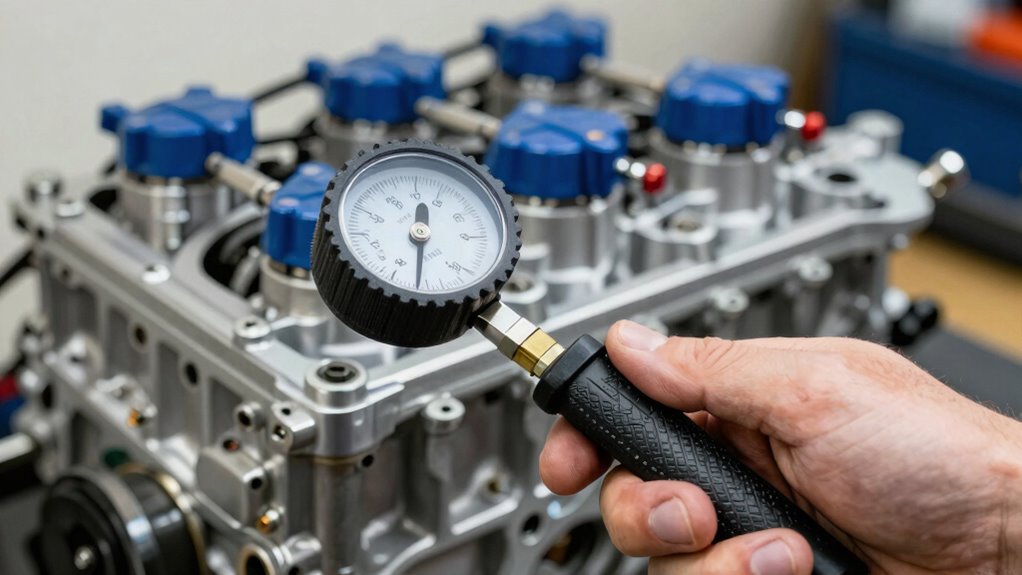

A leak-down test gives you precise insights into an engine’s condition, helping you identify hidden issues like worn piston rings, valve leaks, or head gasket problems before buying. It pinpoints the exact location of faults, ensuring you’re aware of potential repairs needed. This test improves your chances of making a solid investment by avoiding costly surprises later. Keep exploring to understand how this tool can protect your next engine purchase even better.
Key Takeaways
- Provides precise insights into engine cylinder condition, aiding in informed buying decisions.
- Detects hidden issues like worn piston rings or valve leaks early, preventing costly surprises.
- Confirms proper cylinder sealing, ensuring optimal engine performance and fuel efficiency.
- Helps assess overall engine health, extending lifespan and reducing the risk of future failures.
- Preserves vehicle value by ensuring the engine is in good condition before purchase or repair.

A leak-down test offers a clear advantage when diagnosing engine issues because it provides precise insights into the condition of your engine’s cylinders. When you’re considering a serious engine purchase, understanding the internal health of the engine is vital. This test allows you to pinpoint exactly where potential problems lie, rather than relying on guesswork or less informative diagnostics. By evaluating how well each cylinder holds pressure, you gain a clear picture of the engine’s overall health, which can directly impact your decision-making process and future repairs.
One of the most significant benefits of performing a leak-down test is its ability to reveal issues that might otherwise go unnoticed. For example, if a cylinder is losing pressure due to worn piston rings, valve leaks, or head gasket problems, the test will highlight these faults. Identifying such issues early helps you avoid purchasing an engine with hidden defects that could lead to costly repairs down the line. It also means you can negotiate better pricing or request repairs before finalizing the deal, saving you money and headaches.
A leak-down test reveals hidden engine issues, helping you avoid costly repairs and negotiate better prices.
In addition to helping you avoid future repair costs, a leak-down test provides vital information about the engine’s fuel efficiency. An engine with compromised cylinders often burns more fuel because it doesn’t operate smoothly or efficiently. By confirming that each cylinder is sealing properly, you can guarantee that the engine runs at its best, which translates into better fuel economy. This is especially important if you’re investing in a used engine or vehicle, where efficiency might have already declined due to neglect or wear.
Furthermore, performing a leak-down test contributes to the engine’s longevity. When you identify issues early, you can address them before they cause extensive damage. A healthy, well-sealing engine is less prone to overheating, abnormal wear, and mechanical failure, all of which can shorten an engine’s lifespan. By choosing an engine that passes the leak-down test with minimal leakage, you’re fundamentally investing in a powerplant that’s more likely to serve you reliably over the years. This not only preserves your investment but also ensures your vehicle operates smoothly and efficiently for a longer period.
Regularly testing engine components like cylinder sealing can help maintain optimal engine performance and prevent costly repairs in the future.
As an affiliate, we earn on qualifying purchases.
Frequently Asked Questions
How Often Should I Perform a Leak-Down Test on My Engine?
You should perform a leak-down test at least once a year or whenever you notice engine performance issues. Regular testing helps with maintenance scheduling and improves diagnostic accuracy, catching potential problems early. If your engine runs poorly, has unusual noises, or consumes excessive oil, do a leak-down test sooner. Consistent testing guarantees your engine stays in top condition and prevents costly repairs, giving you peace of mind.
Can a Leak-Down Test Detect All Types of Engine Problems?
A leak-down test can identify many engine problems, but it doesn’t catch everything. It effectively detects faulty valves and piston damage by revealing pressure loss. However, issues like worn piston rings or head gasket leaks might not be as apparent. You should consider additional diagnostics if you suspect problems beyond leak-down test results. Regular testing helps maintain engine health, but be aware of its limitations for a thorough diagnosis.
Is a Leak-Down Test Suitable for All Engine Types?
A leak-down test isn’t suitable for all engine types, as engine compatibility varies. For example, it works well on gasoline engines but may have limitations with diesel engines or engines with certain modifications. Test limitations include difficulty detecting specific issues like timing problems or internal wear not causing leaks. Always check your engine’s specifications and consult a professional to guarantee a leak-down test is appropriate for your engine type.
What Are the Costs Associated With a Leak-Down Test?
Cost considerations can cause concern, but leak-down tests tend to be cost-effective and essential for car connoisseurs. Typically, you’ll pay between $100 and $200, depending on the vehicle and location. The affordability of this assessment offers a strategic safeguard, revealing engine health and preventing costly repairs later. While prices vary, investing in a leak-down test pays dividends by delivering detailed diagnostics and deepening your engine knowledge.
How Long Does It Take to Complete a Leak-Down Test?
A leak-down test typically takes about 20 to 30 minutes, depending on the engine’s complexity. You’ll want to do some test preparation, like ensuring the engine is warm and cylinders are at top dead center. During the process, you compare compression readings from each cylinder to identify issues. This quick yet thorough compression comparison helps you assess engine health accurately, making it a valuable step for serious buyers.
Conclusion
So, next time you’re eyeing that engine, remember the leak-down test is your safeguard, revealing hidden flaws like shadows lurking in the dark. It’s your chance to see beyond the surface, to hear the silent whispers of potential trouble. With this test, you’re holding a flashlight in a tunnel, illuminating the unseen, ensuring your investment doesn’t turn into a nightmare. Trust this method to steer you clear, and keep your engine dreams on the road, not in the repair shop.