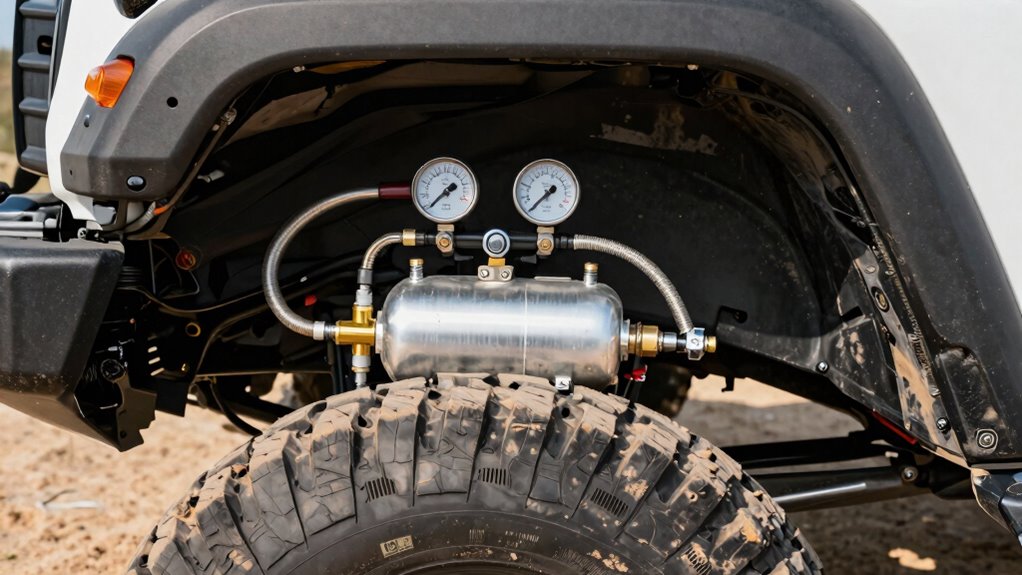

An onboard air system is invaluable for off-road builds because it gives you quick access to compressed air for tire inflation and pneumatic tools when you’re in remote, tough terrain. It eliminates the need for external compressors or stops, helping you stay moving and handle tire repairs or other tasks efficiently. Proper maintenance and smart setup guarantee reliability and safety. To discover how to optimize your system further, continue exploring the key tips and considerations.

Get business pricing on garage and car supplies
- Business-only prices and quantity discounts
- Tax-exempt purchasing
- Multiple users, one account, clear invoices
Key Takeaways
- Provides quick, reliable compressed air for tire inflation and pneumatic tools, enhancing off-road efficiency.
- Eliminates dependence on external compressors or service stations, increasing off-road independence.
- Enables fast tire repairs and recovery in challenging terrain, reducing downtime.
- When properly maintained and installed, ensures system durability and safety in harsh environments.
- Customizable system components optimize performance based on specific off-road needs.
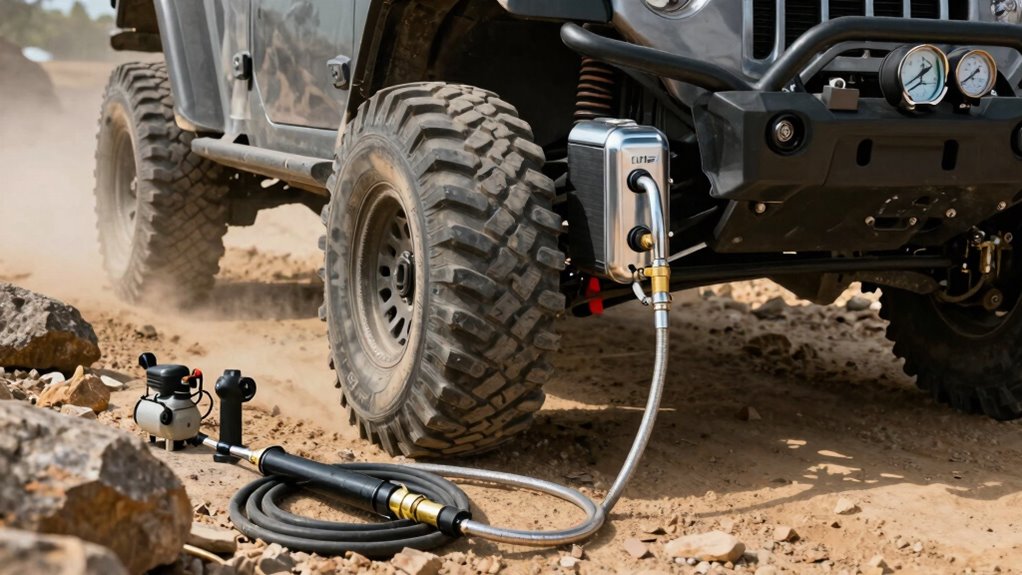
Off-road adventures often demand quick and reliable access to compressed air, whether for airing up tires, operating pneumatic tools, or other recovery needs. An onboard air system makes this possible, giving you the convenience of having compressed air right at your fingertips without the hassle of external compressors or waiting for service stations. When you invest in an onboard system, you’re gaining independence and efficiency, especially in remote locations where help or tools might be miles away. This setup is especially valuable if you’re tackling challenging terrain, as it allows you to address tire issues or perform repairs swiftly, minimizing downtime and keeping your trip on track.
Having onboard compressed air boosts off-road independence and quickens tire repairs in remote, tough terrain.
To get the most out of your onboard air system, proper air compressor maintenance is essential. Regular checks help prevent issues like leaks, pressure drops, or equipment failure. Make sure you inspect hoses and fittings for wear, keep the compressor clean, and change filters as recommended by the manufacturer. Well-maintained components not only extend the life of your system but also guarantee consistent performance when you need it most. Moreover, paying attention to your compressor’s oil levels and pressure settings can help avoid overheating or damage, which could leave you stranded in the middle of nowhere. Additionally, understanding the importance of system durability** can help you choose components that stand up to rugged off-road conditions. Regularly reviewing system performance** can also alert you to potential issues before they become serious problems.
Choosing durable and corrosion-resistant parts can significantly improve your system’s longevity and performance in harsh environments. System installation tips are equally important for reliability and safety. Proper mounting ensures your compressor remains secure during rough rides, preventing damage or disconnection. Choose a location that offers adequate ventilation to avoid overheating, and make sure all wiring and air lines are routed neatly, avoiding sharp edges or pinch points that could cause leaks or failure. When connecting your system, double-check that fittings are tight and that the pressure switch is correctly calibrated to prevent over-pressurization. It’s essential to follow the manufacturer’s instructions carefully—installation procedures are critical to ensure safety and optimal performance. Improper installation can lead to system failure or safety hazards.
Having an onboard air system also means you can customize your setup to match your specific off-road needs. You might want a larger tank for prolonged use or a more powerful compressor for quick inflation. Consider how often you’ll use the system and plan your installation accordingly. Investing in quality components and taking the time to do it right pays off in durability and performance. With proper air compressor maintenance and thoughtful system installation tips, your onboard air setup becomes a dependable tool that enhances your off-road experience, giving you the confidence to handle whatever terrain throws your way.
off-road onboard air compressor kit
As an affiliate, we earn on qualifying purchases.
As an affiliate, we earn on qualifying purchases.
Frequently Asked Questions
How Much Does an Onboard Air System Typically Cost?
Onboard air systems typically cost between $200 and $600, depending on the features and brand. Your pricing options vary based on compressor size, tank capacity, and added accessories. When considering budget, think about your off-road needs and how often you’ll use the system. Investing in a reliable setup might cost more upfront but guarantees durability and performance, making it a worthwhile addition for serious off-road enthusiasts.
Can Onboard Air Systems Be Installed on Any Vehicle?
Yes, onboard air systems can be installed on most vehicles, but vehicle compatibility varies depending on the air system type and available space. You’ll want to take into account factors like engine size, available mounting points, and electrical capacity. Some air systems are designed specifically for off-road vehicles, while others are more universal. Consulting with a professional guarantees you choose the right system and installation method for your vehicle.
What Maintenance Is Required for Onboard Air Systems?
To keep your onboard air system running smoothly, you need to regularly check the air filter and clean or replace it as needed. Keep an eye on the system’s durability by inspecting hoses and connections for leaks or wear. Additionally, periodically drain any moisture from the tank, and guarantee the compressor is properly lubricated if applicable. Routine maintenance helps prevent failures and extends your system’s lifespan during off-road adventures.
How Long Does It Take to Install an Onboard Air System?
Installing an onboard air system generally takes about 2 to 4 hours, depending on your experience and the vehicle. You’ll need to choose the right air compressor type, like rotary screw or piston, and tackle installation challenges such as mounting space and wiring. With proper tools and patience, you can complete the setup efficiently, ensuring your off-road build has reliable air power for tires and accessories when you need it.
Are Onboard Air Systems Suitable for All Off-Road Terrains?
Terrain trouble? Onboard air systems tackle most terrains with terrific adaptability, providing reliable air for tires, lockers, or tools. However, system limitations like compressor capacity and airflow can impact performance on extreme terrains. You’ll find these systems suitable for a wide range of off-road adventures, but for brutal or highly technical trails, upgrade your system for peak operation. Always assess your terrain and system specs for the best off-road experience.
Conclusion
An onboard air system might seem like a luxury, but it’s your secret weapon on rugged trails. While your off-road build boasts powerful tires and tough shocks, it’s the air system that keeps everything in check—adjusting tire pressure or powering tools when you need them most. Without it, your adventure risks being stuck or slowed down. So, in the wild outdoors, it’s the little things—like onboard air—that make your journey smoother and more enjoyable.
Fall Picks
fall essentials
As an affiliate, we earn on qualifying purchases.