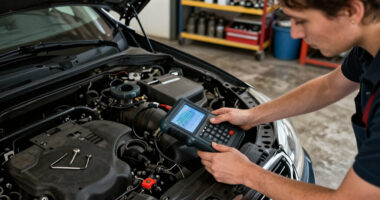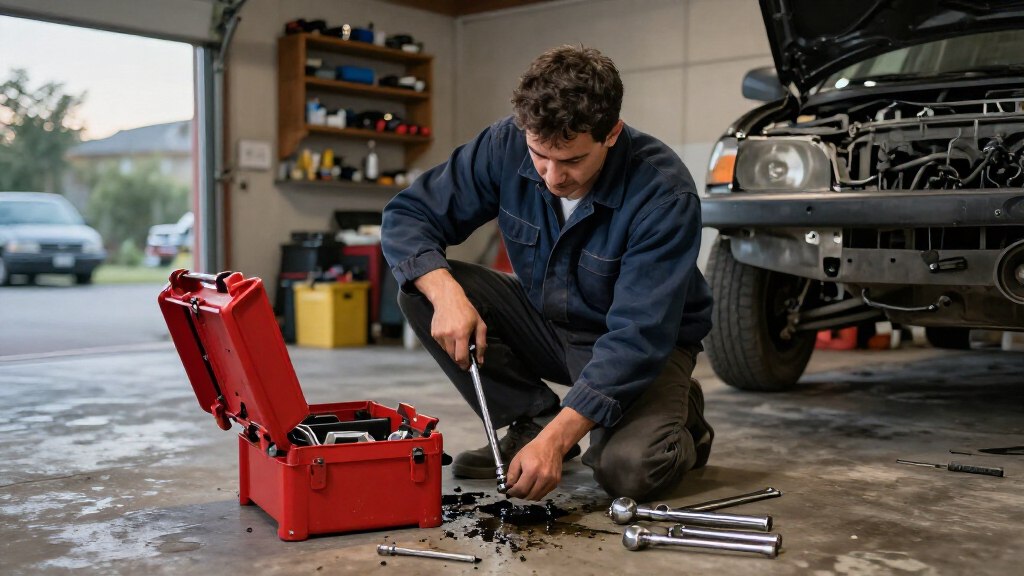

Choosing an automotive tool kit is a decision about the work you expect to do, not simply how many pieces fit in the case. A basic automotive tool kit is aimed at occasional jobs such as tightening accessible fasteners, replacing a battery, or handling a minor roadside issue. A mechanic-grade automotive tool kit is designed for more frequent maintenance and repairs, with a wider range of sockets and sturdier tools that are more likely to stand up to repeated use.

Get business pricing on garage and car supplies
- Business-only prices and quantity discounts
- Tax-exempt purchasing
- Multiple users, one account, clear invoices

Craftsman 262-Piece Mechanic Tool Set with 3-Drawer VERSASTACK Box
- ✔ Piece count: 262
- ✔ Drive sizes included: 1/4, 3/8, and 1/2 inch listed; some accessories are limited to 1/4 and 3/8 inch
- ✔ Socket standards: SAE and metric

DEWALT Mechanic Tool Set, 168-Piece, Metric and Standard
- ✔ Piece count: 168
- ✔ Drive sizes: 1/4 and 3/8 inch
- ✔ Socket standards: Metric and standard

SEDY Premium 132-Piece Mechanics Tool Set
- ✔ Piece count: 132
- ✔ Drive sizes: 1/4 and 3/8 inch
- ✔ Socket standards: SAE and metric
The tradeoff is coverage and durability against cost and portability. For a driver who wants a compact set for emergencies and simple tasks, the basic kit is usually the sensible buy. For a vehicle owner who works on cars regularly, the mechanic-grade set is generally worth the added expense because missing sizes and worn tools can slow a repair or force a second purchase. The sections below compare the two across the criteria that affect real jobs, then identify when neither is the right choice.
At a Glance
| Criteria | Basic automotive tool kit | Mechanic-grade automotive tool kit | Winner |
|---|---|---|---|
| Purchase cost | Lower upfront cost; appropriate when tool use will be occasional | Higher upfront cost, with more tools and stronger construction typically included | A |
| Socket and fastener coverage | Core sizes and common hand tools; may lack specialty or less common sizes | Broader range of sockets, drive sizes, and accessories | B |
| Durability under repeated use | Adequate for light tasks, but materials and ratchets may wear sooner with frequent use | Better suited to frequent use and higher loads, within the tools’ rated limits | B |
| Roadside portability | Often compact and straightforward to store in a vehicle | Usually heavier and bulkier, though some cases remain vehicle-friendly | A |
| Suitability for routine maintenance | Works for basic jobs such as battery service and accessible fasteners | Better coverage for recurring maintenance and varied fasteners | B |
| Ability to handle larger repairs | Limited; may require buying additional tools or choosing another set | More capable for moderate repair work, but not a replacement for every specialty tool | B |
| Long-term value | Good if it meets a narrow, occasional need; poor if gaps prompt repeated add-on purchases | Often better over time for regular users who would otherwise buy missing tools separately | Depends |
Craftsman 262-Piece Mechanic Tool Set with 3-Drawer VERSASTACK Box
For buyers who want one organized kit to cover a wide variety of automotive jobs, the Craftsman 262-piece set makes the strongest case in this group. It brings together SAE and metric sockets, ratchets, combination wrenches, hex keys, specialty bits, and spark plug sockets, giving it broader described coverage than the more focused SEDY 132-piece set. The 90-tooth ratchets with a 5° swing are a practical advantage when a bolt allows little room for handle movement; they are designed to advance in smaller increments than the DEWALT’s 72-tooth ratchets.Organization is a second reason it leads the ranking. The three-drawer VERSASTACK box has a one-hand locking dial and can connect with compatible storage, making the set easier to arrange as a garage collection grows. At 27.5 pounds, however, it is a substantial box to carry, and its breadth may be more than a casual owner needs. The listed limitation on some accessories’ drive sizes also means the large piece count should not be mistaken for coverage of every demanding job. Like the other kits here, it does not present a full larger-drive solution. Choose it for breadth and expandable storage; choose DEWALT if a lighter, more focused assortment with DirectTorque matters more.
Pros:
- Broad described assortment of SAE and metric sockets, wrenches, hex keys, specialty bits, and spark plug sockets.
- 90-tooth ratchets provide a stated 5° swing for restricted movement around fasteners.
- Three drawers and a one-hand locking dial help keep tools sorted during storage and transport.
- VERSASTACK compatibility supports adding compatible storage.
Cons:
- At 27.5 pounds, the box is less convenient to carry as a compact roadside kit.
- Some accessories are limited to 1/4- and 3/8-inch drives, which can constrain certain applications.
- Its large assortment may be unnecessary for occasional basic maintenance.
Best for: Home mechanics who want a broad SAE and metric assortment, spark plug sockets, and organized drawers they can expand with compatible storage.
Not ideal for: Drivers seeking a light emergency kit, buyers who need extensive 1/2-inch-drive tools, or beginners who would rather start with a smaller selection.
Bottom line: We rank Craftsman first for its broadest described automotive assortment and expandable drawer storage, provided its drive limitations fit the work you plan to do.
“We rank Craftsman first for its broadest described automotive assortment and expandable drawer storage, provided its drive limitations fit the work you plan to do.”
DEWALT Mechanic Tool Set, 168-Piece, Metric and Standard
The DEWALT 168-piece set is the middle ground for buyers who want a substantial automotive assortment without the Craftsman’s 262-piece case. Its described contents include metric and standard sockets, three pear-head ratchets, hex keys, wrenches, and specialty tools. The distinctive feature is DirectTorque technology, which is designed to improve contact with a fastener and help reduce rounding. That focus gives this kit a clear job-specific edge over SEDY, whose description emphasizes the tool mix and storage rather than a comparable fastener-contact feature.Its 72-tooth ratchets offer a 5° swing, matching Craftsman on the stated swing while using fewer teeth. That can still help where the handle cannot move far, though Craftsman has the finer tooth count on paper. DEWALT also includes an anti-slip driver handle and a case with metal latches, useful details for repeated handling and transport. The tradeoff is that this set is limited to 1/4- and 3/8-inch drive, so it is not the choice for jobs calling for larger drive tools. The supplied description also notes confusing duplicate socket counts, making it sensible to check the actual included inventory. It suits buyers prioritizing fastener control and a moderate assortment over maximum breadth.
Pros:
- DirectTorque design is intended to improve fastener contact and reduce rounding.
- 72-tooth pear-head ratchets have a stated 5° swing for confined spaces.
- Includes metric and standard sockets, wrenches, hex keys, and specialty tools.
- Case with metal latches and an anti-slip driver handle support practical handling.
Cons:
- Drive coverage is limited to 1/4 and 3/8 inch, with no larger drive size specified.
- Duplicate socket counts in the description can make the exact assortment harder to assess.
- Less extensive by piece count than the Craftsman set.
Best for: DIY mechanics who regularly work around restricted access and value a 5° ratchet swing and a design intended to help protect fasteners.
Not ideal for: Buyers needing larger drive sizes, maximum assortment breadth, or a clearly documented inventory without ambiguous socket counts.
Bottom line: We recommend DEWALT when fastener contact and confined-space ratcheting matter more than the broadest assortment or larger drive coverage.
“We recommend DEWALT when fastener contact and confined-space ratcheting matter more than the broadest assortment or larger drive coverage.”
SEDY Premium 132-Piece Mechanics Tool Set
The SEDY 132-piece set is the most focused assortment here, combining SAE and metric 1/4- and 3/8-inch sockets with ratcheting wrenches, extensions, adapters, and a quick-release ratchet. That combination makes it a practical candidate for routine automotive jobs where wrench access is useful alongside socket access. Compared with the DEWALT 168-piece set, its described contents call out ratcheting wrenches explicitly, while DEWALT places more emphasis on its DirectTorque feature and three pear-head ratchets.A two-drawer lockable case keeps the tools separated and secured, without the size and expansion system of Craftsman’s three-drawer VERSASTACK box. The stated chrome-vanadium construction and polished finish are appropriate features for a general mechanics set, but material claims do not tell us how the tools perform under heavy workshop use. The description calls this a comprehensive kit, yet its 132 pieces are fewer than both competitors, and no ratchet tooth count or swing angle is supplied. Buyers who need documented tight-space ratchet performance may prefer the Craftsman or DEWALT. For someone who values a contained selection with ratcheting wrenches and both measurement systems, SEDY is the sensible lower-complexity choice—after checking the included socket sizes against intended repairs.
Pros:
- Includes both SAE and metric sockets for 1/4- and 3/8-inch drives.
- Ratcheting wrenches add an alternative for fasteners where a socket cannot fit.
- Extensions, adapters, and a quick-release ratchet broaden the stated everyday tool mix.
- Two-drawer lockable case separates and secures the assortment.
Cons:
- At 132 pieces, it has the smallest stated assortment in this comparison.
- No ratchet tooth count or swing angle is provided in the supplied details.
- Only 1/4- and 3/8-inch drives are specified.
Best for: Vehicle owners and newer DIY mechanics who want SAE and metric sockets, ratcheting wrenches, and lockable drawer storage in a more contained set.
Not ideal for: Mechanics seeking a 1/2-inch drive, the largest selection in this lineup, or published ratchet tooth-count and swing specifications.
Bottom line: We choose SEDY for a contained SAE and metric kit that explicitly includes ratcheting wrenches, while recognizing its smaller assortment and less detailed ratchet specifications.
“We choose SEDY for a contained SAE and metric kit that explicitly includes ratcheting wrenches, while recognizing its smaller assortment and less detailed ratchet specifications.”
As an Amazon Associate we earn from qualifying purchases.
Key Differences
The basic kit wins on cost and easy storage. That matters if the set will mostly sit in a trunk until a loose clamp or battery terminal needs attention. It also limits the risk of paying for a broad assortment that may never leave the case. Its weakness appears when the job calls for a size, extension, or drive tool it does not include. A cheap set can become an expensive starting point if you repeatedly add pieces to finish ordinary maintenance.
The mechanic-grade kit is the stronger choice for regular work because it tends to pair more complete coverage with tools built for more cycles of use. That can reduce interruptions and make it easier to work across different vehicles or jobs. It asks for more money and storage space, and even a substantial set cannot replace specialized tools such as a torque wrench, breaker bar, or vehicle-specific service equipment when a repair calls for them. Pay more when the extra coverage will be used; otherwise, the basic kit is the better fit.
Detailed Comparison
Purchase cost (Basic automotive tool kit wins — major)
The basic kit wins by requiring less money upfront, a major advantage for drivers who want a modest emergency set or rarely do repairs. The mechanic-grade set costs more because it normally includes more pieces and sturdier construction. That premium only pays off when its extra tools see regular use; buying a large set for occasional simple tasks ties up money without much practical gain.
Socket and fastener coverage (Mechanic-grade automotive tool kit wins — major)
The mechanic-grade kit usually wins with a broader spread of socket sizes, drive options, and extensions. The gap is moderate to major depending on the exact kit, since piece counts alone do not guarantee useful coverage. In practice, a broader, well-chosen set is less likely to interrupt maintenance because a needed size is missing. Check the included sizes and drive sizes before buying either type.
Durability under repeated use (Mechanic-grade automotive tool kit wins — moderate)
The mechanic-grade kit generally wins because its ratchets, sockets, and case are intended for more frequent work. This is a moderate difference for home users and a major one for anyone using tools weekly. A basic kit can perform well on light tasks, but repeated force or careless use can wear lower-cost components sooner. Neither kit should be used beyond its intended load, and a socket set is not a substitute for a properly rated breaker bar.
Roadside portability (Basic automotive tool kit wins — moderate)
The basic kit wins because it is typically lighter, smaller, and easier to leave in a vehicle without sacrificing much cargo space. The mechanic-grade kit brings more capability but also more weight and bulk. This is a moderate difference for drivers who want an always-on-board set, but it matters less if the tools stay in a garage. For roadside use, prioritize a secure case and the few tools relevant to your vehicle.
Suitability for routine maintenance (Mechanic-grade automotive tool kit wins — moderate)
The mechanic-grade set wins for recurring maintenance such as working on brakes, changing accessible components, or servicing more than one vehicle. Its broader coverage can spare trips to buy missing sizes. The advantage is moderate for a skilled owner who already has supplementary tools, and major for someone building a home toolkit from scratch. A basic set remains sufficient for straightforward jobs if its contents match the fasteners involved.
Ability to handle larger repairs (Mechanic-grade automotive tool kit wins — moderate)
The mechanic-grade kit wins, but only within limits. It is more likely to contain the range of sockets and accessories needed for moderate repairs, whereas the basic kit is usually aimed at simpler work. The difference is moderate, not a promise that one case covers every repair. Stuck fasteners, torque-sensitive work, and model-specific procedures can require separate specialty tools and a repair manual. Choose a set based on actual jobs rather than its headline piece count.
Long-term value (major difference)
There is no universal winner. The basic kit is better value when the need is occasional and limited: a low price and compact size may be all that matters. The mechanic-grade set is better value for frequent users if its added range and durability prevent repeated purchases. This is a major decision point because a bargain kit with substantial gaps can cost more over time, while an oversized set can leave useful money spent on tools that remain unused.
Basic automotive tool kit: Pros and Cons
Pros:
- Lower cost for occasional users
- Compact and easy to keep in a vehicle
- Covers many common light-duty tasks
Cons:
- May omit sizes or accessories needed for broader repairs
- Less suited to frequent high-load use
- Can lead to extra purchases when the included coverage is too narrow
Mechanic-grade automotive tool kit: Pros and Cons
Pros:
- Broader socket and accessory coverage
- Typically better suited to repeated maintenance
- Can offer better value for users who regularly work on vehicles
Cons:
- Higher upfront cost
- Often heavier and bulkier to store
- Still may not include specialty tools required for particular repairs
Who Should Choose What
Choose Basic automotive tool kit if:
- You want a compact kit for roadside backup and simple jobs such as tightening accessible fasteners.
- You work on your vehicle only a few times a year and have checked that the kit includes the sizes you need.
- You are setting a strict budget and prefer to add individual tools only when a real job calls for them.
Choose Mechanic-grade automotive tool kit if:
- You perform routine maintenance yourself or work on more than one vehicle.
- You want broader coverage and expect the tools to see regular use.
- You would rather pay more once than repeatedly buy missing sizes or replace worn components.
Skip both if: You plan to do specialized or safety-critical repairs without the right training or model-specific tools. Buy the particular rated tools and service information those jobs call for, or use a qualified mechanic.
Value for Money
Paying more for a mechanic-grade kit is worthwhile when you will use its broader selection and more durable components regularly. For a home mechanic maintaining a daily driver, the added cost can be sensible if it prevents tool gaps and supports work across several jobs. Compare the actual contents, warranty, and construction rather than relying on a large piece count or the word “professional.”
If your goal is a trunk kit for occasional roadside needs, the basic set is usually the better value. Spending more makes little sense if the additional sockets and accessories stay unused. A practical approach is to list the maintenance tasks you expect to handle, check their required sizes and tools, and buy the least expensive set that covers those jobs reliably.
Final Verdict
Choose the basic automotive tool kit if your priority is low cost, simple roadside preparedness, and occasional light maintenance. Choose the mechanic-grade kit if you regularly service a vehicle, maintain several cars, or want a broader set that is more likely to keep pace with repeated work. For most owners who routinely do their own maintenance, the mechanic-grade option is the stronger long-term purchase; for everyone else, the basic kit is the more sensible buy. The deciding factor is whether the extra coverage will be used often enough to justify its cost and bulk.
Frequently Asked Questions
Is a basic automotive tool kit enough for roadside emergencies?
It can be enough for simple tasks such as tightening accessible fasteners or addressing a loose battery connection, provided the necessary tools are included. It will not resolve every breakdown. Keep vehicle-specific roadside equipment and emergency supplies separate, and use the vehicle manual for safe procedures.
Does a mechanic-grade kit include every tool needed for car repairs?
No. It may cover more common sizes and hand-tool tasks, but some repairs call for separate specialty tools, a torque wrench, diagnostic equipment, or vehicle-specific tools. Check the repair procedure and the kit contents before starting.
Should I choose a kit by its piece count?
No. A high count can include duplicate bits or small accessories that do not help with your likely jobs. Compare socket sizes, drive sizes, extensions, ratchet quality, and the case layout against the work you expect to do.
Is the more expensive kit worth it for one car?
It can be if you perform maintenance regularly and its extra coverage replaces tools you would otherwise buy separately. If you only need an occasional emergency set, a compact basic kit is usually a better use of the money.