
You need to use ozone generators smarter in your car because improper use can cause health issues and damage. High ozone levels irritate your respiratory system, eyes, and skin, so you must operate the device safely—ventilate well and wait before re-entering. Overexposure can also harm vehicle materials. Following safety protocols guarantees effective odor removal without risking your health or vehicle integrity. If you want to know how to maximize safety and efficiency, keep exploring these guidelines.
Key Takeaways
- Ozone can irritate respiratory systems, requiring careful regulation to prevent health risks in vehicle environments.
- Excessive or improper use can degrade interior materials and cause chemical odors.
- Smarter use ensures ozone levels are safe before re-entry, avoiding overexposure.
- Optimized treatment durations balance odor removal effectiveness with safety concerns.
- Responsible ozone use acknowledges its limitations and incorporates complementary cleaning methods.
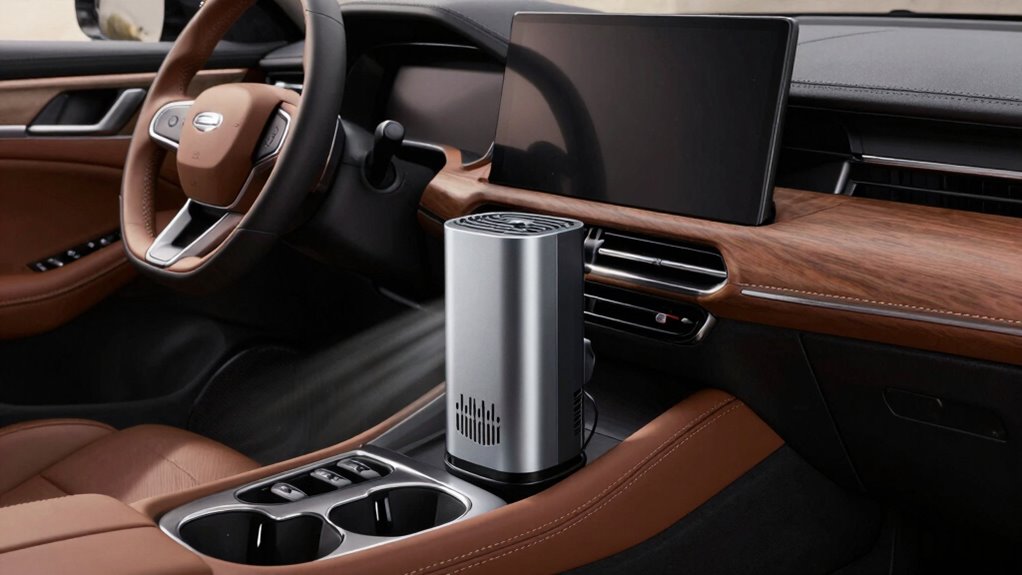
Ozone generators are increasingly popular for removing odors and disinfecting automotive interiors, but their effectiveness depends on smarter, more cautious use. When used properly, they can considerably improve air quality inside your vehicle by eliminating bacteria, mold, and stubborn smells. However, if misused or ignored safety protocols, these devices can pose health risks rather than benefits. It’s crucial to understand how to operate ozone generators responsibly to protect yourself and others while achieving the desired results.
Proper use of ozone generators enhances air quality and safety; misuse can pose health risks.
First, you need to be aware of the safety protocols associated with ozone use. Ozone is a powerful oxidizer that can irritate your respiratory system, eyes, and skin if inhaled in high concentrations. Therefore, never run an ozone generator inside a vehicle when people are present. Always ensure the interior is empty, and the vehicle is well-ventilated after treatment. Once the ozone cycle is complete, you should wait for a specified period before entering the space. Proper safety measures include using timers, wearing protective gear if necessary, and confirming that ozone levels have dissipated before re-entry. These precautions are essential to prevent health issues and guarantee that the air quality inside your vehicle is safe to breathe. Additionally, understanding ozone safety protocols is vital to ensure responsible usage and avoid health hazards. Recognizing the potential health effects of ozone exposure can help emphasize the importance of following safety guidelines.
Furthermore, understanding how to optimize ozone generator settings and duration is key. Using the device for too long or at excessive levels doesn’t necessarily mean better results. Overexposure can produce harmful ozone concentrations, defeating the purpose of improving air quality. Most manufacturers recommend specific treatment times based on the size of the interior and severity of odors. Following these guidelines helps you achieve cleaner air without risking your health. Additionally, consider the frequency of use; frequent ozone treatments can cause material degradation or lingering chemical smells if not properly managed. Proper knowledge of ozone use guidelines can help prevent overexposure, material damage, and ensure effective treatment. Recognizing the limitations of ozone is also important to avoid relying solely on ozone for comprehensive cleaning.

Ozone Generator 45,000mg/h, Home/Industrial O3 Car Deodorizer. Ozone Machine Air Ionizer Ozone Odor Eliminator for Strong Odor. Odor Eliminator for Home, Car, Pet. Room Deodorizer For 2500 sq ft.
- Effective Odor Elimination: Removes odors from home, pets, cars, and more
- Strong Ozone Output: 45,000mg/h ozone generation for large spaces
- Wide Coverage Area: Suitable for up to 2500 sq ft areas
As an affiliate, we earn on qualifying purchases.
As an affiliate, we earn on qualifying purchases.
Frequently Asked Questions
Can Ozone Generators Damage Car Electronics or Plastics?
Yes, ozone generators can damage your car’s electronics and plastics. High ozone levels can cause electronics corrosion, leading to malfunctions over time. Additionally, ozone can accelerate plastic degradation, making interior surfaces brittle and discolored. To prevent this, you should use ozone generators carefully, avoiding prolonged exposure and high concentrations. Proper usage protects your vehicle’s sensitive electronics and plastics, ensuring they remain in good condition without risking damage.
How Often Should Ozone Treatment Be Performed for Safety?
They say, “Less is more,” and that’s true for ozone safety. You should perform ozone treatment in your car every few months, or when odors become noticeable. Keep in mind, excessive treatment can harm your vehicle’s electronics and plastics. To guarantee safe treatment frequency, always follow manufacturer guidelines, and ventilate your car thoroughly afterward. This way, you protect your vehicle and maintain a healthy environment inside.
Are There Specific Ozone Generator Models Best for Automotive Use?
You should look for ozone generators designed specifically for automotive use, focusing on model compatibility and portability. Portable options are ideal because they let you easily move the device inside your vehicle, guaranteeing thorough treatment. Choose models that are compatible with automotive interiors and offer adjustable ozone output. This way, you maximize effectiveness while maintaining safety. Always follow manufacturer guidelines to prevent overexposure and ensure your vehicle’s interior remains safe.
What Are the Signs of Overexposure to Ozone in Cars?
Ironically, the scent of a fresh car might hide ozone overexposure warning symptoms. If you notice persistent coughing, throat irritation, or headaches, it’s a sign you’ve overdone it with ozone. Eye irritation, shortness of breath, or a metallic taste also indicate ozone overexposure. Pay attention to these warning symptoms, as prolonged exposure can cause respiratory issues. Always ventilate your vehicle well after ozone treatments to avoid these subtle yet serious signs.
How Does Ozone Compare to Traditional Car Air Freshening Methods?
Ozone generators offer superior air freshening effectiveness compared to traditional methods, quickly neutralizing odors and eliminating bacteria. You’ll notice a more thorough clean, with fresher air lasting longer due to ozone’s ability to reach hidden sources of smell. Unlike sprays or plug-ins that fade fast, ozone’s scent longevity ensures your vehicle stays smelling fresh longer. Just remember, smarter use is crucial to avoid overexposure and maintain safety in your car.
Conclusion
Remember, a wise person once said, “A stitch in time saves nine.” When it comes to ozone generators in your car, using them smarter—like limiting exposure and proper ventilation—ensures you don’t trade fresh air for potential harm. Don’t rush the process; patience and careful use protect your health and extend your vehicle’s interior life. By being mindful, you turn a simple tool into a safe, effective solution—because prevention is always better than cure.