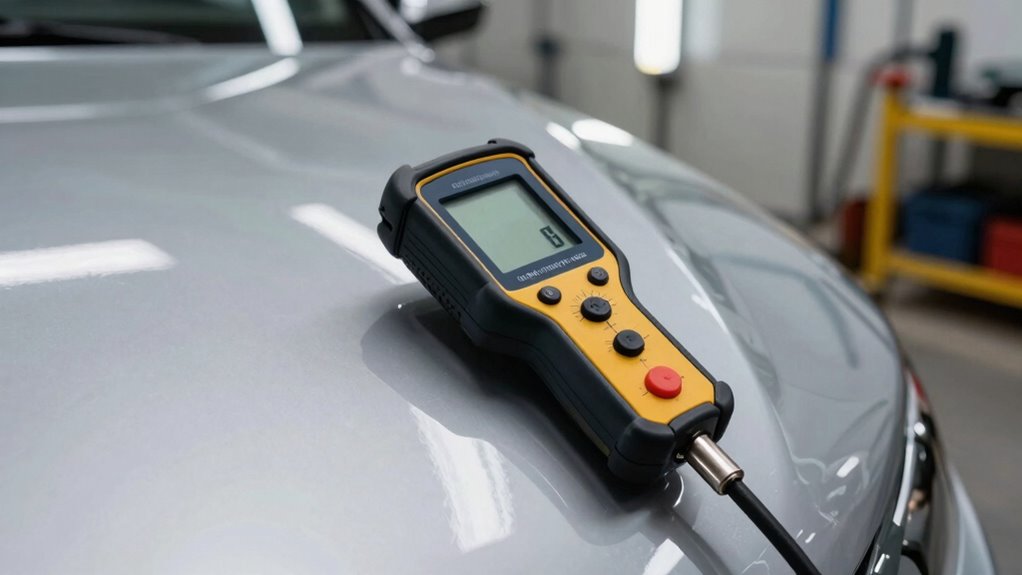

Paint thickness gauges are more useful than new detailers expect because they help you guarantee a flawless finish by accurately measuring paint layers and preventing mistakes like uneven application or mismatched colors. They also reveal hidden damage and guide proper surface prep, saving time and reducing costly errors. By maintaining consistent paint thickness, you’ll achieve professional results that last. Keep exploring how these tools can elevate your detailing skills even further.

Get garage and car supplies delivered free — and shop member deals
- Fast, free delivery on millions of items
- Access to Prime Big Deal Days deals on October 6–7
- Prime Video, Amazon Music and more included
Key Takeaways
- They ensure accurate color matching and prevent mismatched shades during repainting.
- Help identify hidden damage or previous repairs that aren’t visible to the naked eye.
- Promote uniform paint thickness for a professional, durable finish across all surfaces.
- Aid in surface preparation, reducing the risk of peeling, chipping, or uneven application.
- Save time and costs by detecting issues early and guiding precise, consistent layer application.
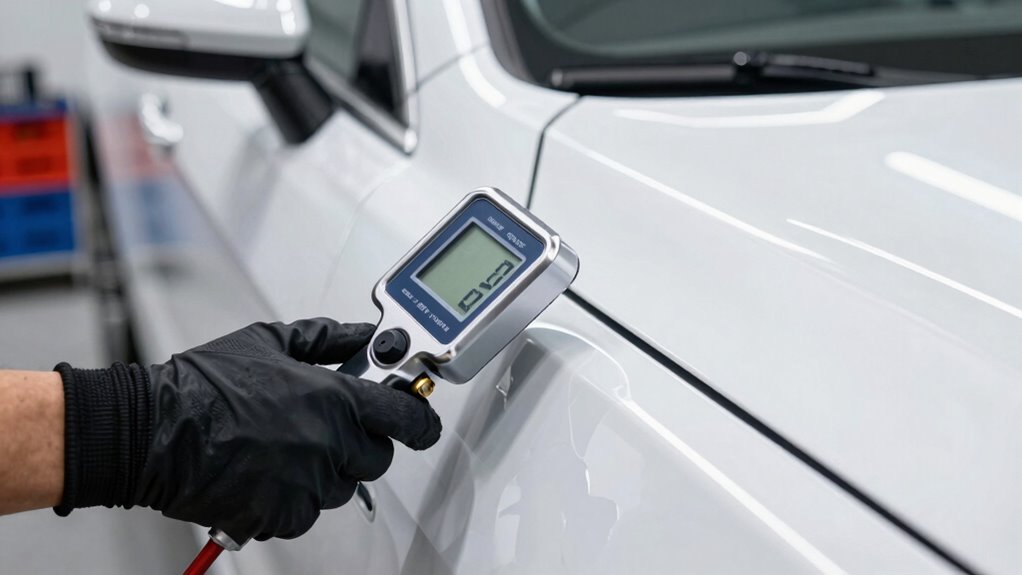
Paint thickness gauges might seem like simple tools, but they’re more valuable than many realize. As a new detailer, you might think their primary purpose is just to measure paint layers. However, these gauges play a essential role in guaranteeing quality work, especially when it comes to color matching and surface preparation. Achieving a seamless, professional finish depends heavily on understanding the existing paint’s thickness, and that’s where these tools shine. By accurately gauging the paint’s depth, you can avoid over-application or uneven layers that might compromise the final look. This precision helps you match the original color more closely, preventing mismatched shades or splotchy appearances that could ruin the vehicle’s look. Additionally, knowing the paint’s thickness can help you identify areas that may need additional attention during the prep process, ensuring a more uniform result. Properly assessing paint conditions early on can prevent costly mistakes later in the process. Recognizing variations in paint application also allows for more tailored approaches to each surface, enhancing the overall quality. Using a paint thickness gauge also aids in detecting hidden damage caused by previous repairs or corrosion, which might not be visible to the naked eye. Moreover, understanding the layering process can help you better control how the paint interacts with different surfaces, leading to a more professional finish.
Paint thickness gauges are essential for ensuring quality, color accuracy, and a flawless finish in auto detailing.
In terms of surface preparation, paint thickness gauges are indispensable. Before applying new paint or touch-up work, you need to know the surface’s condition. If the existing paint is too thin or uneven, you might need to sand or strip certain areas to create a smooth, uniform surface. Using a gauge allows you to identify these inconsistencies early, saving you time and effort down the line. Proper surface preparation ensures that the new coat adheres well and lasts longer, which ultimately results in a more durable finish. Without this knowledge, you risk applying paint over areas that are not properly prepared, leading to peeling, chipping, or color mismatches that stand out.
Furthermore, paint thickness gauges help you maintain consistency across multiple panels or entire vehicles. When you’re working on a large job, it’s easy to lose track of how much paint has been applied or how thick the layers are. Regularly checking with a gauge keeps your workflow precise, preventing over-application that might cause runs or drips. It also helps you replicate factory-like finishes by ensuring each layer of paint is at the perfect thickness. This consistency is essential for achieving a professional look and for meeting customer expectations.
In essence, these tools do more than just measure paint layers; they become an indispensable part of your process for achieving high-quality results. They support accurate color matching, streamline surface preparation, and help you deliver a finish that’s both attractive and durable. As a new detailer, embracing the use of paint thickness gauges will elevate your work and set you apart from less meticulous competitors. Their simplicity masks their importance—and once you start using them, you’ll wonder how you ever worked without them.
As an affiliate, we earn on qualifying purchases.
Frequently Asked Questions
How Accurate Are Paint Thickness Gauges on Different Car Models?
Paint thickness gauges are quite accurate across different car models when you account for paint consistency and keep the gauge calibrated properly. Variations in paint layers or finishes can affect readings, but regular calibration ensures reliability. You need to be aware of the specific vehicle’s paint type and thickness range to get precise measurements. Proper calibration and understanding paint consistency make your gauge a trustworthy tool for evaluating car surfaces.
Can Paint Thickness Gauges Detect Previous Body Repairs?
Yes, paint thickness gauges can detect previous body repairs, especially if surface contamination or inconsistencies exist. When repairs involve added or removed layers, the gauge picks up these differences. However, accurate detection depends on proper gauge calibration and clean surfaces, free from dirt or rust. Regular calibration ensures precise readings, helping you spot repairs that might otherwise go unnoticed, guaranteeing thorough assessment of the vehicle’s paint history.
What Is the Typical Lifespan of a Paint Thickness Gauge?
A paint thickness gauge typically lasts 3 to 5 years, but calibration issues can shorten its lifespan if you don’t regularly calibrate it. Battery life also impacts usage; most gauges need a new battery every year or so, depending on usage. To maximize your gauge’s lifespan, keep it calibrated and replace the batteries promptly. Proper care guarantees accurate readings and extends its overall durability.
Are There Any Safety Concerns When Using These Gauges?
Think of using a paint thickness gauge like steering with a compass—you need to trust its accuracy and handle it carefully. There are minimal safety concerns, but always guarantee proper gauge calibration to avoid inaccurate readings. Be cautious with paint safety; avoid exposing yourself to fumes or spills. Keep the device away from moisture or extreme conditions to maintain its precision and safety during use, making your detail work smooth and safe.
How Do Paint Thickness Gauges Influence Resale Value Assessments?
Paint thickness gauges considerably influence resale value assessments by providing accurate data on paint consistency and surface corrosion. When you use these gauges, you can identify hidden damages or repainting, which helps determine a vehicle’s true condition. This transparency reassures buyers, boosting confidence and value. By ensuring the paint is uniform and free from corrosion, you demonstrate proper maintenance, ultimately leading to a higher resale price and better market perception.
Conclusion
Paint thickness gauges aren’t just tools; they’re your secret weapon, your safeguard, your silent partner in every paint job. They guide your hand, protect your work, and guarantee precision with every measurement. Embrace them, trust them, and watch your results transform from good to great. With these gauges by your side, you’ll see imperfections fade, quality rise, and confidence grow—turning a simple task into a masterpiece in the making.
Fall Picks
fall essentials
As an affiliate, we earn on qualifying purchases.