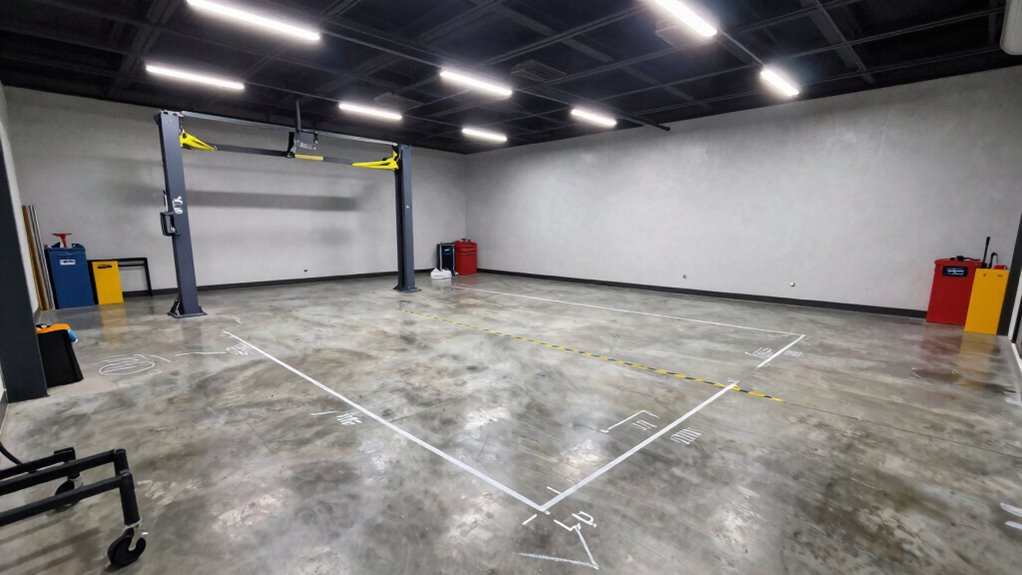

Before buying a 2-post lift, measure your garage’s ceiling height to make certain it’s at least 12-14 feet, including overhead lights or fixtures. Check your vehicle’s highest point and add extra space for lift arms and accessories. Make sure the garage width and length fit your vehicle plus room for maneuvering. Don’t forget to verify that the floor can support the lift’s weight. Keep these measurements in mind to guarantee a safe, seamless fit, and discover more helpful tips below.

Get business pricing on garage and car supplies
- Business-only prices and quantity discounts
- Tax-exempt purchasing
- Multiple users, one account, clear invoices
Key Takeaways
- Measure ceiling height from floor to ceiling, including fixtures, to ensure it meets the 12-14 foot requirement.
- Check vehicle height from ground to highest point, adding extra inches for lift arms and accessories.
- Confirm garage width, length, and door opening are sufficient for vehicle size and lift operation space.
- Assess floor thickness and strength to support the weight of the lift and vehicle safely.
- Ensure overall garage space allows safe maneuvering, maintenance access, and avoids obstructions.

If you’re planning to install a 2-post lift in your home garage, proper measurements are vital to guarantee safe and efficient operation. You need to verify your garage can accommodate the lift comfortably while providing enough space for you to work safely around your vehicle. The first critical measurement to contemplate is the ceiling height. Most 2-post lifts require a minimum ceiling height to operate properly, typically around 12 to 14 feet, depending on the lift model. You should measure from the floor to the ceiling, making sure to account for any overhead fixtures like ceiling fans, light fixtures, or storage shelves that could interfere with the lift’s height or operation.
Measuring ceiling height, including fixtures, ensures your garage can safely accommodate a 2-post lift.
Next, focus on vehicle clearance. This refers to the space needed around your vehicle once it’s lifted. You need sufficient clearance to open doors, access the engine bay, or perform repairs comfortably. Measure the vehicle’s height from the ground to the highest point, usually the roof or antenna, when the vehicle is parked on level ground. Add extra inches for the lift’s arm reach and any accessories or tools you might need to maneuver around the vehicle. This ensures the lift will not only fit inside your garage but also allow you to work without obstruction.
In addition to ceiling height and vehicle clearance, consider the width and length of your garage. The width should comfortably fit the vehicle’s width plus space for the lift arms and enough room to move around the vehicle once it’s elevated. The length should accommodate the vehicle’s length and allow for easy entry and exit, as well as space for tools and equipment. Make sure your garage door opening is wide enough to allow the vehicle to pass easily without scraping or hitting the sides.
Another often overlooked measurement is the floor thickness and strength. Your garage floor must be thick enough to support the weight of the lift and the vehicle. Check the manufacturer’s specifications for the minimum floor thickness and ensure your concrete can handle the load. If your floor isn’t suitable, you may need to reinforce it before installing the lift. Additionally, understanding your garage’s foundation strength can help ensure safety and durability over time.
garage ceiling height measurement tool
As an affiliate, we earn on qualifying purchases.
As an affiliate, we earn on qualifying purchases.
Frequently Asked Questions
Can I Install a 2-Post Lift in a Concrete Slab?
Yes, you can install a 2-post lift in a concrete slab, but it must meet specific Garage flooring and Lift safety standards. Make sure your concrete is at least 4 inches thick, solid, and properly reinforced to support the weight. You should also verify the slab’s level and free of cracks. Following these guidelines ensures safe operation and longevity of your lift, preventing accidents or damage.
What Is the Minimum Ceiling Height Required?
The minimum ceiling height needed for indoor installation of a 2-post lift is typically 12 feet, though some models require a bit more. You should check the specific lift’s specifications, as taller lifts demand higher ceilings. Confirm your garage ceiling can safely accommodate the lift’s height plus extra space for clearance and operation. Proper ceiling height ensures safe, efficient use and easy vehicle access.
How Much Space Is Needed for Vehicle Clearance?
You’ll want at least 8 feet of clearance for vehicle height, but don’t forget the essential space for vehicle clearance—about 10-12 feet wide—to guarantee easy maneuvering. As you plan, consider garage lighting and ventilation—both necessary for safety and comfort. Adequate lighting highlights your work, while good ventilation keeps fumes at bay. Measure carefully now, so your new lift fits perfectly and your workspace remains efficient and safe.
Do I Need Special Wiring or Electrical Outlets?
You usually need to check your electrical requirements and wiring compatibility before installing a 2-post lift. Most lifts require a dedicated circuit, often 220V, with sufficient amperage to handle the load. You might need a special outlet or wiring upgrades to meet these electrical requirements. It’s best to consult a licensed electrician to guarantee your garage’s wiring can safely support the lift and prevent any electrical issues.
Can the Lift Be Installed Outdoors?
You generally can’t install a 2-post lift outdoors because it’s not designed for outdoor use. Outdoor installation requires weather resistance features to withstand rain, snow, and temperature changes. Most lifts are intended for indoor use, so if you want one outside, you need a model specifically built for outdoor installation with weather-resistant coatings and sturdy materials. Always check the manufacturer’s guidelines to guarantee safe, durable outdoor setup.
Conclusion
Before you bring home that 2-post lift, remember, your garage’s measurements are the foundation of your car care dreams. Measure twice, think once—because a well-fitted lift isn’t just about space, it’s about peace of mind and the freedom to work on your vehicle with confidence. Don’t let cramped corners or low ceilings steal your garage’s potential. With the right measurements, you’re not just buying a lift; you’re opening a world of possibilities.
Fall Picks
fall essentials
As an affiliate, we earn on qualifying purchases.