The key that separates pros from hobbyists in paintless dent repair is your ability to select and use the right tools with skill and precision. Pros know how to handle various dents, applying the correct pressure, angles, and techniques to avoid paint damage and achieve a smooth finish. Mastery requires patience, experience, and understanding vehicle structures. Keep going, and you’ll uncover more insights to elevate your dent repair skills to a professional level.

Get business pricing on garage and car supplies
- Business-only prices and quantity discounts
- Tax-exempt purchasing
- Multiple users, one account, clear invoices
Key Takeaways
- Pros select the appropriate tool based on dent size, location, and panel type, rather than relying on brand or price.
- Mastery involves applying controlled pressure and correct angles to prevent paint damage during repair.
- Experienced technicians adapt techniques or use alternative tools when initial methods are ineffective.
- Proper lighting and vehicle access are crucial for precise tool application and successful dent removal.
- Developing skill and patience with specific tools distinguishes professional results from amateur attempts.
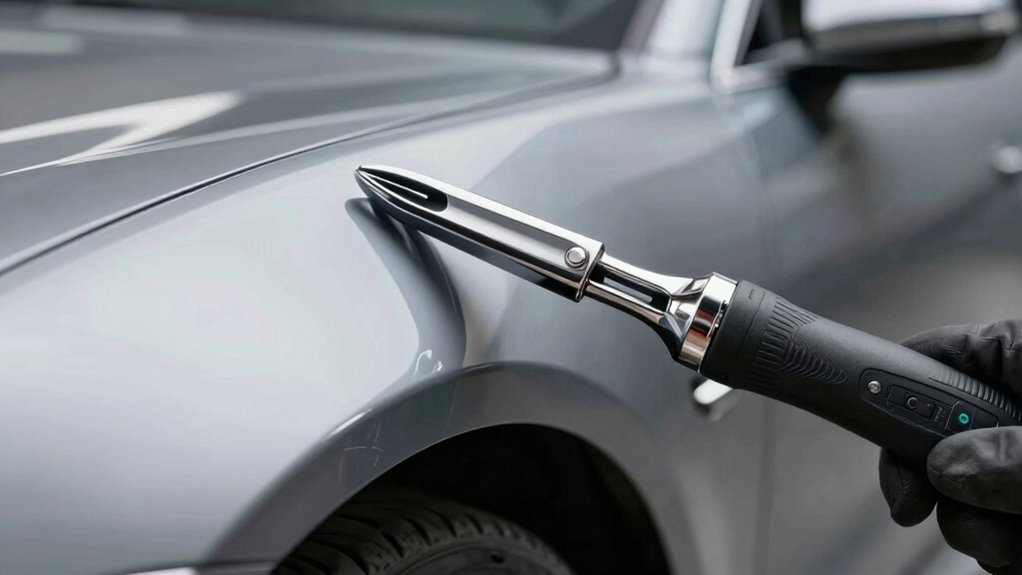
A paintless dent repair (PDR) tool is vital for anyone looking to fix minor dents without damaging the vehicle’s original paint. When you’re exploring dent removal techniques, the tools you choose can determine whether you’re just a hobbyist or a true professional. The key question that separates the two is whether you understand how to use these tools effectively and whether you recognize the nuances involved in delicate dent repair. It’s not just about having the right equipment; it’s about knowing how to wield it with precision.
For beginners, the temptation might be to buy a basic set of PDR tools and start working on dents right away. But this approach often leads to frustration or, worse, further damage to the vehicle. Professionals know that different dents require different techniques and tools. For example, a small, shallow dent might be be easily popped out with a glue pulling kit, but a deep crease or a dent on a complex panel calls for more specialized tools like a tap-down or whale tail. Mastering dent removal techniques involves understanding which tools to use in various scenarios, and this knowledge comes with experience.
Different dents need specific tools and techniques—experience is key to mastering effective PDR repair.
The real skill lies in handling the tools with finesse. You need to apply just enough pressure and know the right angles to pull or push the metal without stretching or cracking the paint. It’s not about brute force; it’s about controlled, strategic movements. This is what sets professional dent repair apart from amateur attempts. Pros also understand how to assess the damage thoroughly, choosing the appropriate technique—whether it’s pulling, pushing, or massaging the panel—to restore the surface seamlessly. They recognize the importance of patience and precision, avoiding shortcuts that could lead to uneven surfaces or visible distortions.
A vital factor that distinguishes professionals is their ability to troubleshoot unexpected issues during repairs. For instance, if a dent doesn’t respond to initial techniques, a pro knows alternative methods or tools to try. They also understand the value of proper lighting and access, which can make or break a repair job. Hobbyists often overlook these details, leading to subpar results. Additionally, understanding the importance of proper lighting and access can significantly influence the outcome of the repair. Developing a comprehensive understanding of vehicle structures helps professionals navigate tight spaces and access hard-to-reach areas effectively. Recognizing the importance of appropriate tools and techniques ensures that the repair process remains efficient and effective, preventing unnecessary complications. Moreover, investing time in learning about vehicle materials and paint types can enhance the quality and durability of the repair. Furthermore, honing your technique and skill can help you achieve results comparable to those of experienced professionals, regardless of your initial experience level.
Ultimately, the right paintless dent repair tool isn’t just about the brand or the price; it’s about how you use it. The question that separates pros from hobbyists isn’t just whether you own the best tools but whether you know how to apply dent removal techniques effectively. If you want professional results, focus on developing your skills, understanding your tools, and practicing patience. That’s what truly elevates your dent repair game.
As an affiliate, we earn on qualifying purchases.
Frequently Asked Questions
Can PDR Tools Fix Large or Complex Dents Effectively?
Yes, PDR tools can fix large or complex dents effectively, but it depends on the dent size considerations and the skill level. With proper paintless techniques, you can successfully repair sizable dents if the metal hasn’t stretched or cracked. However, extremely complex or stretched dents might require traditional repair methods. Your success hinges on understanding the limitations and applying the right techniques for each specific dent.
What Safety Precautions Should Be Taken When Using PDR Tools?
When using PDR tools, you should always wear safety gear like gloves and eye protection to prevent injuries. Before starting, check your tools for damage and perform regular maintenance to guarantee they’re in good condition. Keep your workspace clear and be cautious with your movements to avoid accidents. Proper safety precautions not only protect you but also help maintain your tools, making your repairs safer and more effective.
How Long Does It Typically Take to Repair a Dent With PDR Tools?
Typically, you can repair a paintless dent within an hour, depending on the dent’s size and severity. Precise preparation and proper tool maintenance expedite the process, ensuring efficient, effective fixes. You’ll find that smaller dents often take less time, while larger or more complex ones require patience. With practice, your proficiency grows, and your PDR process becomes quicker, smoother, and more satisfying, transforming tricky dents into tidy, timely triumphs.
Are Professional Training or Certifications Necessary for Using PDR Tools?
You don’t necessarily need certifications to use PDR tools, but they can greatly boost your skill development and credibility. Certification requirements vary by region and employer, so it’s wise to check local standards. Gaining professional training helps you learn proper techniques, avoid mistakes, and handle complex dents confidently. While not always mandatory, pursuing certifications can set you apart from hobbyists and open doors to more advanced repair opportunities.
What Are the Costs Associated With High-Quality PDR Tools?
High-quality PDR tools typically cost between $200 and $1,000 each, depending on their complexity and brand. You might think maintenance costs are high, but regular tool care keeps them in top shape and extends their lifespan, reducing long-term expenses. A thorough cost comparison shows investing in durable, professional-grade tools can save you money over time, ensuring reliable performance and fewer replacements, which is essential for serious dent repair work.
Conclusion
Mastering paintless dent repair is like learning the secret handshake of car enthusiasts—once you get it, you’re in the club. With the right tools and practice, you can transform your vehicle’s appearance and sidestep costly repairs. Remember, even Robin Hood knew the value of precision and skill. So, keep honing your craft, and soon you’ll be the hero who restores beauty with just a few clever moves. The road to mastery starts now—are you ready?
Halloween Picks
halloween
As an affiliate, we earn on qualifying purchases.