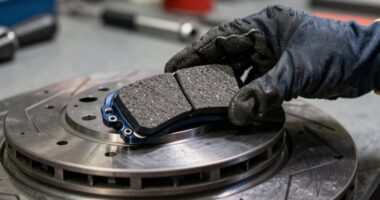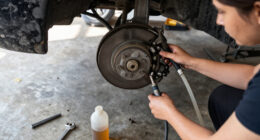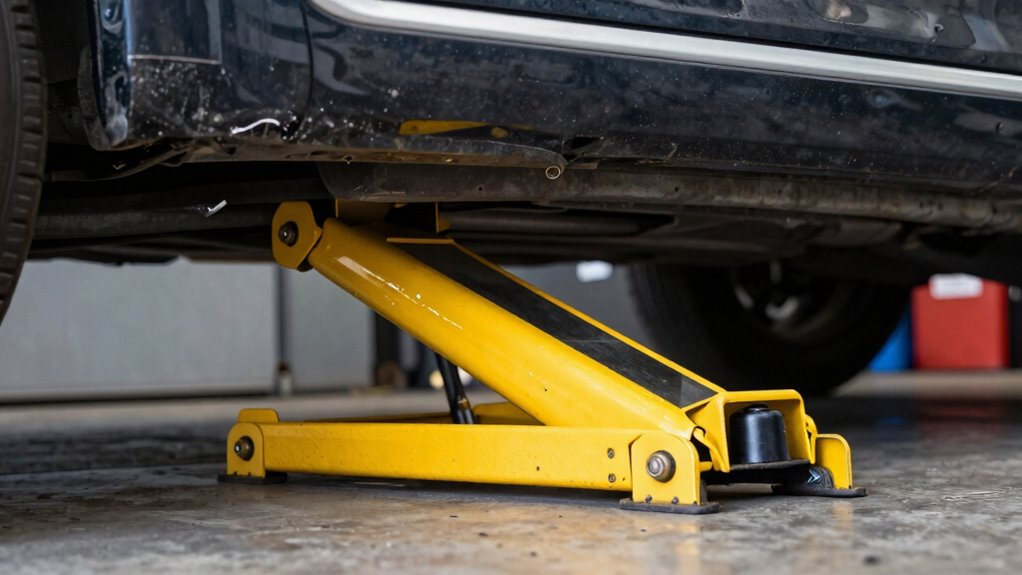

To safeguard your floors, rockers, and nerves, always use the proper jacking points specified by your vehicle’s manufacturer. This habit guarantees even weight distribution, reducing the risk of slipping or damage. Avoid jacking from the same spot repeatedly, as it weakens the frame over time. Regularly inspect your jack and follow safe lifting techniques, including using jack stands. Keep these habits in mind, and you’ll avoid costly repairs and stress—there’s more to learn about perfect jacking practice ahead.

Get business pricing on garage and car supplies
- Business-only prices and quantity discounts
- Tax-exempt purchasing
- Multiple users, one account, clear invoices
Key Takeaways
- Always use manufacturer-specified jacking points to distribute weight evenly and prevent damage to floors and rockers.
- Regularly inspect and maintain your jack to ensure stability and avoid sudden failures during lifts.
- Lift slowly and steadily to maintain vehicle balance and reduce stress on structural components.
- Support the vehicle with jack stands immediately after lifting to prevent accidental drops and protect nerves.
- Develop consistent jacking habits to minimize damage and ensure safe, damage-free lifts every time.
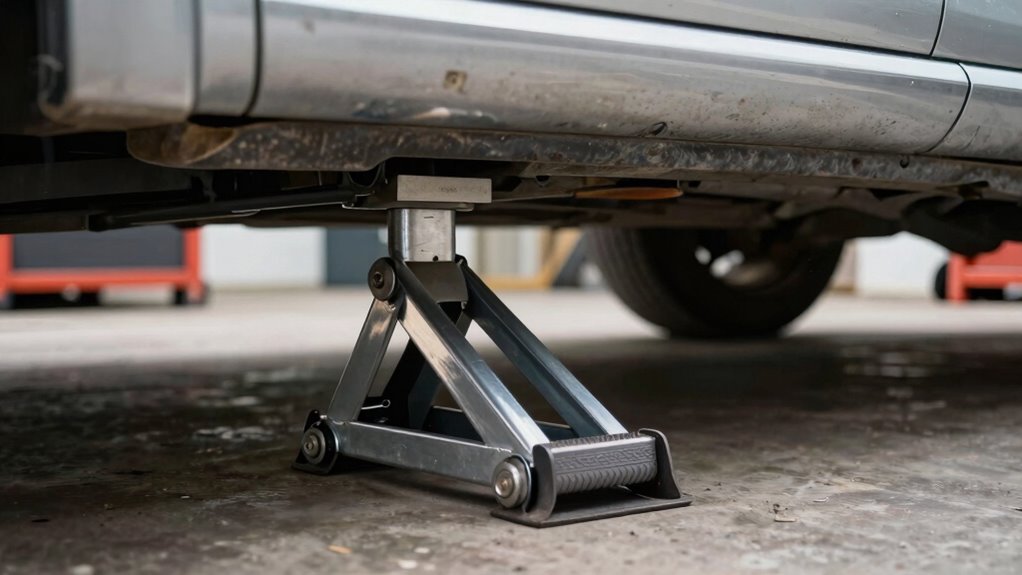
Many people develop the habit of constantly jacking their vehicles from the same point, believing it’s the safest or easiest method. While this might seem convenient, it can compromise vehicle safety and lead to damage over time. Repeatedly lifting your car from the same spot can cause stress on the frame, potentially weakening the jacking point or the surrounding area. That’s why it’s vital to understand the importance of choosing proper jacking points and practicing good jack maintenance. Doing so not only protects vehicle components but also keeps you safe during every lift.
Using the correct jacking point is essential because it distributes the weight evenly and minimizes the risk of slipping or damaging the vehicle. Many vehicle manufacturers specify designated lift points precisely for this reason. If you ignore these guidelines and jack from random spots, you risk damaging the vehicle’s structural integrity, which can lead to costly repairs down the line. Plus, improper jacking can cause your jack to slip or topple, creating safety hazards for you and anyone nearby.
To promote vehicle safety and prolong the life of your jack, regular maintenance is a must. Check your jack before each use for any signs of wear or damage—wobbly parts, leaks, or rust can compromise its ability to lift safely. Keep your jack clean and well-lubricated, especially the moving parts, so it functions smoothly when needed. Proper jack maintenance ensures that your equipment remains reliable, reducing the risk of accidents caused by equipment failure. Remember, a well-maintained jack is more stable and secure, giving you peace of mind during every lift. Additionally, understanding proper jacking techniques can further help prevent damage and injury.
You should also avoid rushing or applying uneven pressure when jacking up your vehicle. Always lift slowly and steadily, ensuring your vehicle remains stable on the jack. Use jack stands to support the vehicle once it’s lifted, never rely solely on the jack. This extra precaution helps prevent accidental drops that can damage your vehicle’s floors or rocker panels and keeps you safe from injury. Investing a little time in proper jacking techniques and routine maintenance will pay off by protecting both your vehicle and your nerves.
Additionally, understanding and implementing proper jacking techniques reduces the risk of damaging your vehicle’s frame or rocker panels over time. Developing good jacking habits isn’t just about convenience—it’s about prioritizing safety and vehicle longevity. By choosing the right jacking points and maintaining your jack, you help prevent damage and reduce stress on your vehicle’s structure. Regularly inspecting your equipment and understanding vehicle specifications can further enhance safety and efficiency. With consistent care and cautious lifting, you’ll keep your car in better shape and avoid unnecessary worries. Making these small adjustments ensures every lift is safe, effective, and damage-free, giving you confidence every time you need to raise your vehicle.
As an affiliate, we earn on qualifying purchases.
Frequently Asked Questions
How Do I Find the Best Jacking Points on My Vehicle?
To find the best jacking points on your vehicle, start by consulting your owner’s manual for specific lift locations. Use a vehicle lift or jack stand at these designated points, typically reinforced areas like the frame or pinch welds. Avoid other parts to prevent damage. Make certain the surface is flat, and always support the vehicle with jack stands after lifting for safety. Proper jacking protects your vehicle and keeps your nerves intact.
Are There Specific Tools Recommended for Safe Jacking?
You should use hydraulic jacks for easy lifting, ensuring they match your vehicle’s weight. Always choose the right jack stand by considering your car’s weight and size—look for sturdy, adjustable options with a reliable weight rating. Before jacking, place the hydraulic jack securely at the proper jacking point, then carefully lift and support the vehicle with the correct jack stand. This approach keeps you safe and protects your vehicle’s floor and rocker panels.
Can Improper Jacking Damage My Car’s Frame?
Yes, improper jacking can damage your car’s frame if you don’t guarantee jack stand stability, which can lead to uneven weight distribution. It might also cause fluid leakage if you lift from wrong points or use the wrong tools. Always use the recommended jacking points, verify jack stand stability, and avoid overextending the lift to prevent frame damage, fluid leaks, or accidents.
How Often Should I Inspect Jacking Points for Wear?
You should inspect your jacking points for wear at least every 6 months or after any rough driving conditions. Think of it like a routine check-up—regular maintenance keeps your car’s structure safe. During inspection, look for cracks, rust, or deformation. Consistent jacking point maintenance prevents costly repairs and preserves your vehicle’s integrity. If you notice any issues, address them immediately before risking further damage or safety hazards.
What Safety Precautions Should I Take During Jacking?
For jacking safety, always wear protective gear, make sure the vehicle is on a flat surface, and use a reliable jack and stands. Keep a clear work area and never go under the vehicle unsupported. Familiarize yourself with emergency procedures beforehand, like how to quickly lower the vehicle or call for help if needed. These precautions prevent accidents, protect your nerves, and keep floors and rockers safe during jacking.
Conclusion
By adopting the jacking point habit, you safeguard your car’s floors, rockers, and your own peace of mind. Think of it as your secret weapon—quietly guarding against damage while you work confidently. Every time you lift, you’re not just protecting metal; you’re nurturing a long-lasting relationship with your vehicle. So, make this habit second nature, and let it be the sturdy anchor in your DIY journey—your vehicle’s silent guardian in every lift.
Halloween Picks
halloween
As an affiliate, we earn on qualifying purchases.