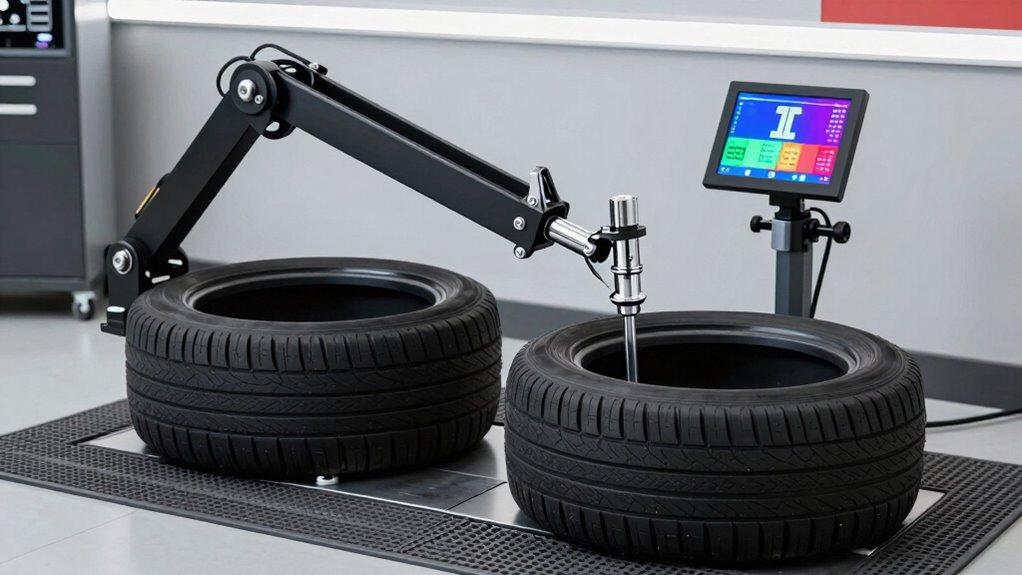

When choosing a tire changer and wheel balancer, focus on their ease of use, safety features, and compatibility with various wheel sizes and types. Look for equipment with precise digital measurements and adjustable settings to guarantee proper mounting and balancing. Investing in quality tools speeds up your workflow, reduces damage, and improves customer satisfaction. To make the best decision, consider your shop’s needs and standards — more insights await if you keep exploring.

Get business pricing on garage and car supplies
- Business-only prices and quantity discounts
- Tax-exempt purchasing
- Multiple users, one account, clear invoices
Key Takeaways
- Ensure compatibility between the tire changer and wheel balancer to meet your shop’s specific tire sizes and types.
- Prioritize safety features and ease of operation for efficient, injury-free tire mounting and balancing processes.
- Look for precise digital measurement tools and automatic data entry to improve accuracy and speed.
- Consider the quality, durability, and after-sales support to maximize long-term investment value.
- Evaluate additional features like bead breaker adjustments, cone adapters, and ergonomic design for better workflow.
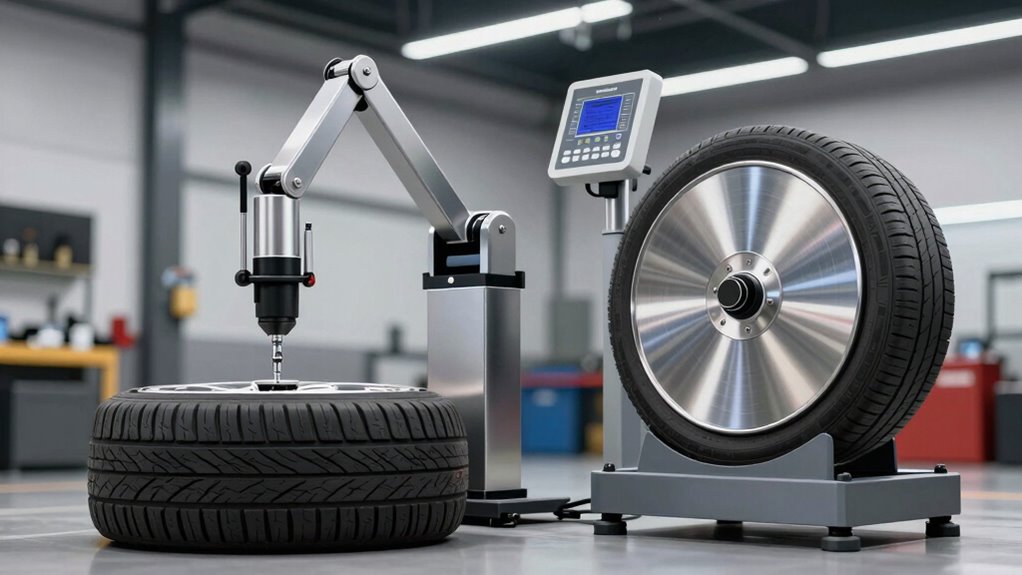
If you’re involved in automotive repair or tire service, a tire changer and wheel balancer are essential tools that can save you time and improve your work quality. These machines are critical for ensuring tire safety, which is fundamental to customer satisfaction and vehicle performance. Proper tire installation and balancing help prevent uneven wear, vibrations, and potential tire failure, making them indispensable in any professional shop. When considering a tire changer and wheel balancer, it’s important to think about how they’ll enhance your workflow and the quality of your service.
Essential tools for automotive repair: tire changers and wheel balancers improve safety and efficiency.
A tire changer simplifies the process of mounting and dismounting tires, especially when dealing with low-profile tires or run-flat designs. It reduces the physical effort involved and minimizes damage to tires and wheels, which is vital for maintaining wheel integrity and ensuring optimal wheel alignment. A good tire changer allows you to work efficiently while upholding strict tire safety standards. It’s worth investing in a model with adjustable bead breakers, turntables, and safety features to prevent accidents. Keep in mind that a reliable tire changer will not only speed up your operations but also contribute to safer tire handling procedures, reducing the risk of injury or damage caused by improper techniques.
Complementing the tire changer is a wheel balancer, which ensures that each wheel and tire assembly is perfectly balanced before installation. Unbalanced wheels cause vibrations, uneven tire wear, and strain on suspension components, compromising tire safety and vehicle stability. A high-quality wheel balancer provides precise measurements, often with digital displays, so you can identify and correct imbalance issues quickly. Proper wheel balancing also supports accurate wheel alignment, which is essential for vehicle handling and extending tire life. When choosing a wheel balancer, look for features like automatic data entry, cone adapters for different wheel sizes, and easy-to-use interfaces to streamline the balancing process.
Both tools work together to improve your shop’s efficiency and the safety of your customers’ vehicles. Investing in a tire changer and wheel balancer that are compatible and easy to operate can greatly reduce turnaround times and boost your shop’s reputation. Remember, consistent tire safety checks and proper wheel alignment are indispensable for vehicle safety, fuel economy, and tire longevity. Using a high contrast ratio projector can further enhance your shop’s presentation and customer experience by showcasing detailed images of tire wear and damage during inspections. By selecting equipment that delivers precision and reliability, you’re guaranteeing that each tire service meets the highest standards. Ultimately, these tools are investments that pay off by enhancing your work quality, increasing customer trust, and keeping vehicles safe on the road.
professional tire changer machine
As an affiliate, we earn on qualifying purchases.
As an affiliate, we earn on qualifying purchases.
Frequently Asked Questions
What Is the Ideal Size for a Tire Changer and Wheel Balancer?
You should look for a tire changer and wheel balancer with size considerations that match your shop’s capacity requirements. For standard cars, a machine that handles rims up to 24 inches works well. If you service trucks or larger vehicles, opt for equipment with a bigger capacity, around 30 inches or more. Ensuring the size matches your typical jobs helps improve efficiency and prevents future upgrades.
How Much Maintenance Do These Machines Require?
You’ll find these machines surprisingly low-maintenance—if you don’t mind routine inspections and regular machine calibration. Skip those, and you’ll face costly repairs or uneven tire balancing. To keep them running smoothly, schedule quick check-ups, keep parts lubricated, and stay vigilant for wear and tear. Proper maintenance isn’t just a suggestion; it’s the secret to avoiding breakdowns and ensuring perfect performance every time you use your tire changer and wheel balancer.
Are There Any Safety Features I Should Look For?
You should look for safety features like safety protocols and an emergency shutoff on your tire changer and wheel balancer. These features help prevent accidents by stopping the machine quickly if something goes wrong. Make certain the equipment has clear safety instructions, guards, and automatic shutoff mechanisms. Prioritizing these safety features will protect you and your staff while maintaining efficient operation. Always choose machines with reliable safety measures to minimize risks.
Can These Machines Handle All Types of Tires?
Yes, these machines can handle most tire types, but you should check tire material compatibility and wheel diameter limitations. Some tire changers are better suited for light truck or heavy-duty tires, while others excel with standard passenger tires. Make sure to verify the equipment’s specifications to guarantee it matches your shop’s needs, preventing damage and ensuring safe, efficient operation. Always consult the manufacturer’s guidelines for peak performance.
What Is the Typical Lifespan of Shop-Grade Equipment?
Think of shop equipment as the backbone of your garage—lasting around 7 to 10 years with proper maintenance. Its durability directly influences replacement costs, so investing in high-quality machines pays off. While heavy-duty models may endure longer, regular upkeep ensures your tire changer and wheel balancer stay in top shape. Don’t forget, good equipment isn’t just a purchase; it’s an investment in your shop’s future.
Conclusion
Before you make your purchase, remember that choosing the right tire changer and wheel balancer isn’t just about specs; it’s about finding gear that fits your shop’s unique rhythm. Sometimes, the best equipment appears when you least expect it—like a reliable partner in your daily grind. Trust your instincts, do your research, and you might just discover the perfect match that transforms your workflow and keeps your customers rolling smoothly.
Columbus Day / Indigenous Peoples' Day Picks
long weekend sales
As an affiliate, we earn on qualifying purchases.