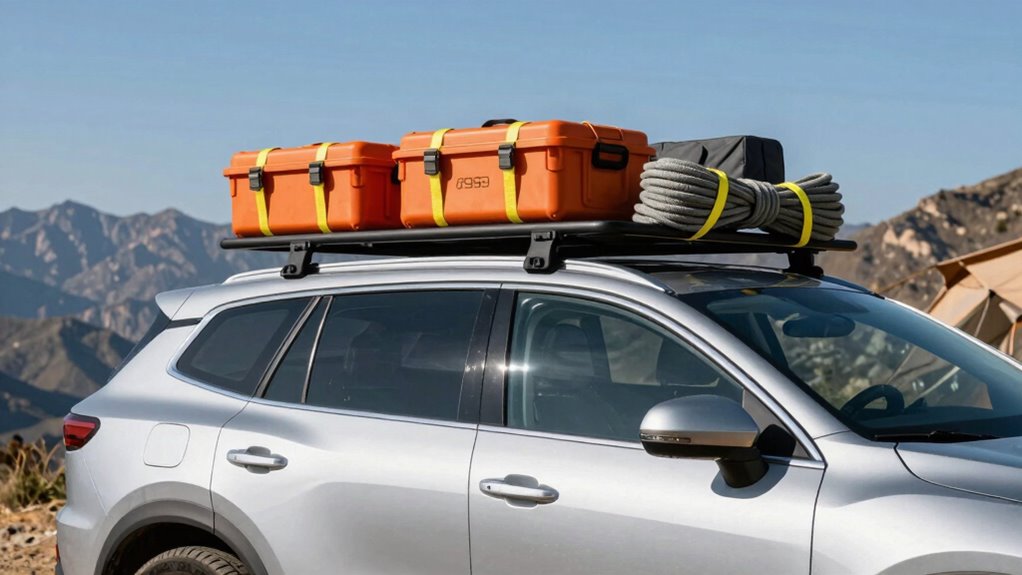

Proper load planning for your roof rack is essential to keep your vehicle stable and safe. By distributing weight evenly and securing gear tightly, you prevent shifting and balance issues that can cause accidents. Knowing your roof’s load capacity helps avoid overloading, which raises rollover risks and reduces fuel efficiency. Good load management ensures smoother handling and better aerodynamics. Keep these principles in mind, and you’ll improve your adventure’s safety—if you explore further, you’ll uncover even more tips to optimize your setup.

Get business pricing on garage and car supplies
- Business-only prices and quantity discounts
- Tax-exempt purchasing
- Multiple users, one account, clear invoices
Key Takeaways
- Proper load planning ensures gear is securely fastened, preventing shifting and potential accidents during transit.
- It helps maintain vehicle stability by distributing weight evenly across the roof rack.
- Planning avoids exceeding the roof load capacity, reducing safety hazards and vehicle damage.
- It improves aerodynamics, which enhances fuel efficiency and driving comfort.
- Responsible load assessment minimizes risks related to imbalance, rollover, and handling issues.

Have you ever wondered how to safely carry all your gear on your vehicle’s roof? Proper load planning is vital to guarantee your adventure goes smoothly and safely. When you load your roof rack, cargo security becomes a top priority. If you don’t secure your gear properly, it can shift during transit, creating dangerous situations for you and others on the road. Using the right straps, tie-downs, and securing your items tightly helps prevent movement. It’s also essential to double-check that everything stays in place before hitting the road. An unfastened load can fall off or cause imbalance, risking accidents and damage to your gear.
Secure your gear tightly with proper straps to prevent shifting and ensure safe travels.
Weight distribution plays a significant role in maintaining vehicle stability. When you overload one side or place too much weight toward the front or back, it affects handling, steering, and braking. Proper load planning involves spreading your gear evenly across the roof rack, keeping the weight centered and balanced. This not only minimizes strain on your vehicle’s roof but also guarantees safe driving dynamics. Overloading the roof can impact your vehicle’s center of gravity, increasing the risk of rollover or loss of control, especially during turns or sudden maneuvers. Additionally, understanding your vehicle’s maximum roof load capacity is crucial to prevent exceeding safe limits. Knowing your vehicle’s maximum load capacity helps you plan effectively and avoid potential safety hazards.
Before you start loading, it’s wise to check your vehicle’s maximum roof load capacity. Exceeding these limits can compromise both your roof rack’s integrity and your vehicle’s safety. Distributing the weight correctly means placing heavier items closer to the roof’s center and lighter gear toward the edges. This helps maintain proper aerodynamics and reduces wind resistance, making your drive more fuel-efficient and comfortable. Remember, the goal isn’t just to carry everything you want but to do so responsibly. Proper load planning ensures your gear stays secure and your vehicle handles optimally, especially when considering vehicle safety principles. Incorporating weight distribution techniques based on your vehicle’s specifications can further enhance stability and safety during your trip. Additionally, taking a moment to assess your load can prevent last-minute surprises and ensure everything is set for a safe journey.
As an affiliate, we earn on qualifying purchases.
Frequently Asked Questions
How Do I Measure My Vehicle’s Roof Weight Limits Accurately?
To measure your vehicle’s roof weight limits accurately, first check your vehicle’s owner’s manual for specific compatibility details. Look for the maximum roof load capacity, which varies by vehicle. Then, identify the roof rack types you plan to use, as different racks have different weight ratings. Confirm your load doesn’t exceed these limits, and distribute weight evenly for safe, effective adventures.
What Are the Signs of Overloading a Roof Rack?
You’ll notice signs of overloading your roof rack when weight shifts unexpectedly, or if the rack feels unstable during driving. Excess weight can cause poor weight distribution, leading to increased wind resistance or noise. Check rack compatibility to guarantee it supports your load safely. If you see sagging, hear rattling, or experience handling issues, it’s a clear warning to reduce your load and avoid potential damage or accidents.
Can Load Distribution Affect Vehicle Handling During Off-Road Trips?
Yes, load distribution greatly affects your vehicle’s handling stability during off-road trips. When you improperly distribute weight on your roof rack, it shifts the center of gravity, making the vehicle more prone to tipping or losing control. Proper weight distribution guarantees better handling, enhances stability, and reduces the risk of accidents. Always plan your load carefully to maintain ideal handling and safety throughout your adventure.
How Often Should I Inspect My Roof Rack for Safety?
You should inspect your roof rack for safety regularly, ideally before each trip and at least once a month during frequent use. Roof rack maintenance is vital to guarantee all components are secure and in good condition. Conduct a thorough safety inspection, checking for loose bolts, rust, or damage. This proactive approach helps prevent accidents, keeps your gear safe, and maintains your vehicle’s handling during your adventures.
What Accessories Can Improve Load Security on Roof Racks?
To improve load security on your roof rack, you should use accessories like cargo nets and tie-down straps. Cargo nets keep your gear from shifting, while tie-down straps provide a tight, secure hold. Make certain to choose high-quality, weather-resistant options, and regularly check their tension and condition. Properly securing your load with these accessories ensures safety during your adventure and prevents damage to your vehicle or cargo.
Conclusion
So, next time you’re about to turn your roof rack into a mobile storage unit, remember: load planning isn’t just a good idea—it’s the difference between an epic adventure and a high-flying, roof-top ballet. Ignoring it might just turn your gear into a crash-test dummy. Think of load planning as your trusty sidekick, saving you from the chaos of a tumbling tent or a rogue cooler. Because, really, who wants their gear to end up as airborne as your dreams?
Halloween Picks
halloween
As an affiliate, we earn on qualifying purchases.