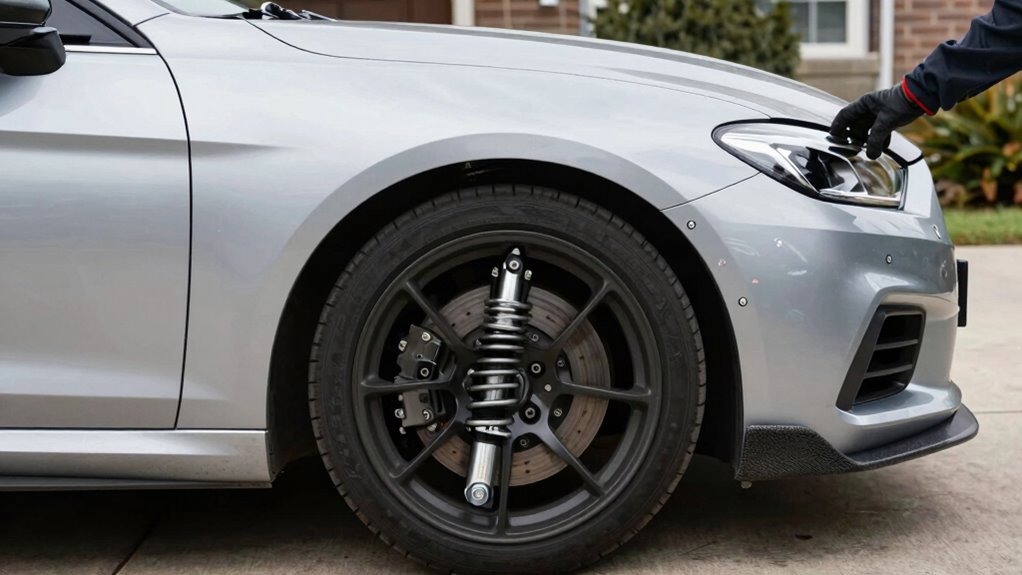

To stop clunks after suspension upgrades, start by listening carefully to when the noise occurs—during bumps, turning, or acceleration. Check for loose or worn components like sway bar links, bushings, or mounts, and make certain everything is properly tightened and lubricated. Also, verify wheel alignment and tire balance, as misalignment or unbalanced tires can cause noise. Remaining attentive to these factors helps you identify the source and solve the issue effectively. More tips await as you continue.
Key Takeaways
- Listen carefully to when the noise occurs—during acceleration, braking, turns, or bumps—to identify potential causes.
- Inspect suspension components for looseness, wear, cracks, or damaged bushings that may cause clunking sounds.
- Check wheel alignment and tire balancing to ensure proper setup, reducing vibration-related noises.
- Confirm all mounting bolts and fasteners are tight and properly secured after suspension work.
- Test drive the vehicle after adjustments, listening for persistent noises and making further diagnostics if needed.
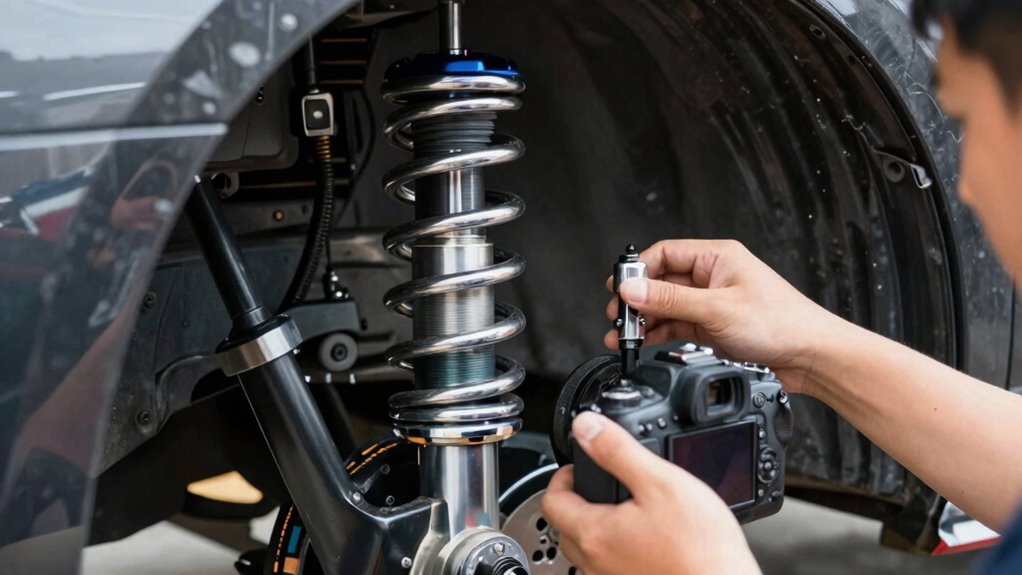
Upgrading your suspension can improve handling and ride quality, but it often brings unexpected noises that can be tricky to diagnose. When you start hearing clunks or squeaks after a suspension upgrade, one of the first steps is to verify your wheel alignment is spot on. Misaligned wheels can cause uneven tire wear and strange noises, especially when turning or driving over bumps. Proper wheel alignment ensures your suspension components work harmoniously and reduces the chances of noise caused by uneven forces pressing against your tires and suspension parts. Alongside alignment, tire balancing plays a vital role. Unbalanced tires can create vibrations and noises that mimic suspension issues, making it essential to have your tires balanced correctly after any suspension work. When tires are out of balance, they can cause your vehicle to shake or produce knocking sounds at certain speeds, complicating the diagnosis process.
As you listen for the source of the noise, pay attention to when it happens—whether during acceleration, braking, turning, or driving over rough surfaces. These clues help identify if the issue stems from suspension components, wheel alignment, or tire balancing. For example, a clunk when hitting a bump might point to worn-out sway bar links or loose mounts, while a squeak during turns could indicate suspension bushings that need lubrication or replacement. If the noise is more noticeable at high speeds or during specific maneuvers, it might be related to wheel imbalance or alignment issues. Don’t forget that even small changes in tire pressure can influence your ride quality and noise levels, so check your tire pressures regularly. Regular inspections of suspension parts for signs of wear, cracks, or looseness can help catch issues early before they manifest as noise problems.
When diagnosing noises, always inspect the suspension components first—look for signs of wear, cracks, or looseness. Sometimes, the problem isn’t with the suspension itself but with how the wheels are aligned or balanced. If your wheels are misaligned, it puts uneven stress on suspension parts and tires, potentially causing noise and uneven wear. Similarly, unbalanced tires can cause vibrations that translate into knocking or humming sounds. It’s a good idea to have your wheel alignment checked after any suspension upgrade, especially if you notice handling issues or abnormal noise. Tire balancing should be refreshed whenever new tires are installed or if you notice vibrations. This proactive approach minimizes noise and ensures your suspension upgrade delivers the performance you want without introducing new problems. Understanding how suspension geometry affects noise and handling can further aid in diagnosing persistent issues.
Frequently Asked Questions
Can Aftermarket Shocks Cause Unexpected Noises?
Yes, aftermarket shocks can cause unexpected suspension noises. When you install new shocks, they might not perfectly match your vehicle’s setup, leading to creaks, squeaks, or clunks. These suspension noises often result from improper installation, incompatible parts, or worn bushings. To fix this, double-check your shock installation, ensure all bolts are tight, and consider replacing worn components. Properly matched shocks help minimize these suspension noises and enhance ride quality.
How Often Should Suspension Components Be Inspected?
You should inspect your suspension components at least once a year, especially if you drive in harsh conditions. During these inspections, check for suspension lubrication to guarantee parts move smoothly and look for component corrosion that can weaken the system. Regular inspections help you catch issues early, prevent noises, and extend the life of your suspension, keeping your ride quiet and safe.
Are Certain Driving Styles More Prone to Suspension Noises?
You might notice more suspension noises if your driving habits involve rough terrain or frequent sharp turns. Constantly hitting potholes or uneven roads can stress suspension components, making noises more likely. Aggressive driving styles, like hard braking and quick acceleration, also put extra strain on your suspension. To minimize issues, adapt your driving to better suit road conditions, and regularly inspect your suspension to catch problems early before they become noisy or costly.
What Tools Are Best for Diagnosing Suspension Issues?
You should use diagnostic tools like a jack, pry bar, and flashlight to inspect your suspension. A stethoscope or mechanic’s scope helps pinpoint noise sources. Employ troubleshooting techniques such as visual checks for worn components and manual tests for looseness or play. These tools and methods quickly identify issues, helping you determine if parts like shocks, struts, or bushings are causing the noises, so you can plan effective repairs.
Do Noise Issues Indicate the Need for Immediate Repair?
Well, if your car’s making noise, it’s practically shouting “alignment problems” or “tire imbalance,” so ignoring it is like pretending a leaky faucet isn’t dripping. Noise issues often signal underlying suspension trouble that needs quick attention. Delaying repairs can cause uneven tire wear, poor handling, and even safety risks. So, yes, these sounds aren’t just nuisances—they’re urgent clues you shouldn’t dismiss.
Conclusion
By paying close attention to sounds, by systematically inspecting components, and by trusting your instincts, you can effectively diagnose noises after suspension upgrades. Recognize the patterns, listen for differences, and address issues promptly. Remember, thoroughness leads to confidence, patience leads to precision, and persistence leads to peace of mind. With each step, you guarantee your suspension performs perfectly, your ride stays smooth, and your peace of mind remains intact. Keep diagnosing, keep improving, and enjoy the ride.