TL;DR

Get business pricing on garage and car supplies
- Business-only prices and quantity discounts
- Tax-exempt purchasing
- Multiple users, one account, clear invoices
A drag race between a BMW i8, Tesla Model Y, and Audi E-Tron GT ended in a rare tie, highlighting the competitive performance of electric vehicles across different segments. The results challenge expectations about EV speed differences.
A recent drag race involving the BMW i8, Tesla Model Y, and Audi E-Tron GT ended in a rare tie, surprising many enthusiasts and challenging assumptions about electric vehicle performance across different classes. The race, captured on video and widely circulated online, has sparked renewed interest in how these EVs compare in straight-line acceleration, especially considering their distinct designs and target markets.
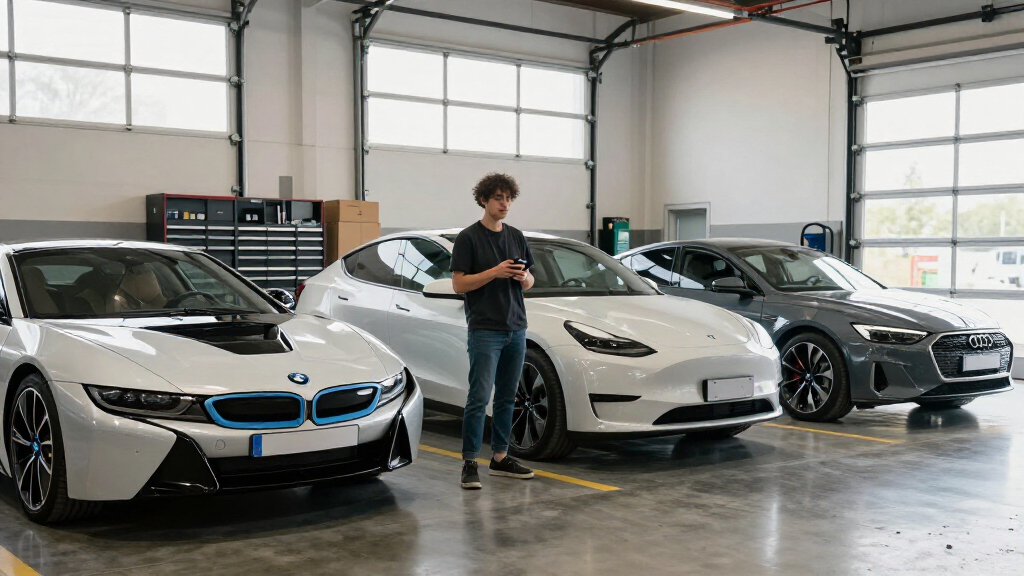
The race took place on an undisclosed private strip, with the BMW i8, a plug-in hybrid sports car known for its sleek design and hybrid powertrain, competing against the all-electric Tesla Model Y, a popular compact SUV, and the Audi E-Tron GT, a high-performance electric sedan. According to the video, the vehicles started simultaneously, with the Tesla and Audi initially pulling ahead, but the BMW maintaining close proximity throughout.
At the finish line, the three vehicles crossed within a fraction of a second of each other, resulting in a dead heat. The video’s uploader and several automotive enthusiasts noted the unexpected competitiveness of the BMW i8, which is often considered less powerful in straight-line acceleration compared to the Tesla Model Y and Audi E-Tron GT. The race’s outcome suggests that factors beyond raw horsepower, such as traction, weight distribution, and launch techniques, significantly influence EV drag race results.
Experts caution that the video’s specifics — including the driver skill, tire conditions, and environmental factors — are not fully verified, and the race may not reflect typical performance scenarios. Nonetheless, the event has generated buzz as a real-world demonstration of EV capabilities across different segments.
Implications for Electric Vehicle Performance Comparisons
The close finish in this drag race underscores the rapid advancements in electric vehicle technology, where performance disparities between models are narrowing. It challenges the common perception that high-end EVs like the Audi E-Tron GT or Tesla Model Y are always significantly faster than hybrids or less powerful EVs. For consumers, this suggests that EV performance is becoming more competitive across different price points and vehicle types.
Furthermore, the race highlights the importance of factors such as driver skill and launch technique, which can significantly impact real-world results. This could influence how enthusiasts and buyers evaluate EVs for straight-line speed, especially as automakers continue to optimize acceleration and traction control systems.
For the industry, the event signals that EV performance benchmarks are evolving, potentially affecting marketing strategies and consumer expectations as more models enter the market with comparable acceleration figures.
As an affiliate, we earn on qualifying purchases.
EV Drag Racing Trends and Performance Expectations
Electric vehicle drag races have gained popularity in recent years as a way to showcase EV acceleration capabilities. Historically, high-performance EVs like the Tesla Model S Plaid set benchmarks for straight-line speed, often outperforming traditional sports cars. However, the emergence of models like the Audi E-Tron GT and improvements in hybrid technology, such as the BMW i8, have begun to blur these lines.
Recent online videos and social media posts have shown EVs competing in drag races, with results often surprising viewers. While many of these races are informal and unverified, they reflect a growing interest in comparing EVs directly. The trend is driven by increasing EV adoption, technological advancements, and consumer curiosity about how different models perform in acceleration tests.
It is worth noting that the specific outcome of this recent race remains a trend signal rather than a definitive performance benchmark, as the details of the race conditions are not fully confirmed.
Details of the Race Conditions and Verification
It remains unclear whether the race was conducted under optimal conditions, the drivers’ experience levels, or if any modifications were made to the vehicles. The video’s authenticity and whether it was staged or a one-off event are also unconfirmed. Additionally, the specific settings of the EVs’ traction and launch controls during the race are unknown, which could significantly influence the outcome.
Experts caution that without official timing data or verified race conditions, the results should be interpreted as anecdotal rather than conclusive evidence of the vehicles’ true performance capabilities.
Monitoring EV Performance Trends and Upcoming Tests
Automotive enthusiasts and industry watchers will likely seek more formalized testing and verified results to assess how these models compare in various conditions. Manufacturers may also respond by highlighting their vehicles’ acceleration figures or conducting their own controlled tests.
Future events, including official drag races and performance comparisons, are expected to shed more light on the evolving capabilities of EVs across different segments. As more models enter the market with comparable acceleration, the competitive landscape will continue to shift, prompting further scrutiny and testing.
Key Questions
Was the drag race officially sanctioned or staged?
There is no confirmation that the race was officially sanctioned; it appears to be an informal video shared online. Its authenticity and conditions are not verified.
How close was the race at the finish line?
The vehicles crossed the finish line within a fraction of a second, resulting in what appears to be a tie, according to the video.
Does this mean EVs are now equally fast across different segments?
This race suggests that performance differences are narrowing, but more controlled testing is needed to confirm how all EVs compare in various scenarios.
What factors influence EV drag race results besides horsepower?
Factors include driver skill, launch technique, traction control, vehicle weight distribution, and environmental conditions.
Will automakers respond to these results?
It is possible that manufacturers will highlight these findings or conduct their own tests to demonstrate their vehicles’ capabilities.
Source: rss
Fall Picks
fall essentials
As an affiliate, we earn on qualifying purchases.