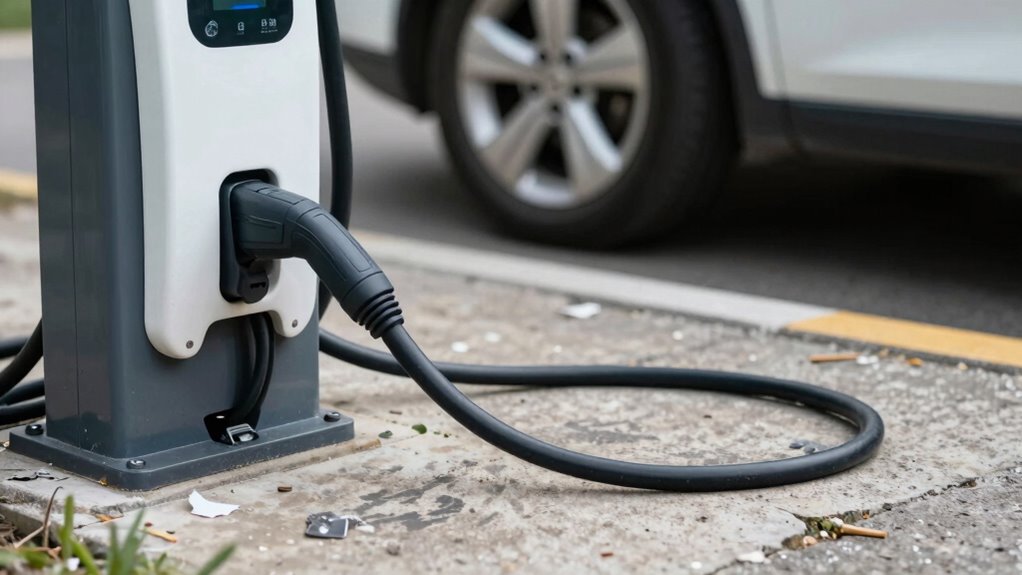

One common EV charger setup mistake that causes daily problems is placing it in an inconvenient or poorly accessible location. If your charger is too far from your parking spot or tucked into tight corners, you’ll struggle to plug in easily, especially in bad weather. This can lead to cable stretching, tripping hazards, and added frustration. Making sure your charger is in a safe, accessible spot helps avoid these issues and keeps your routine smooth—there’s more to keep in mind ahead.

Get business pricing on garage and car supplies
- Business-only prices and quantity discounts
- Tax-exempt purchasing
- Multiple users, one account, clear invoices
Key Takeaways
- Placing the charger in an inconvenient or hard-to-access location causes daily frustration and safety risks.
- Ignoring electrical safety standards can lead to circuit overloads and frequent breaker trips.
- Failing to plan for future expansion may require costly upgrades later, disrupting daily routines.
- Using incompatible chargers or wiring can reduce efficiency and slow charging times.
- Skipping professional consultation increases the risk of improper installation and ongoing daily problems.

Have you ever underestimated the importance of proper installation when setting up your EV charger? It’s a mistake that can lead to daily frustrations you might not initially think about. One of the key issues begins with charging station placement. If you choose a spot that’s inconvenient or poorly accessible, you’ll find yourself constantly struggling to plug in your vehicle. For instance, setting your charger too far from your parking spot or in a tight corner makes the process awkward, especially in bad weather or when you’re in a hurry. Proper placement isn’t just about convenience; it’s about guaranteeing safety and ease of use**. You want the charger within comfortable reach, ideally close to your parking area, and in a location that minimizes cable stretching or tripping hazards. Additionally, ensuring the right electrical safety measures are in place can prevent hazards and damage. It’s also important to consider future expansion options, so your setup can accommodate any upgrades or additional chargers you might need later. Planning for electrical capacity** can help ensure your system remains efficient and safe as your needs grow.
To avoid costly modifications later, it’s advisable to conduct a comprehensive assessment of your electrical system before installation. Another critical aspect that often gets overlooked is power supply compatibility. If your charger isn’t properly matched to your home’s electrical system, it can cause ongoing problems. For example, if your EV charger draws more power than your circuit can handle, you might frequently trip circuit breakers. This not only interrupts your daily charging routine but can also be a safety concern. Conversely, if the compatibility isn’t right, your charger might operate inefficiently or fail to deliver the best charge rate. Before installing, you should verify that your home’s electrical system can support the charger’s power requirements. Sometimes, this means upgrading your wiring or installing a dedicated circuit, which is a necessary step to avoid problems down the road. Proper system evaluation can help identify potential issues before installation.
When these two issues aren’t addressed properly, you end up with a setup that’s more of a hassle than a convenience. You might find yourself constantly repositioning your vehicle or struggling with cable management. Repeated circuit trips can lead to frustration and even damage to your electrical system if not corrected. The inconvenience grows over time, making your daily routine more stressful. To prevent this, it’s best to plan ahead. Think about where you’ll park regularly and ensure that the power supply can support the charger’s demands. Consulting a professional during installation can save you from these common pitfalls, ensuring that your charging station is both accessible and compatible with your electrical system.
Products Worth Considering

Autel MaxiCharger Level 2 EV Charger, 40A, 240V, Indoor/Outdoor, 25‑Foot Flexible Cable, NEMA 14‑50 Plug (White)

Autel 40A Level 2 EV Charger, 240V NEMA 14-50 J1772, WiFi, 25ft Cable

Autel Home EV Charger up to 50A J1772 Hardwired Level 2 Charger with 25 ft Cable
As an affiliate, we earn on qualifying purchases.
Frequently Asked Questions
How Do I Choose the Right EV Charger for My Vehicle?
To choose the right EV charger for your vehicle, you need to prioritize charger compatibility with your car’s make and model. Check your vehicle’s charging port and power requirements, then consider charging speed—faster chargers save time but may cost more. Confirm the charger’s amperage matches your home’s electrical system, and pick a model that offers reliable performance. Doing this helps you avoid daily frustrations and ensures efficient, safe charging.
What Safety Precautions Should I Consider During Installation?
Think of yourself as a guardian, guaranteeing safety like a lighthouse keeper. Always double-check your electrical wiring to guarantee it’s properly rated and undamaged. Use correct grounding techniques to prevent electrical shocks or fires. Turn off the power supply before installation, and wear insulated gloves for extra protection. These precautions help you avoid hazards, creating a safe environment for your home and peace of mind for you and your family.
Can I Install an EV Charger Myself or Should I Hire a Professional?
You can install an EV charger yourself, but be aware of DIY pitfalls like improper wiring or safety hazards. If you’re not experienced, mistakes can lead to costly repairs or unsafe conditions. While DIY might save you money upfront, consider cost considerations like tools and potential damage. For safety and reliability, hiring a professional guarantees proper installation, compliance with local codes, and peace of mind, making it a worthwhile investment.
How Often Should I Inspect or Maintain My EV Charger?
You should inspect and maintain your EV charger at least once a year to guarantee ideal charging speed and power capacity. Regular checks help identify loose connections, wear, or damage that could hinder performance. Keep an eye on the charging cable and port, and clean any dirt or debris. Proper maintenance prevents issues that could slow down charging or reduce efficiency, ensuring your charger stays reliable and safe for daily use.
What Are the Common Signs of a Faulty EV Charging Setup?
Did you know that nearly 30% of charging station issues stem from faulty setups? You’ll notice signs like inconsistent charging, frequent power surges, or the charger refusing to start. If your charging station feels hot or makes strange noises, these are red flags. Regularly inspect your setup, verify proper connections, and watch for warning signs. Addressing these problems early prevents long-term damage and keeps your EV charging smooth and safe.
Conclusion
If you ignore the small cracks in your foundation, over time, they threaten to destabilize the entire house. Similarly, rushing through your EV charger setup without paying attention to details can lead to daily frustrations that feel like cracks widening beneath your feet. Take the time now to get it right; build a solid base for your electric journey. When your setup is secure, your daily drives will be smooth, just like a house standing tall through any storm.