
Hybrid tuning depends on accurate data because guesswork can lead to inconsistencies and inefficiencies. When sensors are uncalibrated or unreliable, your system may give skewed results, making it harder to optimize performance and detect issues early. Good data helps you make targeted adjustments, reducing trial and error. If you want to understand how reliable data enhances tuning and boosts system longevity, there’s more to uncover below.

Get business pricing on garage and car supplies
- Business-only prices and quantity discounts
- Tax-exempt purchasing
- Multiple users, one account, clear invoices
Key Takeaways
- Accurate data ensures precise adjustments, reducing reliance on inaccurate estimates or assumptions in hybrid tuning.
- Poor data quality leads to inconsistent results and increased risk of inefficiency or system failure.
- Regular calibration maintains sensor reliability, providing trustworthy information for optimal tuning decisions.
- High-quality data enables targeted improvements and early detection of system anomalies.
- Better data fosters sustainable tuning practices, extending component lifespan and improving overall system performance.
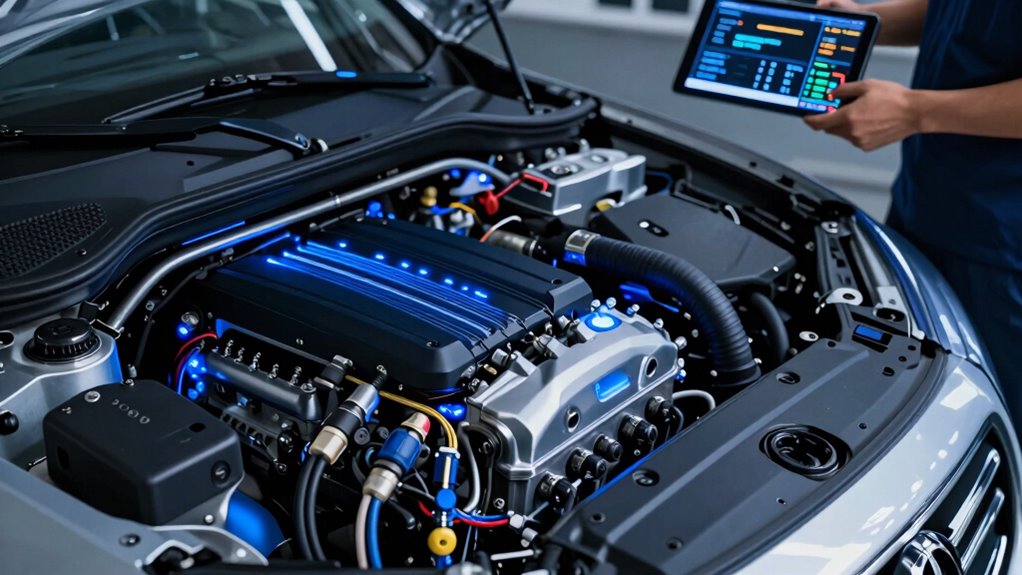
Have you noticed that hybrid tuning often falls short because it lacks reliable data? When tuning hybrid systems, you might rely on assumptions or rough estimates, but this approach can lead to inconsistent results. The core issue is that the data guiding your adjustments isn’t accurate enough to make informed decisions. Without precise data, you’re essentially guessing, which increases the risk of inefficiency and subpar performance. That’s why improving data accuracy should be your top priority rather than just throwing more guesses into the mix. Regularly updating and verifying sensor calibration is crucial because sensor accuracy directly impacts data quality and system reliability.
One of the most critical factors in ensuring better data is sensor calibration. Sensors act as the eyes and ears of your hybrid system, providing vital information about battery performance, energy flow, and system health. If these sensors aren’t properly calibrated, their readings become unreliable. You might think that a sensor is providing correct data when it’s actually giving skewed information, leading you to make misguided tuning adjustments. Regular sensor calibration ensures that the data you’re working with is precise and trustworthy, which ultimately results in more effective tuning. Additionally, data reliability plays a key role in maintaining optimal system performance over time. Improving data quality involves not just calibration but also consistent maintenance to prevent drift and inaccuracies, which can occur due to environmental factors or component aging.
Proper sensor calibration ensures accurate data, leading to more effective and reliable hybrid system tuning.
Having accurate data allows you to make targeted improvements with greater confidence. When your data is accurate, you can identify exactly where inefficiencies lie and target those areas for improvement. Instead of making broad, guesswork-based changes, you can fine-tune the system based on solid evidence. This reduces trial and error, speeds up the tuning process, and helps you achieve a more balanced and efficient hybrid system. Accurate data also allows you to detect anomalies early, preventing potential failures or excessive component wear. Relying on well-calibrated sensors and high-quality data minimizes the risk of misinterpretation and incorrect adjustments that could compromise the system’s longevity and performance. Recognizing the importance of high-quality data is essential for establishing a consistent tuning methodology.
Investing in proper sensor calibration and emphasizing data accuracy isn’t just about immediate performance; it’s about creating a sustainable tuning process. When you focus on reliable data, you develop a clearer understanding of how different variables interact within the hybrid system. This knowledge enables you to optimize energy management, improve fuel efficiency, and extend component lifespan. Ultimately, better data replaces guesswork with certainty, leading to smarter decisions and a more reliable hybrid system. Moreover, data-driven decisions rely heavily on the integrity of your data, making calibration and maintenance essential for long-term success.
As an affiliate, we earn on qualifying purchases.
Frequently Asked Questions
How Does Data Quality Impact Hybrid Tuning Accuracy?
Data quality critically impacts hybrid tuning accuracy because accurate data guarantees reliable results. When you perform data validation, you catch errors or inconsistencies that could skew your tuning process. Proper sensor calibration assures your measurements are precise, which is essential for effective hybrid tuning. Poor data quality leads to incorrect adjustments, reducing system efficiency. Consequently, investing in thorough data validation and sensor calibration helps you achieve more accurate, consistent hybrid tuning outcomes.
What Types of Data Are Most Critical for Hybrid Tuning?
Think of your data as a finely tuned orchestra—each instrument must be perfectly calibrated. Sensor calibration is essential, ensuring each sensor plays its part accurately, while data normalization aligns diverse data sources for harmony. These elements are crucial for hybrid tuning, as they provide reliable, consistent information, helping you make precise adjustments. Without them, your tuning efforts risk being out of sync, like a dissonant melody.
Can Poor Data Lead to Incorrect Hybrid System Adjustments?
Poor data can definitely lead to incorrect hybrid system adjustments. If sensor calibration is off, your system makes decisions based on inaccurate readings, causing inefficiency. Additionally, lacking data redundancy means you lack backup information, increasing the risk of errors. When your data isn’t reliable or thorough, the hybrid tuning process becomes guesswork, ultimately reducing system performance and potentially causing damage or higher operational costs.
How Do Data Collection Methods Influence Tuning Outcomes?
You realize that your data collection methods directly shape tuning outcomes. Precise sensor calibration guarantees accurate readings, preventing misleading data that could skew adjustments. Incorporating data redundancy captures diverse operating conditions, revealing true system behaviors. Without these methods, your hybrid system might respond to faulty data, wasting time and resources. Effective data collection, as a result, becomes the foundation for reliable tuning, guiding your decisions with confidence and minimizing guesswork.
What Are Common Data Pitfalls in Hybrid Tuning Processes?
You often face data pitfalls like sensor calibration errors and poor data integration, which can skew tuning results. If sensors aren’t correctly calibrated, the data becomes unreliable, leading you to make misguided adjustments. Similarly, when data from different sources isn’t integrated properly, inconsistencies and gaps emerge, making it harder to tune effectively. Ensuring accurate sensor calibration and seamless data integration is key to avoiding these common pitfalls and achieving ideal hybrid tuning outcomes.
Conclusion
If you think hybrid tuning is just about mixing guesses and hope, think again. Without top-tier data, you’re fundamentally flying blind in a storm, risking catastrophic failures and missed opportunities. Better data isn’t just an upgrade—it’s your secret weapon for accessing peak performance. Skip the guesswork, embrace high-quality data, and turn your tuning into a precision art form. Because in this game, good enough isn’t good enough—only the best data wins!
Halloween Picks
halloween
As an affiliate, we earn on qualifying purchases.