
Power‑split hybrid systems optimize performance by seamlessly managing power flow between the engine and electric motor through advanced planetary gearsets. They automatically adjust to driving conditions, combining power sources for acceleration, cruising, or low-speed operation without noticeable gear shifts. Regenerative braking captures energy, boosting efficiency. With AI-driven controls, these systems fine-tune performance in real-time, ensuring a responsive and smooth drive. To discover how these innovations work together, continue exploring the details behind this smart technology.
Key Takeaways
- Advanced planetary gearsets enable precise and seamless power distribution for optimal performance across driving conditions.
- Real-time energy management and regenerative braking recover and reuse energy, enhancing overall system responsiveness.
- AI-driven analytics dynamically optimize power flow, improving acceleration, fuel efficiency, and driving experience.
- Multiple operation modes (electric, hybrid, engine-only) allow tailored performance and efficiency based on driver needs.
- Continuous variable transmission via planetary gearsets ensures smooth power transitions without gear shifts.
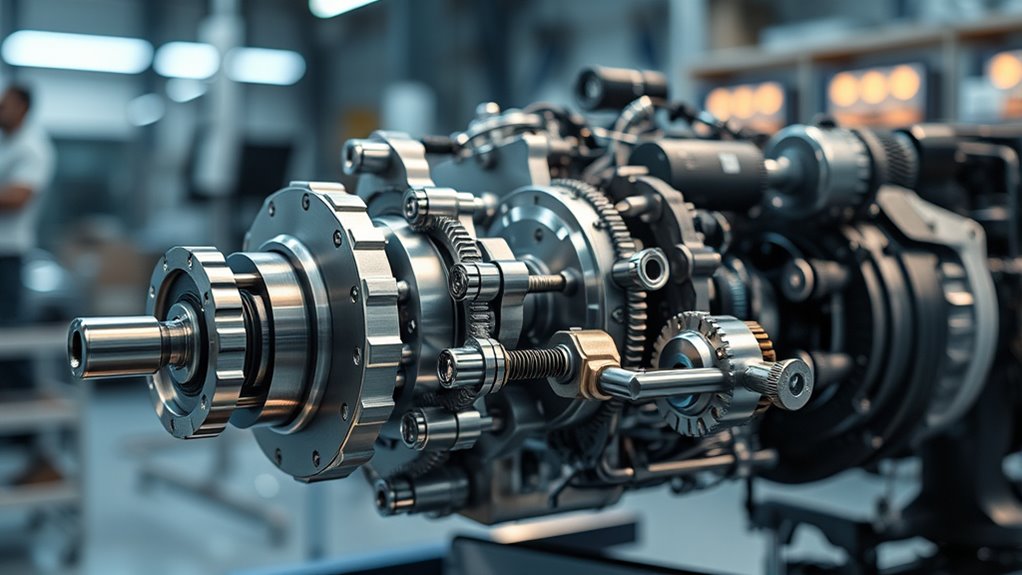
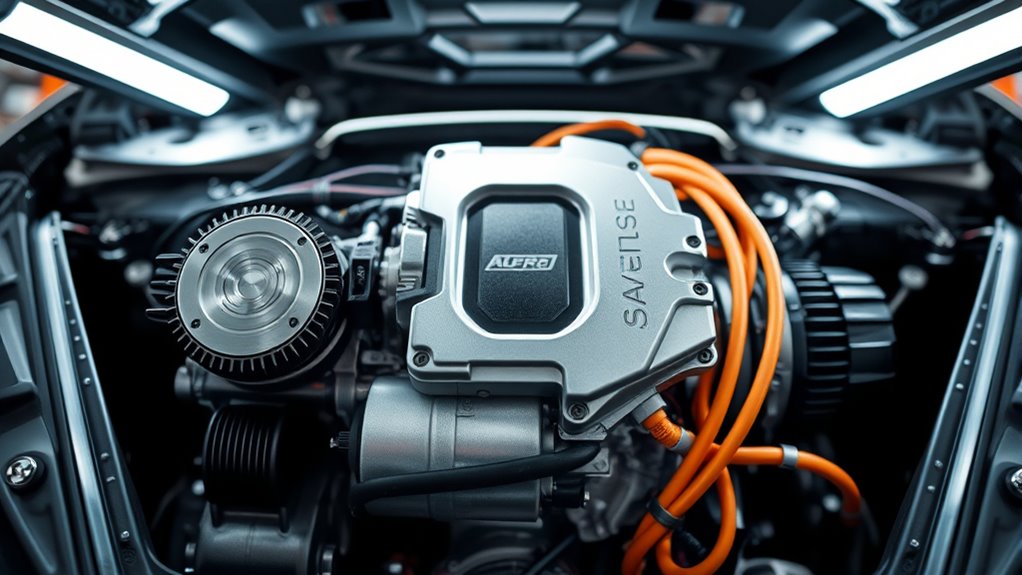
Power‑split hybrid systems are advanced drivetrains that seamlessly combine internal combustion engines with electric motors to maximize efficiency and performance. When you drive a vehicle with this system, you benefit from the smooth integration of electric motor technology with traditional engine power, creating a more responsive and fuel-efficient experience. At the core of this setup is electric motor integration, which allows the electric motor to assist, supplement, or take over driving tasks depending on the driving conditions. This integration is made possible through the use of planetary gearsets, a key component that manages power flow between the engine, electric motor, and wheels efficiently.
Planetary gearsets act as sophisticated power distribution hubs, enabling the system to switch seamlessly between different modes of operation. When you accelerate, for instance, the engine might work alongside the electric motor to deliver optimal power without overloading any single component. During cruising, the gearset can isolate the engine to conserve fuel, while the electric motor handles propulsion. At low speeds or during stop-and-go traffic, the system can run solely on electric power, reducing emissions and saving fuel. This flexibility results in a driving experience that feels natural and uninterrupted, unlike traditional hybrids that may shift gears or change power sources more noticeably.
The planetary gearset’s design allows for continuous variation in power distribution, which is essential for a power-split system’s efficiency. You don’t need to think about shifting gears or managing different modes; the system automatically determines the best configuration based on your driving behavior. This means you enjoy a smooth ride with optimized energy use, whether you’re accelerating onto a highway or crawling through city traffic. The electric motor integration within the planetary gearset setup also helps recover energy during braking, converting kinetic energy into electrical energy stored in the battery. This regenerative braking enhances overall efficiency by recycling energy that would otherwise be lost.
Additionally, the system’s efficiency can be influenced by AI-driven analytics, which optimize operation based on real-time data and predictive modeling to further improve fuel economy and performance.
Frequently Asked Questions
How Do Power-Split Hybrids Compare to Traditional Hybrids in Efficiency?
You’ll find that power-split hybrids are generally more efficient than traditional hybrids because they better optimize the engine and motor operation, especially in city driving. This improved efficiency can lead to longer battery longevity since the system reduces wear. However, they tend to have higher initial cost implications due to complex technology. Overall, if maximizing efficiency and battery lifespan matters to you, power-split hybrids are a smart choice despite the higher upfront expense.
What Maintenance Is Required for Power-Split Hybrid Systems?
You’ll need to check your power-split hybrid’s battery longevity regularly, as batteries typically last around 8-10 years or 100,000-150,000 miles. Fluid replacement is also crucial; you should change the transmission and coolant fluids every 30,000 to 60,000 miles to keep the system running smoothly. Routine inspections ensure peak performance, preventing costly repairs, and keep your hybrid operating at top efficiency for years to come.
Can Power-Split Hybrids Operate Solely on Electric Power?
Yes, power-split hybrids can operate in electric-only mode, but it depends on your battery capacity. When the battery is sufficiently charged, you can switch to electric-only mode, which allows you to drive without using the internal combustion engine. Keep in mind that battery capacity limits how long you can stay in electric mode, so driving distance in electric-only mode varies based on your battery’s size and current charge level.
How Does Ambient Temperature Affect Power-Split Hybrid Performance?
You might notice that ambient temperature dramatically influences your hybrid’s performance. As thermal effects come into play, cold weather can reduce battery performance, limiting electric-only driving and efficiency. Conversely, warmer temperatures help maintain ideal battery chemistry, ensuring smooth, responsive operation. So, when temperatures drop, your hybrid’s ability to deliver seamless power splits might diminish, but proper thermal management keeps it running smoothly, balancing performance and reliability regardless of the climate.
Are Power-Split Systems Suitable for Heavy-Duty or Off-Road Vehicles?
You can consider power-split systems suitable for heavy-duty or off-road vehicles because they offer excellent off-road durability and efficiency. These systems handle high torque loads and challenging terrains well, making them ideal for demanding environments. Their ability to optimize power distribution enhances performance and reliability in tough conditions. So, if you’re looking for a hybrid setup that can withstand heavy-duty use and off-road adventures, power-split systems are a strong choice.
Conclusion
Think of a power-split hybrid system like a skilled conductor directing an orchestra, seamlessly blending engine power and electric drive for perfect harmony. Just as a conductor ensures every instrument plays in sync, optimizing this system boosts performance and efficiency. Imagine your car as that orchestra—when tuned right, it delivers a smooth, powerful performance while saving fuel. Embrace these optimizations, and you’ll experience a ride that’s as balanced and harmonious as a well-conducted symphony.