
Before purchasing an exhaust system, you need to understand your local laws because regulations on noise and emissions vary widely. Some aftermarket exhausts can violate noise limits or bypass emission controls, leading to fines or legal issues. To stay compliant and avoid costly penalties or vehicle trouble, you should check your area’s specific rules. If you continue exploring, you’ll discover more about how to guarantee your exhaust choice stays within legal boundaries.

Get business pricing on garage and car supplies
- Business-only prices and quantity discounts
- Tax-exempt purchasing
- Multiple users, one account, clear invoices
Key Takeaways
- Different regions have specific noise ordinances that may restrict certain exhaust sound levels.
- Some exhaust systems bypass emissions controls, risking non-compliance with environmental regulations.
- Unsanctioned modifications can void vehicle warranties and violate manufacturer or legal standards.
- Laws regarding exhaust legality and emissions frequently change, requiring ongoing legal research.
- Proper research helps avoid fines, inspection failures, and legal disputes related to exhaust modifications.
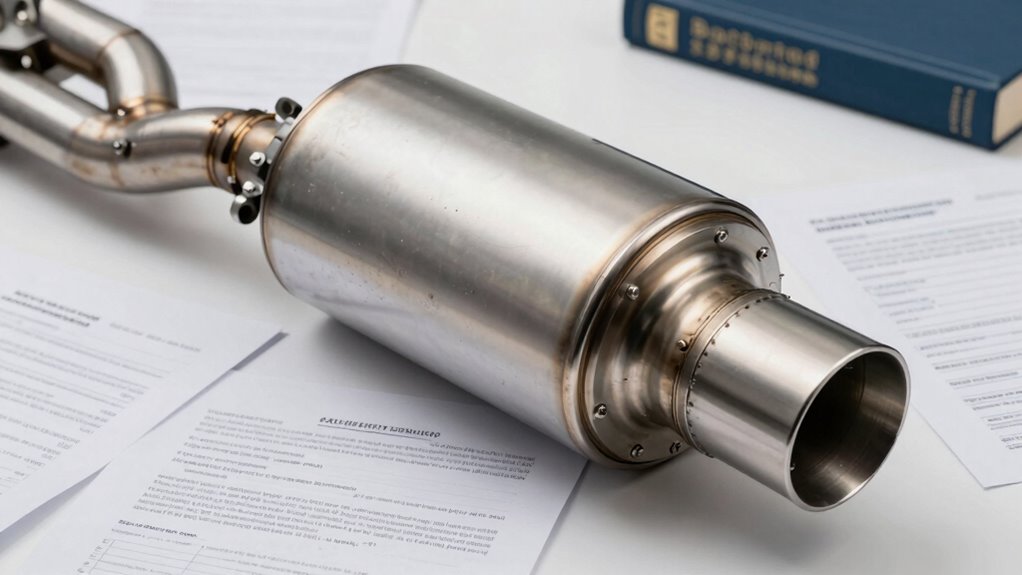
Exhaust systems are more than just components of your vehicle; they can also have legal implications that you need to understand. When you’re considering a new exhaust system, it’s tempting to focus on performance or aesthetics, but you should also think about how it affects your vehicle’s compliance with laws. Some exhaust systems can alter engine noise in ways that might violate local noise ordinances, especially if they produce louder sounds than what’s legally allowed. Excessive engine noise isn’t just a nuisance to others; it can also lead to fines, vehicle inspections, or even the removal of the aftermarket system. Knowing the noise limits set by your jurisdiction helps you avoid unnecessary legal trouble.
Exhaust systems can impact legality through noise levels and compliance with local laws.
Beyond noise, emission standards play a crucial role in what exhaust system you can install. Different regions have strict regulations designed to limit pollutants released into the environment. An aftermarket exhaust that bypasses or modifies the catalytic converter or other emissions control devices may boost performance but can also cause your vehicle to fail emissions tests. This failure can prevent you from legally registering your vehicle or result in fines if you’re caught operating a non-compliant exhaust system. That’s why thorough research is essential before making a purchase—what seems like an upgrade could actually be a legal headache down the line. Understanding emission standards is vital to ensure your vehicle remains compliant. Additionally, staying informed about regulatory updates can help you adapt your vehicle modifications in accordance with evolving laws. Being aware of legal requirements for vehicle modifications is equally important to avoid unintended violations.
You also need to consider manufacturer warranties and vehicle modifications regulations. Some exhaust systems aren’t approved by the original manufacturer, which could void your warranty if installed incorrectly or if they’re deemed illegal. Insurance companies may also refuse coverage if your modifications violate local laws or increase the risk of violations. Before buying, check whether the exhaust system is certified by relevant authorities or meets the standards for your vehicle’s make and model. Additionally, understanding vehicle modification laws can save you from unexpected legal issues and penalties. Being aware of legal regulations regarding modifications helps you avoid costly repercussions and ensures that your upgrade remains within legal boundaries.
Doing your legal research before buying an exhaust system isn’t just about avoiding fines or repair costs; it’s about protecting yourself from potential legal disputes and ensuring your vehicle remains roadworthy. You’ll want to verify local laws regarding noise levels, emission standards, and approved modifications. Consulting with professionals or local authorities can give you peace of mind that your new exhaust system will be both effective and compliant. Taking these steps saves you time, money, and the hassle of dealing with legal consequences later on. Being informed about the legal landscape surrounding exhaust systems ensures that your vehicle remains legal, safe, and efficient on the road.
Products Worth Considering

Chemical Guys 14-Piece Arsenal Builder Car Wash Kit with Foam Blaster

Chemical Guys 16-Piece Arsenal Builder Car Wash Kit with Foam Cannon & Bucket

DEWALT 20V MAX Cordless 1/2-Inch Impact Wrench Kit (DCF900P1)
As an affiliate, we earn on qualifying purchases.
Frequently Asked Questions
Are Aftermarket Exhaust Systems Legal in All States?
No, aftermarket exhaust systems aren’t legal in all states. You need to take into account exhaust sound and emissions standards, which vary by location. Some states require emissions-compliant systems, while others limit noise levels. Before buying, check your state’s regulations to ensure the exhaust sound isn’t too loud and that it meets emissions standards. This way, you avoid fines or having to remove your new exhaust system later.
How Do I Verify Exhaust System Compliance With Local Laws?
Think of your exhaust system as a voice for your vehicle—make certain it speaks within the rules. To verify compliance, you check local noise regulations and emission standards, like tuning into a specific frequency. Visit your state’s DMV or environmental agency websites, or consult local laws. Get a professional inspection if needed. Staying within legal limits ensures your vehicle’s voice remains clear and compliant on the road.
What Penalties Exist for Illegal Exhaust Modifications?
If you make illegal exhaust modifications, you could face penalties like hefty fines, vehicle impoundment, or even points on your license. Authorities enforce emissions standards and noise regulations strictly, so illegal exhausts that exceed noise limits or don’t meet emissions standards can lead to legal trouble. It’s essential to research local laws before modifying your exhaust system to avoid these penalties and guarantee your vehicle remains compliant.
Do Electric Vehicles Require Exhaust System Legal Research?
Electric vehicles don’t require exhaust system legal research because they produce no tailpipe emissions. However, you should still consider regulations related to electric vehicle emissions and battery recycling, as these impact environmental compliance and resale laws. Understanding local laws about electric vehicle emissions standards and proper battery disposal helps guarantee you stay within legal limits. Researching these aspects now can prevent future legal issues and promote eco-friendly practices.
How Often Do Exhaust Laws Change in Different Regions?
Exhaust laws change as often as the wind shifts, so it’s essential to stay updated. In different regions, regulations around emission standards and noise regulations can evolve yearly or every few years. These updates keep pace with environmental goals and community concerns. To avoid surprises, regularly check local legislation, as these laws don’t stay still—they’re constantly in flux, like a river carving new paths.
Conclusion
Before you pick an exhaust system, remember that thorough legal research can save you from costly fines or recalls. Did you know that over 30% of vehicle modifications are halted due to non-compliance with local regulations? That’s a lot of time, money, and frustration avoided by doing your homework first. So, take the time to check the laws—your wallet and peace of mind will thank you in the long run.