
TL;DR

Get business pricing on garage and car supplies
- Business-only prices and quantity discounts
- Tax-exempt purchasing
- Multiple users, one account, clear invoices
Regulators have launched an investigation into Tesla’s Cybercab prototype due to its absence of a steering wheel. The move follows increased coverage and public interest, but details remain unclear. The outcome could impact future autonomous vehicle regulations.
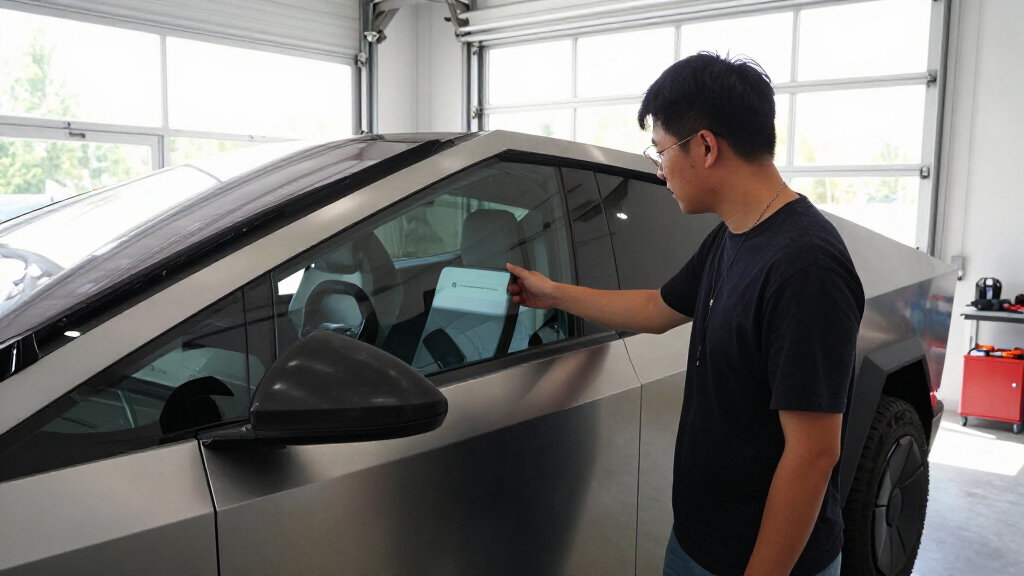
Regulatory agencies are currently investigating Tesla over its Cybercab prototype due to the vehicle’s absence of a steering wheel, a key safety feature traditionally required by law. This investigation marks a significant step in assessing the safety and regulatory compliance of Tesla’s latest autonomous vehicle concept, which has garnered increased public and media attention.
The investigation was publicly announced by a regulatory body earlier this week, following reports that Tesla’s Cybercab prototype was showcased without a steering wheel during recent demonstrations. The vehicle, designed as a fully autonomous electric taxi, has sparked debate over whether current safety standards adequately cover vehicles that do not include manual driving controls. Tesla has not yet issued a detailed statement, but sources suggest that the company believes the vehicle complies with existing autonomous vehicle regulations. The probe is focused on whether the absence of a steering wheel violates safety laws or if new standards are needed for such vehicles.Automotive safety authorities have historically mandated steering wheels and manual controls for vehicles on public roads. However, as autonomous vehicle technology advances, regulators are debating whether these requirements remain relevant. The investigation will examine Tesla’s compliance with national and regional safety standards, and whether the Cybercab’s design poses any risks to passengers, pedestrians, or other road users. The outcome could influence future regulatory frameworks for autonomous and electric vehicles, especially those designed without traditional driving controls.
Legal and Safety Implications of No Steering Wheel
This investigation is significant because it tests the boundaries of existing vehicle safety regulations in the context of autonomous driving technology. If regulators determine that a vehicle can operate safely without a steering wheel, it could lead to a major shift in vehicle design standards and legal requirements. Conversely, if they find Tesla’s design non-compliant, it could delay or halt the deployment of similar autonomous vehicles. The case also raises broader questions about how quickly safety standards can adapt to technological innovations in the automotive industry.
As an affiliate, we earn on qualifying purchases.
Regulatory Evolution and Autonomous Vehicle Standards
Over the past decade, autonomous vehicle development has accelerated, with companies like Tesla pushing the boundaries of vehicle automation. Traditional safety regulations, established decades ago, require manual controls such as steering wheels and pedals. Recently, some jurisdictions have begun exploring updated standards to accommodate fully autonomous vehicles, especially those intended for commercial use like taxis and shuttles. Tesla’s Cybercab, announced as a driverless electric taxi, enters a regulatory landscape that is still evolving, with many safety authorities cautious about approving vehicles lacking manual controls. The investigation follows a trend of increased scrutiny of autonomous vehicle prototypes that challenge existing safety norms.
Unclear Regulatory Standards for Steering-Less Vehicles
It is not yet clear whether current safety laws explicitly prohibit vehicles without steering wheels or if regulators are considering new standards. The investigation’s outcome will depend on legal interpretations and potential updates to vehicle safety regulations, which are still under discussion in many jurisdictions. Additionally, Tesla’s precise compliance measures and the vehicle’s safety features remain undisclosed, adding further uncertainty to the case.
Next Steps in Regulatory Review and Tesla’s Response
Regulators are expected to conduct a detailed review of Tesla’s Cybercab prototype, including safety assessments and legal evaluations, over the coming weeks. Tesla may be asked to provide technical data, safety reports, and possibly modify the vehicle design to meet regulatory standards. The investigation’s findings could influence future policy adjustments for autonomous vehicles, especially those without manual controls. Tesla has indicated willingness to cooperate, but the final decision remains pending.
Key Questions
Could Tesla’s Cybercab be legally operated without a steering wheel?
It is currently uncertain. Existing laws generally require manual controls, but regulators are reevaluating standards for autonomous vehicles, especially those designed for driverless operation.
What safety concerns are associated with a vehicle lacking a steering wheel?
Safety concerns include emergency control in case of system failure, passenger safety during unexpected events, and the vehicle’s ability to respond to unpredictable road conditions.
How might this investigation impact Tesla’s autonomous vehicle plans?
If regulators determine that vehicles without steering wheels are non-compliant, it could delay Tesla’s deployment of the Cybercab and similar models, or lead to new safety standards that must be met.
Are other automakers facing similar regulatory scrutiny?
Yes, several companies developing fully autonomous vehicles are under review, as regulators seek to update standards for vehicles without manual controls.
When will a final decision be made in this investigation?
There is no specific timeline yet; the review process is ongoing and could take several weeks or months depending on the complexity of the assessment.
Source: rss
Halloween Picks
halloween
As an affiliate, we earn on qualifying purchases.