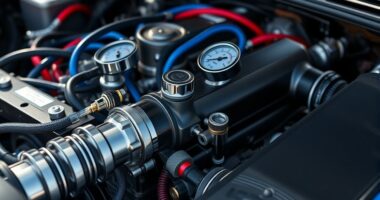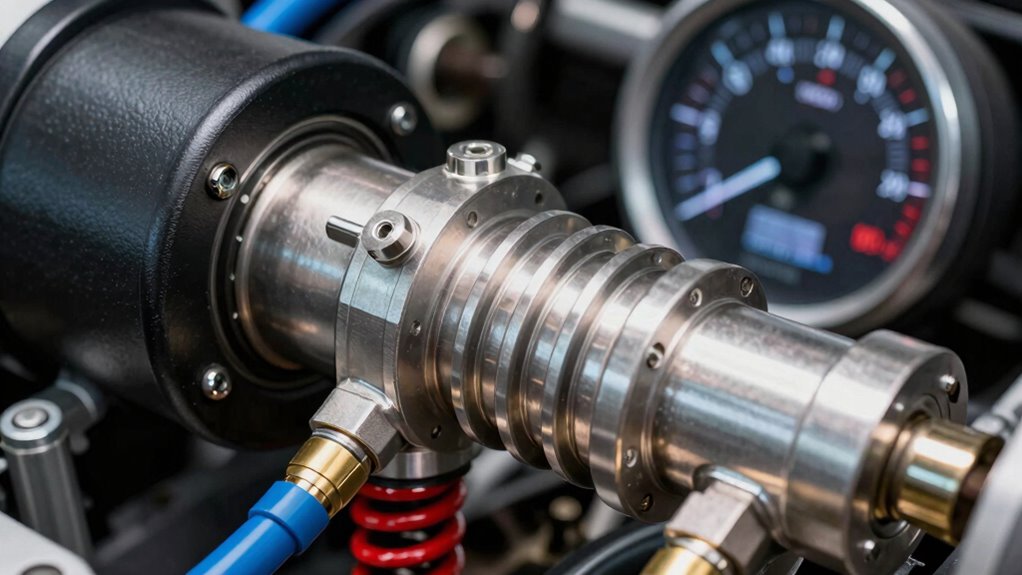
Boost control relies on wastegates and springs to regulate engine boost pressure. The wastegate opens at a preset level to vent excess exhaust gases, preventing overboosting. Springs in the wastegate determine when it opens; if they’re too stiff, they can delay opening, causing boost creep, while weak springs might open too early, reducing power. Proper calibration ensures smooth boost spikes and avoids turbo lag. To fully understand how to optimize your boost system, keep exploring these components in detail.
Key Takeaways
- Wastegates regulate boost by diverting exhaust gases, opening at a preset pressure to prevent over-boosting.
- Springs in wastegates determine the boost level at which the wastegate opens, affecting boost stability.
- Boost spikes occur when wastegates malfunction or springs are improperly calibrated, leading to excessive pressure.
- Proper calibration of wastegate springs and actuators ensures consistent boost levels and reduces lag or creep.
- Boost creep happens when wastegates don’t open promptly, causing boost pressure to exceed safe limits and risking engine damage.
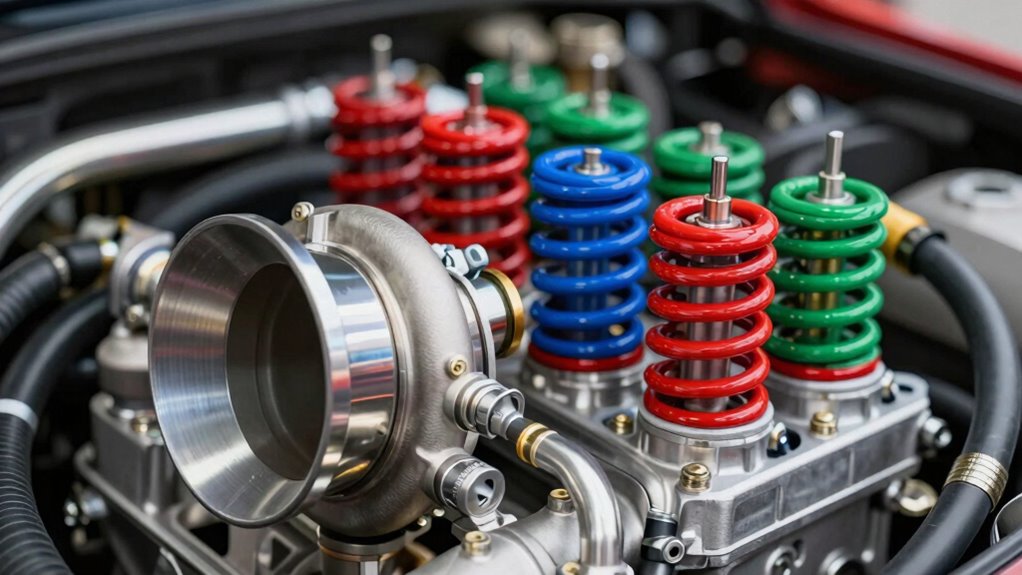
Ever wondered how turbocharged engines reach higher power levels? It’s all about managing the boost pressure that the turbo creates. When you step on the gas, the turbo spools up, forcing more air into the engine for increased power. But this process isn’t always perfectly smooth. You might notice turbo lag, which is the delay between pressing the accelerator and feeling the full boost. During this lag, the turbo is spooling up, and the engine isn’t yet delivering the expected power. Once the turbo reaches its target boost level, you get that surge of acceleration. However, sometimes you’ll also experience boost creep, where the boost pressure exceeds the set limit. Instead of staying within safe bounds, it keeps climbing, which can lead to over-boosting and potential engine damage. This phenomenon often happens when the wastegate isn’t venting excess exhaust gases properly.
Turbo lag delays power delivery, while boost creep causes over-boosting and potential engine damage.
Understanding how wastegates, springs, and other components interact helps you grasp why boost behavior varies. The wastegate acts as a valve that controls how much exhaust gas bypasses the turbine side of the turbo. When the boost reaches a preset level, the wastegate opens to divert exhaust gases away from the turbine, preventing further boost increase. The opening of the wastegate is influenced by the spring pressure; a stronger spring requires more boost pressure to open. If the spring is too weak, the wastegate might open prematurely, reducing boost and causing sluggish acceleration. Conversely, if it’s too stiff, the wastegate may stay closed longer than desired, risking boost creep. Proper calibration of these components is essential for maintaining consistent boost levels and engine safety.
The spring’s tension is vital because it determines the boost threshold, but it’s not the only factor. Boost control systems also include electronic or mechanical actuators that fine-tune wastegate operation. These allow you to set a target boost level and maintain it more consistently. When you modify your turbo system or change wastegate springs, you’re effectively adjusting the boost limit. Too aggressive a spring or a poorly calibrated actuator can lead to boost spikes or creep, causing instability and potential engine stress.
In real-world driving, these boost control elements work together to deliver reliable power while protecting your engine. If you notice boost spikes—sudden, unpredictable increases in boost pressure—that’s often a sign of boost creep or malfunctioning wastegate control. Proper tuning and selecting the right wastegate spring strength can help you minimize turbo lag and prevent boost creep from compromising performance or longevity. Understanding boost control components allows you to optimize your turbo setup for smoother, safer acceleration and more consistent power delivery.
Frequently Asked Questions
How Do I Choose the Right Wastegate Size for My Setup?
When choosing the right wastegate size, you should consider your turbo compatibility and desired boost levels. For most setups, a wastegate with a larger internal diameter (around 38-44mm) works well for high-boost applications, while smaller sizes (around 38mm) suit lower boost. Make certain it can handle your turbo’s airflow, preventing boost spikes. Match wastegate sizing to your turbo’s airflow capacity and your power goals for ideal performance and reliability.
Can Boost Spikes Damage My Engine?
Boost spikes can indeed damage your engine. Sudden surges, like turbo lag and boost creep, force excessive pressure that strains engine components. When spikes occur, pressure rises quickly, risking over-boosting and possibly causing engine knock or damage. You must monitor and manage boost carefully, ensuring wastegates and springs work smoothly. Staying vigilant prevents damaging over-pressurization, protecting your engine from costly chaos caused by unpredictable boost spikes.
What Are the Signs of a Faulty Wastegate?
If your wastegate is faulty, you’ll notice signs like inconsistent boost levels, excessive boost spikes, or sluggish acceleration. A wastegate failure can cause a boost leak, leading to reduced power and poor engine performance. You might also hear hissing sounds or see a check engine light. These symptoms indicate your wastegate isn’t regulating boost properly, risking further damage if not addressed promptly.
How Does Ambient Temperature Affect Boost Control?
You might find that ambient temperature considerably impacts boost control. Warmer air reduces air density, causing your turbo to produce less boost, while cooler temperatures increase air density, boosting performance. Temperature fluctuations can lead to inconsistent boost levels, making your car feel unpredictable. Ambient effects influence wastegate operation and spring pressure, so it’s essential to take into account outside conditions for ideal boost management, especially during temperature swings or seasonal changes.
Are Electronic Boost Controllers Better Than Manual Ones?
Electronic boost controllers are generally better than manual ones because they offer precise, consistent boost management and can be easily tuned via software. However, they tend to be more expensive upfront and may require additional wiring and setup. Manual controllers are more affordable and straightforward, making them suitable for budget builds or simpler setups. Decide based on your budget, desired control, and tuning expertise to choose the best option for your needs.
Conclusion
Understanding boost control helps you avoid spikes and maintain consistent power. For example, imagine you’re on a track and suddenly experience a boost spike that unsettles your car’s handling. By properly tuning your wastegate and spring settings, you can prevent that sudden surge. Mastering these basics ensures smoother acceleration, better performance, and more confidence behind the wheel. Keep experimenting and fine-tuning—your car’s boost stability depends on it.