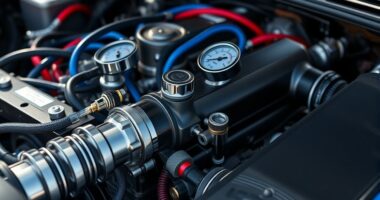
Cylinder deactivation helps you balance efficiency and performance by turning off some engine cylinders during steady driving, which reduces fuel use and lessens engine wear. It operates smoothly thanks to smart controls, switching seamlessly between full and half or single-cylinder modes. This technology not only boosts fuel economy but also extends your engine’s lifespan without sacrificing power when you need it. To discover how this innovative feature works behind the scenes, keep exploring the details.
Key Takeaways
- Cylinder deactivation reduces fuel consumption during steady driving by shutting down some engine cylinders seamlessly.
- It maintains performance by quickly reactivating cylinders when increased power is needed, ensuring driving responsiveness.
- Advanced control systems optimize the timing of activation and deactivation to balance efficiency with performance demands.
- Reducing active cylinders lowers engine stress, extending engine longevity without compromising driving experience.
- Overall, it enhances fuel economy while preserving vehicle power and responsiveness through intelligent management.

Have you ever wondered how modern engines improve fuel efficiency without sacrificing performance? One of the key innovations driving this balance is cylinder deactivation. This technology allows an engine to temporarily shut down some of its cylinders when full power isn’t needed, such as during highway cruising or steady-state driving. By doing so, you can enjoy better fuel economy, saving money at the pump, while maintaining the performance you expect when acceleration or heavy loads come into play. The idea is simple but effective: reduce unnecessary fuel consumption without compromising the overall driving experience.
When you activate cylinder deactivation, your engine intelligently switches from operating on all cylinders to fewer, usually half or even just a single cylinder. This process is seamless and often undetectable to you as the driver, thanks to advanced control modules and sensors that monitor driving conditions constantly. The benefit here is a significant decrease in fuel consumption because the engine consumes less fuel when fewer cylinders are firing. This is especially advantageous during long-distance highway driving, where maintaining an *essential* fuel economy is *vital*. Additionally, many modern engines equipped with cylinder deactivation are designed to optimize the engine’s durability by reducing stress during operation. However, it’s not just about saving fuel; engine durability also benefits from this technology. Because the engine isn’t working as hard during deactivation phases, it experiences less wear and tear over time, potentially extending its lifespan. Fewer active cylinders mean reduced thermal and mechanical stress on engine components, which can translate into longer intervals between maintenance and repairs.
Of course, the switch between active and deactivated cylinders is designed to be smooth, *guaranteeing* your driving experience remains consistent. Modern engines use sophisticated algorithms to determine when to deactivate or reactivate cylinders, based on factors like acceleration, load, and RPM. When you need more power, such as during overtaking or climbing hills, the engine quickly reactivates all cylinders to deliver the performance you require. This dynamic adjustment strikes a fine balance—maximizing fuel economy during light loads while preserving engine responsiveness during demanding situations.
In the end, cylinder deactivation is a clever engineering solution that helps you get more miles per gallon without sacrificing the power and reliability you expect from your vehicle. It’s a *proof* of how automakers are continually working to make driving more efficient and sustainable. By intelligently managing how your engine operates, this technology *assures* you enjoy better fuel economy while supporting the durability of your engine components, making your drive both economical and dependable.
Frequently Asked Questions
How Does Cylinder Deactivation Affect Engine Longevity?
Cylinder deactivation can extend your engine’s longevity by reducing engine wear and overheating, especially during light loads. When fewer cylinders run, the engine experiences less stress, which helps with lubrication management and minimizes wear over time. However, if not properly managed, it can lead to uneven lubrication and potential engine issues. Overall, when designed well, cylinder deactivation can promote a longer-lasting engine by easing stress and wear.
Is Cylinder Deactivation Suitable for All Vehicle Types?
Only some vehicle types benefit from cylinder deactivation, especially larger engines like trucks and SUVs. About 70% of drivers notice improved fuel economy and emission reduction with this feature. If your vehicle has a V8 or V6 engine designed for cylinder deactivation, it’s suitable. However, smaller cars or models without advanced engine systems might not see benefits or could experience issues, so check your vehicle’s compatibility first.
What Maintenance Is Required for Engines With Deactivation Technology?
You’ll need to keep up with regular maintenance for engines with deactivation technology. This includes routine oil changes to guarantee proper lubrication and prevent buildup that could affect the system. Spark plug replacement is also essential, as deactivation can put extra stress on plugs, leading to misfires or reduced efficiency. Staying on top of these tasks helps your engine run smoothly and prolongs its lifespan.
Are There Any Safety Concerns With Cylinder Deactivation Systems?
You might wonder if cylinder deactivation systems pose safety concerns. Generally, these systems are designed with strict safety protocols and high system reliability, so they rarely cause issues. However, it’s essential to follow manufacturer guidelines and get regular inspections. If you notice irregular engine behavior, have a professional check the system. Staying proactive guarantees your vehicle remains safe and the deactivation technology functions correctly, giving you peace of mind.
How Does Cylinder Deactivation Impact Vehicle Resale Value?
You might think cylinder deactivation boosts resale value, but surprisingly, it often does the opposite. Market perception tends to view these systems as complex and potentially unreliable, leading to resale depreciation. When you’re ready to sell, buyers may worry about maintenance costs or system failures. So, instead of adding value, cylinder deactivation can make your vehicle less appealing, subtly impacting its resale value in the long run.
Conclusion
Cylinder deactivation is like a skilled conductor, seamlessly balancing efficiency and performance. By turning off some cylinders when full power isn’t needed, you save fuel without sacrificing driveability. This technology helps your engine run smarter, not harder, much like a well-orchestrated symphony. So, whether you’re cruising or accelerating, cylinder deactivation ensures you get the best of both worlds—saving fuel while still delivering the power you want. It’s the perfect harmony of efficiency and performance.