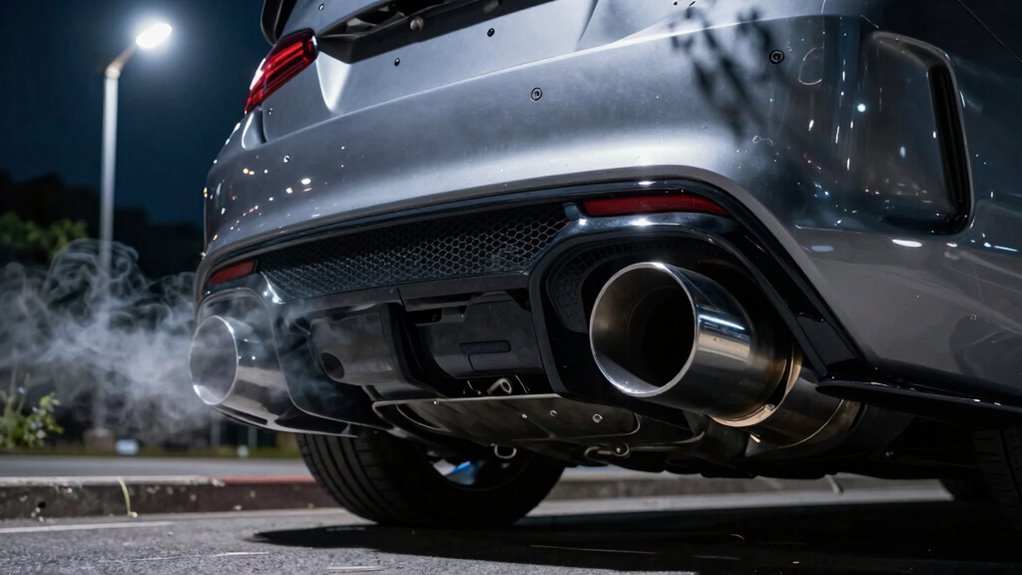

Exhaust systems drone badly when their design causes resonance at certain engine speeds, which amplifies sound frequencies into a persistent, irritating noise. This happens because the exhaust vibrates at natural resonance points, similar to how glass vibrates when a note matches its frequency. Aftermarket systems often produce more drone because of less precise tuning. If you want to understand how to fix this problem and reduce noise, keep exploring the details behind exhaust resonance and solutions.

Get business pricing on garage and car supplies
- Business-only prices and quantity discounts
- Tax-exempt purchasing
- Multiple users, one account, clear invoices
Key Takeaways
- Exhaust drone occurs when sound frequencies match the vehicle’s natural resonance, causing amplification of vibrations.
- Aftermarket exhaust systems often lack precise tuning, broadening sound frequency ranges and increasing drone likelihood.
- Aggressive or free-flowing exhaust designs tend to produce more resonant frequencies, leading to louder drone.
- Improperly tuned resonators can exacerbate resonance, intensifying drone and vibrations inside the cabin.
- Resonance amplifies sound waves, causing vibrations that not only produce noise but can also impact engine performance.
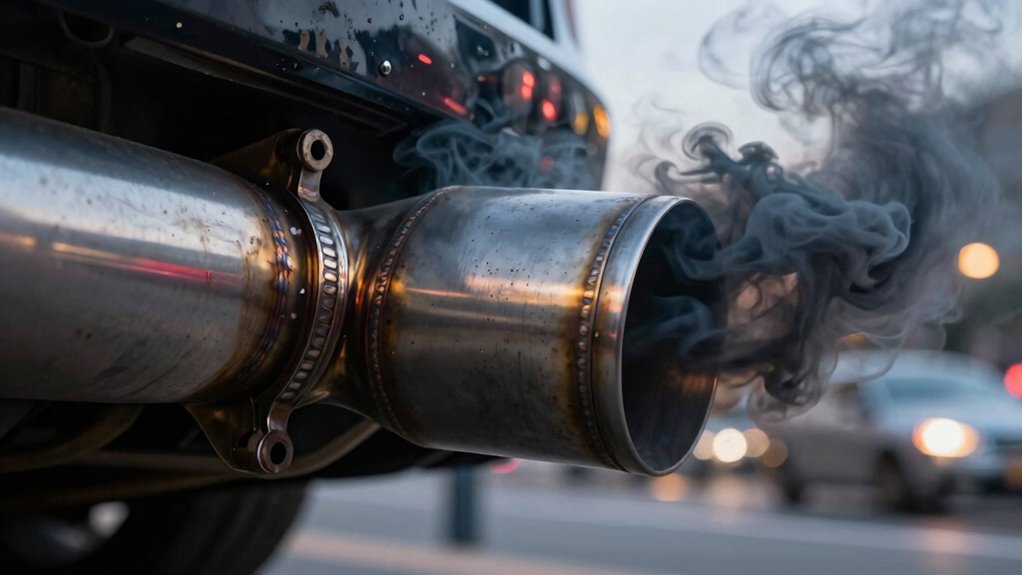
If you’ve ever noticed a persistent droning noise coming from your vehicle’s exhaust system, you’re not alone. That constant hum can be annoying, especially during long drives, and often leaves you wondering what’s causing it. That the drone often occurs at particular RPM ranges, where the sound frequencies generated by the exhaust system align with the natural resonance of your vehicle. When these frequencies match, they create a harmonic that amplifies and sustains the droning sound. It’s similar to how a singer hits a note that makes a glass vibrate — only here, it’s the exhaust’s sound waves resonating through the car’s cabin and undercarriage. The more aggressive or free-flowing your exhaust system is, the more likely it is to produce these resonant frequencies. That’s because aftermarket systems often lack the precise tuning of stock exhausts, leading to a wider range of sound frequencies that can resonate at certain engine speeds.
Moreover, the drone isn’t just about noise; it can also impact your engine performance. An exhaust system that produces excessive drone may indicate that the flow of exhaust gases isn’t ideal, which can slightly hinder engine efficiency. When sound frequencies cause vibrations that aren’t absorbed or dampened properly, they can also lead to increased fatigue on mounts and other components over time. Sometimes, the drone is a byproduct of a design flaw, like a muffler that’s too free-flowing or a resonator that’s not tuned correctly. Understanding the sound resonance involved can help you better diagnose and address the issue. Properly addressing these resonant frequencies often requires engineering modifications to optimize exhaust flow and acoustic properties. Additionally, addressing the resonance frequency with proper engineering modifications can significantly reduce drone and improve overall driving comfort. In some cases, using dampening materials or specialized resonators can effectively minimize unwanted vibrations and noise.
In essence, the real reason some exhaust systems drone so badly is because of the way sound frequencies are generated and amplified through the system. When these frequencies hit certain engine speeds, they create a resonant harmony that’s both loud and irritating. It’s not just a noise issue; it’s a complex interaction between sound waves, exhaust design, and engine performance. Fixing it often involves tuning or adding dampening components to reduce the resonance and eliminate that unbearable drone.
As an affiliate, we earn on qualifying purchases.
Frequently Asked Questions
Can Drone Noise Affect Vehicle Performance or Fuel Efficiency?
Drone noise itself doesn’t directly impact your vehicle’s fuel economy or engine performance. However, if the drone results from a modified or damaged exhaust system, it could indicate underlying issues like leaks or restrictions. These problems may affect engine performance, causing it to work harder and reducing fuel economy. So, while noise alone isn’t harmful, addressing the cause of drone noise guarantees your vehicle runs efficiently and smoothly.
Are There Specific Exhaust Materials That Reduce Drone Noise?
Yes, certain exhaust materials can reduce drone noise effectively. You can choose exhaust insulation and sound deadening wraps, which absorb and dampen vibrations, minimizing drone. Materials like mineral wool or ceramic fiber insulation help insulate sounds, while specialized wraps add an extra layer of noise control. These options work together to improve comfort, reduce noise pollution, and keep your ride quieter and more enjoyable.
How Does Engine Size Influence Exhaust Drone Levels?
Engine size considerably influences exhaust drone levels because larger engines tend to produce more exhaust resonance, which amplifies drone noise. You’ll notice more drone with bigger engines, especially if the muffler design isn’t optimized to dampen this resonance. To reduce drone, consider upgrading to a muffler designed specifically to break up exhaust resonance, or explore exhaust modifications that minimize the amplification of drone noise at higher engine sizes.
Is Drone Noise More Common in Certain Vehicle Models?
Yes, drone noise is more common in certain vehicle models, especially those with specific exhaust designs and sound tuning. Performance cars often emphasize aggressive sound, which can unintentionally cause drone at highway speeds. Manufacturers use sound tuning to minimize this, but some models still experience it, particularly if the exhaust system isn’t carefully designed. So, your vehicle’s make and how its exhaust is tuned profoundly influence drone frequency and intensity.
Can Drone Be Eliminated Without Replacing the Entire Exhaust System?
You can often eliminate drone without replacing the entire exhaust system. About 70% of drone issues come from exhaust resonance, which you can address with muffler modifications. Installing resonator tips or adjusting the muffler’s internal packing reduces drone noise notably. These tweaks target the source of the resonance, making your drive quieter and more comfortable without the need for costly exhaust replacements.
Conclusion
So, next time your exhaust system sounds like a swarm of angry bees trapped in a tin can, remember, it’s not just annoyance—it’s a symphony of chaos, a protest against quality, or maybe just your car’s way of saying, “Hey, I’m bored and loud, deal with it!” Embrace the drone; after all, who needs peace and quiet when you can have a roaring reminder that your exhaust is auditioning for a rock band?
Halloween Picks
halloween
As an affiliate, we earn on qualifying purchases.