When choosing between forged and flow-formed wheels, you’re paying for manufacturing complexity, strength, and durability. Forged wheels undergo high-pressure shaping, giving you maximum strength, longer lifespan, and better resistance to stress, but at a higher cost. Flow-formed wheels are created through a rolling process, offering a good balance of strength, weight savings, and affordability. To truly understand which fits your needs, explore the differences further—you’ll find valuable insights ahead.
Key Takeaways
- Forged wheels generally cost more due to complex manufacturing and superior strength, while flow-formed wheels offer a more affordable alternative with good durability.
- Forged wheels have a denser, more uniform internal grain structure, resulting in higher strength and resistance to cracking and bending.
- Flow-formed wheels are produced by stretching and compressing cast or billet blanks, providing a balance of weight savings and durability at a lower cost.
- The manufacturing process impacts performance: forged wheels excel in high-stress conditions, whereas flow-formed wheels suit moderate performance needs.
- Your choice depends on budget, performance requirements, and durability expectations, with forged wheels offering maximum longevity and flow-formed wheels providing cost-effective strength.
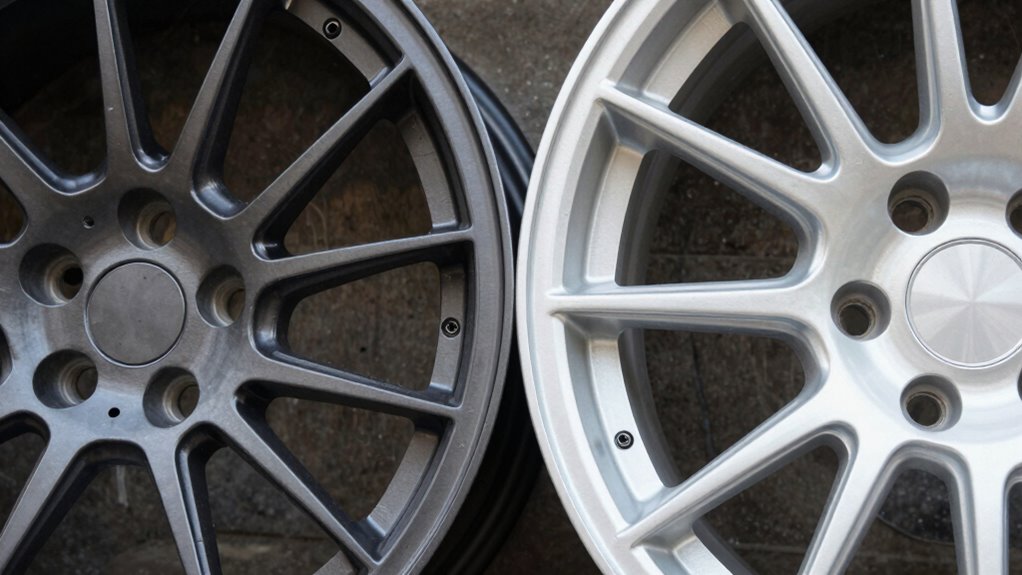
When choosing between forged and flow-formed wheels, understanding their differences is essential for making an informed decision. These wheels are manufactured through distinct processes that impact their material strength, weight, and overall performance. Forged wheels are created by applying extreme pressure to a solid piece of metal, usually aluminum or alloy, to shape it into the desired form. This manufacturing process results in a dense, uniform structure with exceptional strength. Because the material is compressed rather than cast or spun, forged wheels tend to be more durable and resistant to impacts, making them ideal for high-performance driving or demanding conditions.
Forged wheels are made by applying extreme pressure to metal, resulting in a dense, durable structure.
Flow-formed wheels, on the other hand, are produced through a different process that involves spinning a cast or billet blank while applying pressure with rollers. This process stretches and compresses the metal, aligning its internal grain structure to enhance strength. While flow-formed wheels are not as dense as forged ones, their manufacturing process considerably improves their material strength compared to standard cast wheels. The result is a wheel that offers a good balance of weight savings, strength, and cost-effectiveness. Flow-forming typically involves less complexity and energy than forging, which translates into lower production costs and, consequently, a more affordable price point for consumers.
Additionally, the manufacturing process used for each wheel type influences their internal grain structure, directly affecting their overall durability and resistance to fatigue. Material strength plays a vital role in how these wheels perform under stress. Forged wheels generally outperform flow-formed wheels in terms of strength-to-weight ratio because of their solid construction and the way their internal grains are aligned during manufacturing. This makes forged wheels less prone to cracking or bending under extreme loads, especially during aggressive driving or heavy braking. Flow-formed wheels, while not quite matching the strength of forged options, still provide impressive durability and resistance, often sufficient for everyday driving and moderate performance use.
Understanding these manufacturing processes helps you weigh the benefits and limitations of each wheel type. Forged wheels offer superior material strength and longevity, but they come at a higher price due to their complex production. Flow-formed wheels, while slightly less strong, deliver considerable strength gains over cast wheels at a more accessible price point. Your choice depends on your driving style, budget, and performance needs. If you prioritize maximum strength and durability, forged wheels are the way to go. But if you’re looking for a lightweight, cost-effective upgrade that still delivers solid performance, flow-formed wheels are an excellent option.
Frequently Asked Questions
How Do Forged and Flow-Formed Wheels Compare in Weight?
Forged wheels are generally lighter than flow-formed wheels because their manufacturing process involves compressing a solid billet into shape, reducing weight without sacrificing strength. Flow-formed wheels, created by spin-forming and heat treatment, are somewhat heavier but still lighter than cast alternatives. The aesthetic differences are subtle, but forged wheels often have a cleaner, more refined look. Your choice depends on whether weight savings or cost is more important to you.
Which Wheel Type Offers Better Heat Dissipation?
You’ll find forged wheels excel in heat dissipation, making them the cool kids in high-performance driving. They handle heat better, ensuring your brakes stay safer longer—because who wants overheating? Flow-formed wheels, with their aesthetic appeal, save you cash but lag behind in cooling prowess. If you’re all about looks and cost considerations, they’re tempting. But when it comes to managing heat, forged wheels truly shine, even if they cost a bit more.
Are Flow-Formed Wheels as Durable as Forged Wheels?
Flow-formed wheels are generally less durable than forged wheels, but they still offer good strength for daily driving. You’ll notice aesthetic differences, with forged wheels often looking more refined and high-end. Cost considerations also play a role; flow-formed wheels tend to be more affordable, making them a smart choice if you want a balance between durability, appearance, and budget. However, for maximum strength, forged wheels remain the superior option.
What Maintenance Differences Exist Between Forged and Flow-Formed Wheels?
You’ll find that forged wheels generally require less maintenance than flow-formed ones because they have better corrosion resistance. To keep both types in top shape, you should regularly clean them with mild soap and water. Forged wheels resist corrosion better, so they need less frequent cleaning and special coatings. Flow-formed wheels may need more careful cleaning and protective treatments to prevent corrosion over time.
How Does Manufacturing Impact Overall Wheel Lifespan?
Manufacturing greatly impacts your wheel’s lifespan through material quality and consistency. Forged wheels, made with high-quality alloys and strict manufacturing controls, tend to last longer and resist cracking under stress. Flow-formed wheels, while durable, may not have the same level of material refinement. Consistent manufacturing guarantees fewer flaws, reducing the risk of failure. Overall, premium manufacturing results in a more reliable wheel that withstands road demands over time.
Conclusion
Think of forged wheels as the sturdy oak tree—strong, durable, built to last through storms. Flow-formed wheels are like a finely crafted sculpture—lighter and more affordable, but still impressive. Your choice depends on whether you want the unwavering strength of the oak or the sleek beauty of art. In the end, investing wisely means picking the right tree—or wheel—that matches your journey’s needs. Make your decision carefully; your ride’s future depends on it.